
Plenty of us start with BabyLoveGrowth because it spins up quick drafts without much setup. But once the tool is part of your daily workflow, its practical limits start to cost you time and money — and the hunt for BabyLoveGrowth alternatives begins.
Here are the ones we run into most:
AI drafts don’t nail your brand voice, so every piece needs heavy editing, time you just don’t have as a solo founder.
Credit usage is hard to predict. A long post can chew through credits faster than the plan suggests, throwing off your monthly budget.
The SEO scoring is basic. It won’t help with advanced tactics like internal linking or content freshness, which actually move the needle on rankings.
BabyLoveGrowth doesn’t integrate with the rest of your stack. If you use project management or social scheduling tools, you’ll end up doing a lot of manual copying and pasting.
In this article, we compare the BabyLoveGrowth competitors you’ll typically find when you outgrow these limits, and we give you a straight answer on which ones are worth your money.
On this page
Surfer SEO vs Search Atlas: Heavy-Duty Alternatives for Serious SEO

We’ve already compared Surfer SEO and BabyLoveGrowth head-to-head, and Surfer comes out ahead for content quality and SEO integration, especially if you write directly in its editor. That verdict holds up the more you use it. Surfer SEO’s content editor scores your draft against top-ranking pages in real time, which directly addresses the complaint about basic SEO scoring that drives people to look elsewhere. As you type, the editor flags keyword density gaps and structural mismatches against what’s already ranking, so you’re not guessing whether a piece is competitive before you publish. For a solo writer, that real-time feedback is a huge productivity boost you don’t get with BabyLoveGrowth’s flat scoring. The tradeoff is price: Surfer uses per-article or per-seat pricing that scales with your output, making it a premium choice for content quality. It’s more expensive and less straightforward than BabyLoveGrowth’s credit model.
Search Atlas takes a different angle. Its subscription-style per-seat pricing is predictable, so you won’t run out of credits halfway through a long post, and your monthly cost stays fixed. That alone solves the unpredictable-credit frustration from our introduction. Search Atlas also pairs its AI writing with a full SEO suite, including site audits, rank tracking, and backlink analysis, so one subscription replaces several. The trade-off: the AI writing here isn’t as polished as Surfer’s, so you’ll spend more time on edits. But as a budget-conscious all-in-one, it’s hard to beat.
Neither Surfer nor Search Atlas is as simple as BabyLoveGrowth’s credit model, but both give you far more control over the SEO output. If you’re comparing the best AI SEO writing tools, those are the two to start with.
Machined AI vs Junia AI: AI-First Content Engines, One Step Removed
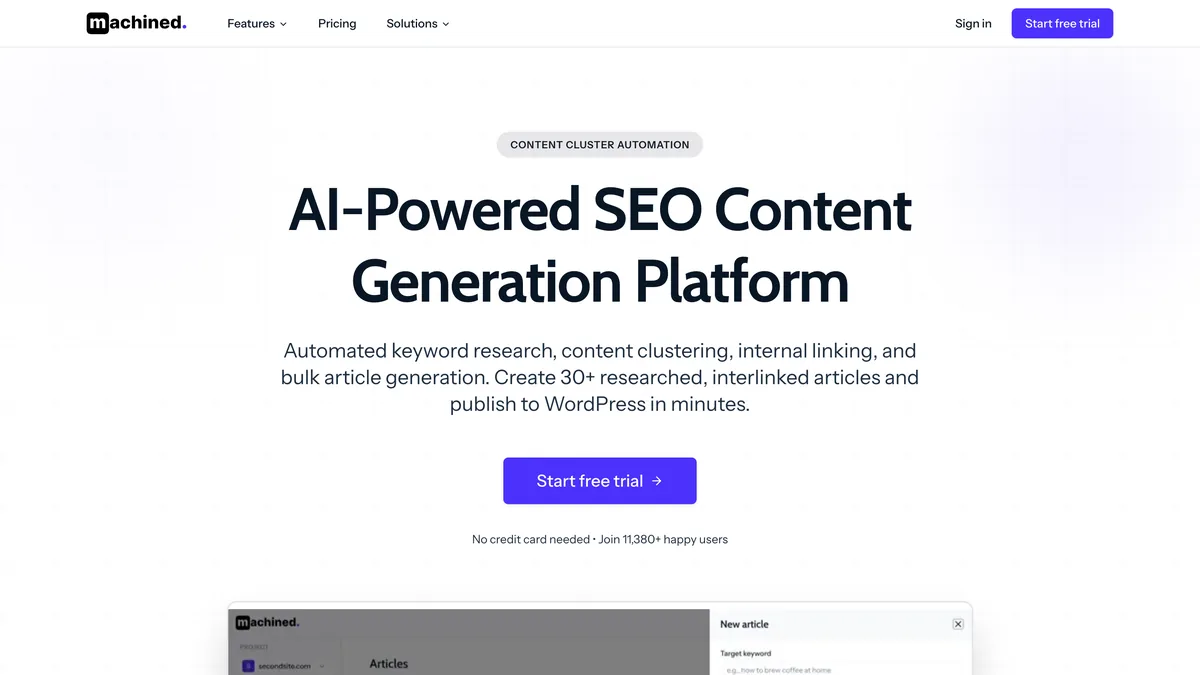
Machined AI approaches the brand-voice problem from a different direction entirely. Instead of giving you a draft to refine, it’s built for bulk: you set topics and guidelines, and it auto-generates entire articles on its own. That sounds appealing if you need to scale informational posts without getting hands-on with each one. But in practice, the output tends to run generic. We’ve found ourselves layering in our own expertise and stories on almost every piece, which erases the time savings the automation was supposed to deliver. The bottom line is that it needs your voice before it’s publishable, and the pricing makes that harder to swallow. You’re locked into a monthly subscription, unlike BabyLoveGrowth’s flexible credits, and that hurts if your output doesn’t justify the cost.
Junia AI takes a different route to the same outcome. Its monthly subscription does remove the credit-unpredictability headache from our introduction, which is a real plus. The tool generates long-form content with SEO suggestions baked in and even produces AI images, so it covers more of the production pipeline in one place. But the free tier is very limited, and the paid plans can feel steep for the consistency you actually get across drafts. Some pieces come out strong; others need heavy reworking. For an AI SEO article writer comparison, that inconsistency matters because you’re paying a flat monthly rate for output that varies.
When we stack these against BabyLoveGrowth, both Machined and Junia offer far more automation, but the content often lacks a human touch, and their subscription pricing keeps you committed longer than a credit-based model. Among automated SEO content tools, they’re worth a look if volume is your bottleneck. Just budget for the editing time either way.
Hike SEO and BabyLoveGrowth: Simpler Tools for the Long Run
Hike SEO tackles the unpredictable-credit complaint directly. Its pricing is flat-rate, so a solopreneur with a tight, predictable budget never gets surprised mid-month, a clear contrast to BabyLoveGrowth’s per-credit model that can spiral on long posts. The tradeoff shows up in the output. Hike’s AI writer walks you through a step-by-step process that’s genuinely beginner-friendly, but the content it produces is more of a starting point than a finished piece. You’ll need to flesh it out with your own detail and structure before it’s ready to publish. As one of the more affordable AI SEO tools we’ve looked at, Hike earns its keep if you know going in that the AI gives you a scaffold, not a draft.
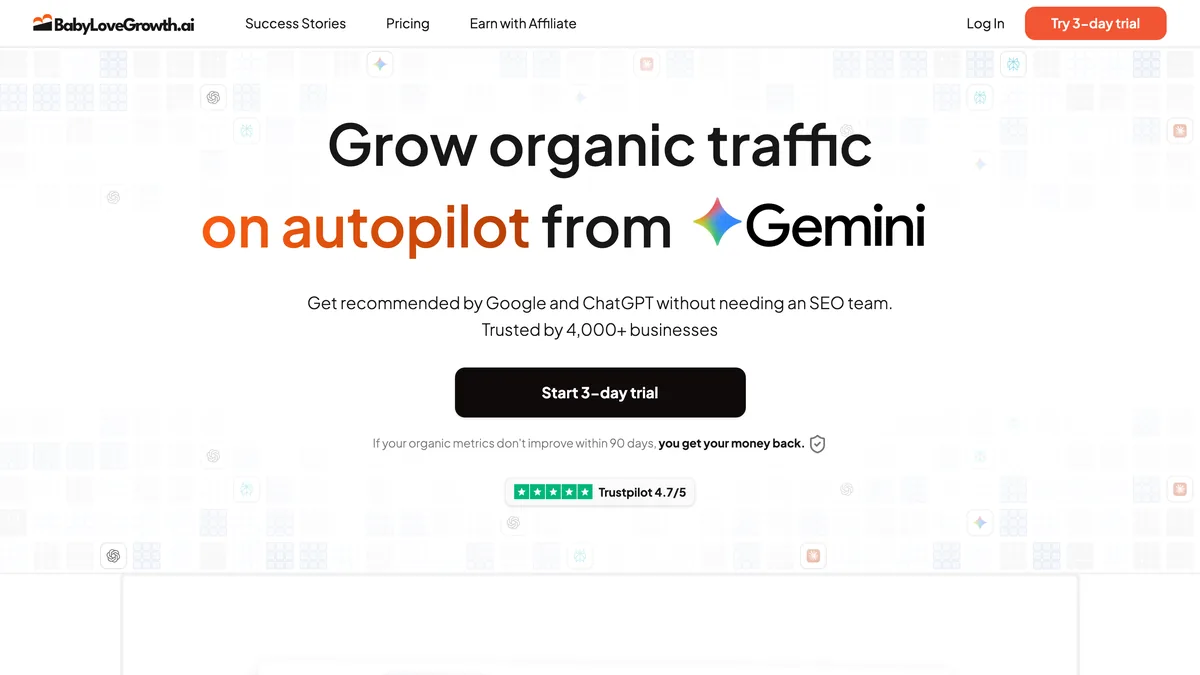
BabyLoveGrowth still holds its place as a lightweight option when you just need a quick draft. The credit system is flexible, but as we noted earlier, the quality often demands a second pass. The output-quality verdict is mixed at best: serviceable for short pieces, thin for anything substantial. On price, it’s credit-based and flexible, but that same flexibility makes it unpredictable when a long-form post burns through more credits than you planned for.
Neither tool is ideal for high-stakes content. Both serve best as idea starters or for very short, low-effort pieces where perfection isn’t the goal. If you’re weighing AI SEO tools for solopreneurs who want low friction and no surprises, they’re both reasonable. Just don’t expect either to carry your flagship content.
Side-by-Side Comparison and Our Recommendation
Here’s our SEO AI writer pricing comparison in one place. The table below distills each tool’s pricing structure and our verdict on output quality relative to the editing effort you’ll have to put in before publishing.
| Tool | Pricing model | Output quality vs editing effort |
|---|---|---|
| BabyLoveGrowth | Credit-based, flexible but can be unpredictable | Mixed; often needs a second pass |
| Surfer SEO | Per-article or per-seat | High quality; minimal editing |
| Search Atlas | Per-article or per-seat | Decent quality; moderate editing |
| Machined AI | Monthly subscription | Generic; needs your voice added |
| Junia AI | Monthly subscription | Inconsistent; steep for the value |
| Hike SEO | Flat-rate | Basic; needs fleshing out |
Here’s how we’d match each tool to a specific situation:
If you need publication-ready content without doing much editing yourself, Surfer SEO is our top pick. Its editor and scoring keep you aligned with what’s already ranking.
If you want an all-in-one SEO command center and can tolerate decent AI drafts, Search Atlas gives you more capabilities for the money.
If your goal is high-volume informational articles without writing them yourself, Machined AI fits, but be prepared to add your own voice to everything it produces.
If you only need occasional, quick drafts and don’t want to commit to a subscription, stick with BabyLoveGrowth.
No tool is perfect for every solo founder, but matching the tool to the specific limit you’re hitting is the fastest way to get your content working for you.



Leave a Reply