
Running a small business often means wearing every hat. Founder, marketer, product manager, support – yep, all of it. Mastering complex SEO tools or paying an agency thousands doesn’t fit that reality. I’ve seen that pressure sink momentum fast.
Hike SEO’s AI Kit aims to fix that. One app sets the strategy, shows the next tasks to do, and tracks results over time. Built for non-experts who still want real growth. No fluff, no maze of settings.
It won’t work overnight. Solid results usually show up after a few months of steady effort. That timeline matters, and it keeps expectations realistic.
If you’ve been searching for something straightforward but smart enough to cover the SEO basics, this review explains why Hike SEO deserves a look.
How Kit streamlines onboarding and builds your first 30‑day SEO plan
I’ve found Hike SEO Kit easy to set up. Start by adding your domain, then connect Google Search Console and Analytics if you’ve got access. Those connections give the Kit a look at current traffic and search visibility. It asks a few short questions about industry and location so recommendations match the market you actually serve. Then load any keywords you track, or let the Kit suggest new ones that fit your niche.
Within minutes, it builds a custom plan. No clutter. Just a ranked to‑do list based on impact and effort. Tasks hit the basics that move rankings: fix broken links and slow pages, add content that meets search demand, and polish pages that already get impressions.
Here’s the kind of tasks that show up:
- Technical fixes, like site speed and crawl errors
- Content topics mapped to target keywords
- On‑page updates for meta descriptions and headers
- Internal linking ideas to lift key pages
Each task shows an impact score and an effort estimate, so planning weekly work is straightforward.
When it’s time to write, the Kit drafts briefs for blog posts or service pages based on chosen keywords and search intent. Writers get exports with suggested headings, FAQs tied to real queries, plus meta title and description ideas. Drafting feels faster because the angle and structure are already mapped out.
Expect an hour or two at first to learn the layout and finish early tasks. After the first week, check‑ins often drop to about 30 minutes since the roadmap stays current and priorities are clear.
I like how the Kit calls out risky moves early, including keyword stuffing and thin pages, before they turn into headaches. The guidance tracks closely with Google’s rules, so the work stays clean and growth stays steady.
If the plan convinces you, check the current Hike SEO coupon code before subscribing rather than after.
Essential features for small teams, from keywords to reporting
I like how Hike SEO makes keyword tracking feel straightforward. Each plan covers a set number of keywords with daily or weekly updates, so ranking shifts never sneak past. The dashboard shows visibility scores and competitor movement in one place. No maze of menus.
The platform runs technical audits on its own. It flags missing titles, slow pages, 404 errors, and duplicate meta descriptions. It doesn’t stop at alerts. It gives step-by-step fixes, sorted by priority, so the most important jobs get done first.
Local SEO gets thoughtful support. Google Business Profile tasks sit front and center, and NAP details stay consistent across directories. It pings when something changes and tracks local keywords as well. Multi-location teams get templated location pages with on-page elements for each service area.
Content optimization feels practical. The editor grades target pages against selected keywords, then suggests tighter titles, smarter internal links, and semantic terms pulled from top results. Pages stay focused and relevant without guesswork.
Reporting stays light but complete. One click turns out a PDF or web report with keyword trends, traffic pulled from connected analytics, recent tasks, and next steps. It works for client updates or quick internal reviews:
- Keyword ranking changes over time
- Traffic highlights reflecting recent trends
- Tasks finished since last report
- Clear action items moving forward
Pricing and value compared with agencies and DIY tool stacks
Pricing for Hike SEO in 2025 sits between $74 and $149 a month. The exact number depends on tracked keywords, how many sites or seats are needed, and which features are turned on. Paying annually drops the monthly rate, which helps with predictable budgeting.
Here’s where the numbers stand out. Agencies often start around $18,000 a year and can reach $60,000. A DIY stack with Ahrefs or Semrush, plus a crawler and reporting tools, often lands near $200 to $400 a month. Hike SEO fits between those routes, with enough coverage for most needs without a heavy price tag.
Time costs matter. Kit’s weekly task list usually takes one to three hours. Valuing time at about $75 per hour puts labor at $300 to $900 a month. Even with that added in, total spend stays well below typical agency fees when the scope stays tight.
There are limits to note. Keyword tracking caps and project counts mean fast-growing sites may outgrow entry plans sooner than expected. Teams that need deep technical crawling or advanced link prospecting may still want extra tools.
Results tend to show when Hike SEO gets steady attention for three to six months with a tight focus on core pages. Main services, top blog hubs, and location pages make strong starting points. Spreading effort across everything at once slows momentum.
Quick rundown of what shapes total cost and value:
- Pricing bands based on keywords, sites, seats, and features
- Labor time at an estimated founder hourly rate, about 1 to 3 hours a week
- Plan limits that affect growth potential
This setup suits small businesses that want steady progress without draining budgets or calendars.
Pros, cons, and who Hike SEO is best for
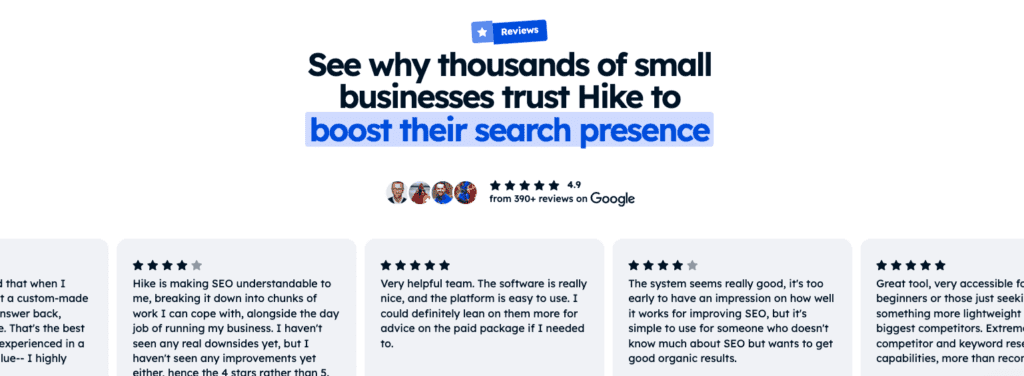
SEO feels less intimidating with Hike. The workflow is clear, the language is plain, and the next steps don’t feel like guesswork. That matters when a small business already has a hundred other jobs waiting. The Kit automates routine tasks so strategy stays on track. Local SEO basics and simple reports cover the essentials without fluff.
I don’t see it as a fix for every case. New users face a learning curve, and progress stalls if they stop early. Lower plans cap keywords and projects, so fast-growing sites hit ceilings sooner than they expect. Complex technical needs – JavaScript rendering issues or log-file analysis – sit outside its scope. Same for heavy link-building. Specialized tools or agencies still earn their keep there.
Best Fit:
- Local service businesses aiming to boost nearby visibility
- Niche e-commerce shops with smaller product catalogs
- Solo founders ready to dedicate weekly time blocks for steady progress
Not Ideal:
- Large content-heavy websites needing advanced crawl management
- Teams running aggressive digital PR or link acquisition programs
- Users already comfortable with Ahrefs, Semrush, or similar pro-level platforms
If this matches your situation, pick three priority keywords tied to core services. Choose two key pages and optimize them with the Kit’s weekly steps. Stick with it for 8 to 12 weeks. Then compare your starting points to current rankings and traffic.
This tight sprint builds momentum without spreading effort too thin. It also shows whether Hike fits your weekly rhythm before scaling up.
Leave a Reply