
The Daniel Mullins founder story starts with a solo developer who built the title “pretty much everything” himself, with only music, sound effects, and 3D art outsourced. He created a card game that sold more than a million copies by January 2022, according to publisher Devolver Digital, and took home Game of the Year at the 22nd Game Developers Choice Awards in 2022. Not bad for a project that launched on Windows on October 19, 2021, with no major studio behind it.
That success didn’t come from a bigger budget or a louder marketing push. It came from the game itself, specifically the way Inscryption keeps refusing to be what it appears to be. Mullins has described his design instinct as hunting for moments where a game does something it’s “not supposed to do, or ever does,” and that instinct became the product’s entire identity. The card game that looks like a moody cabin-bound roguelike keeps reframing itself, and every reframe is the point.
That raises a genuinely awkward question for anyone trying to sell it: how does a solo creator market a game whose core appeal is a secret? Show too much and the surprise evaporates. Show too little and nobody knows why it matters. Mullins’ answer, across three games, is that a distinctive position can beat a bigger budget when the creator builds something ownable and repeatable, a gimmick that turns into a signature.
Early Roots in the Daniel Mullins Founder Story
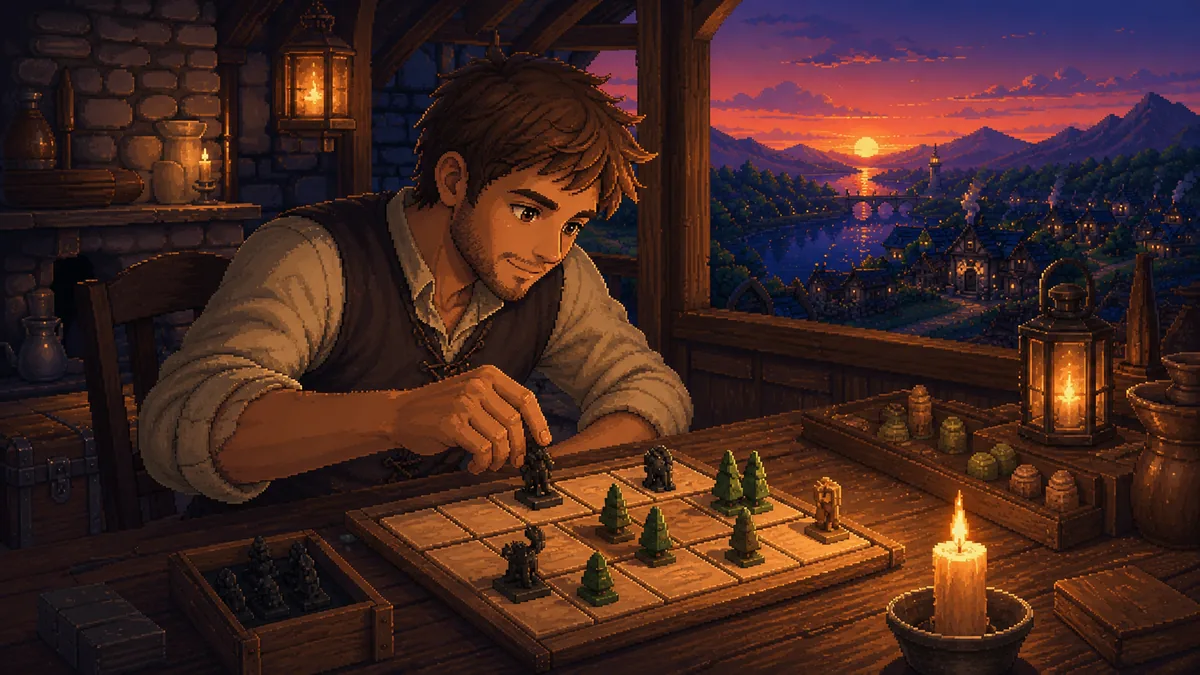
Daniel Mullins’ game formula didn’t appear fully formed. It grew from years of tinkering that started long before anyone had heard of the developer. Mullins made games as a child, beginning with paper-based designs before moving into Flash and RPG Maker, and he picked up programming properly as a computer science undergraduate. The engines changed as he learned: XNA, then Cocos2D, then Unity. After graduating, he spent a couple of years as a programmer at a handful of Vancouver-based game studios before striking out on his own with his first commercial indie release, Pony Island, in 2016.
That game established the pattern that would define everything after it. Pony Island’s appeal was that it was not what it appeared to be, a twist that became a calling card rather than a one-off trick. But the origin of Inscryption, the project that would eventually make his name, came from somewhere far more ordinary: a 48-hour game jam in 2018.
Inscryption began life as Sacrifices Must Be Made, built for Ludum Dare 43 under the theme “sacrifices must be made.” Mullins had recently gotten back into Magic: The Gathering, and the game’s sacrifice mechanic sat squarely in his head as he started the jam. The core systems, a tug-of-war victory condition, sacrificing cards, and lane-based combat, were “rapidly created during the 48-hour game jam” with little planning. What emerged was crude but compelling enough that Mullins published it free on itch.io on December 31, 2018, and the positive response convinced him to expand it into a full game once he’d finished his second title, The Hex. The jam prototype wasn’t the finished product, but it carried the seed of everything that made the eventual release distinctive.
How the Pony Island Developer Built a First Shock
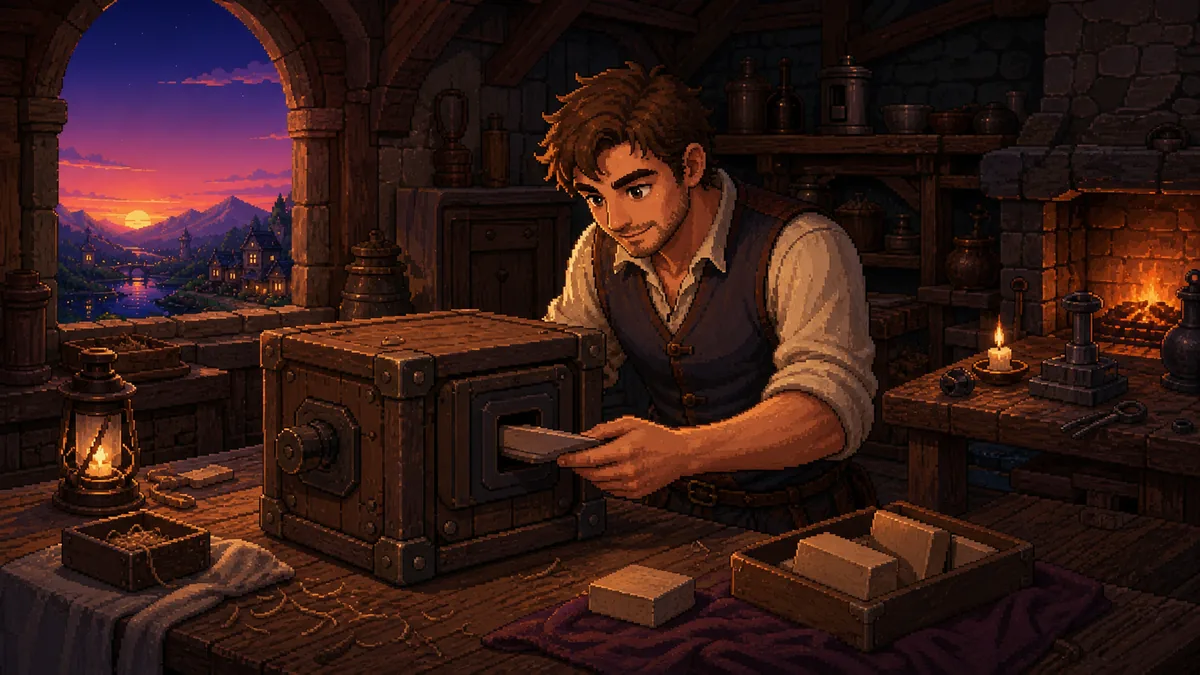
The Pony Island developer’s first commercial indie game launched in 2016, right after the Vancouver studio years and right before Mullins settled into full-time solo work. Pony Island looked, on the surface, like a cheerful arcade game about a pony jumping over obstacles. That surface was the joke. The real game underneath was a dark, fourth-wall-breaking puzzle about a malevolent AI trapping a soul inside a corrupted arcade cabinet, and the contrast between the candy-colored exterior and what lurked beneath became the point.
Its most talked-about moment remains the fake Steam popup. Midway through the game, a notification slides in from a real Steam friend, one of the player’s actual contacts, asking “Why did you send that?” The player never sent anything. The game manufactured the entire exchange, including the friend’s name, for a moment Mullins himself calls “socially horrifying.” It was a cheap trick, a small breach of trust between the player and the machine that worked precisely because it felt real.
Mullins has said since that he has spent his career chasing that kind of “cheap shock value,” moments where a game does something it is not supposed to do. The Steam popup is the cleanest expression of the instinct that defines his catalog: a game quietly reaching outside its own frame to touch the player’s actual life. It is not a jump scare or a well-written twist. It is a violation of the unspoken contract that says a game stays inside its window.
That single moment did more than make Pony Island memorable. It set the expectation for everything Mullins would release afterward. Players who finished Pony Island learned that his games do not play it straight, and by the time The Hex and Inscryption arrived, the audience came in already looking for the hidden layer. The gimmick had become a signature, and the signature had become the reason to show up.
The Hex: Doubling Down on a Twist or Getting Typecast?
Mullins’ second commercial release, The Hex, arrived in 2018 and doubled down on the exact instinct that made Pony Island work. Both titles, in Mullins’ own words, “deliciously subvert your expectations.” The Hex took that idea further, dropping players into a tavern where six characters sit around telling stories about the games they star in, each narrative a different genre pastiche that eventually collapses into something stranger. It was the same trick, applied with more confidence and a larger canvas.
The problem with building a career on surprises is that the audience starts expecting them. By the time The Hex shipped, Mullins had made two games in a row that refused to play it straight, and players who loved Pony Island came to The Hex already watching for the rug pull. Mullins felt that pressure acutely when he started work on Inscryption. He said there “are certain expectations to have something that doesn’t just play it straight,” and that fans “would be disappointed if it was exactly what it looked like.”
That is a real bind for a solo developer. A bigger studio can pivot genres, hire different talent, or release enough volume that no single game carries the weight of a reputation. Mullins had no such buffer. Every release was his whole identity, and the more he leaned into the twist, the more he risked being typecast as a one-trick developer, someone whose only move was hiding a different game underneath the advertised one.
Mullins chose to lean in anyway, and he was honest about the cost. He acknowledged that the Inscryption ending is “a little similar to my previous games, maybe I’m falling back on old tricks,” noting that something comparable exists in Pony Island and The Hex. He did not pretend the pattern was accidental or that each game was a radical departure. He treated the meta style as a feature rather than a limitation, betting that a recognizable signature was worth more than the risk of seeming repetitive.
The bet looks obvious in hindsight, but it was risky at the time. The Hex had been well received, but it had not made Mullins a household name, and a third game built on the same structural foundation could have read as diminishing returns. Instead, the expectation itself became part of the experience. Players who knew Mullins’ history did not have the surprise spoiled; they had the anticipation sharpened. The question was no longer whether Inscryption would subvert expectations, but how, and that question turned out to be a more powerful hook than any single twist could have been.
From Sacrifices Must Be Made to the Full Inscryption Vision
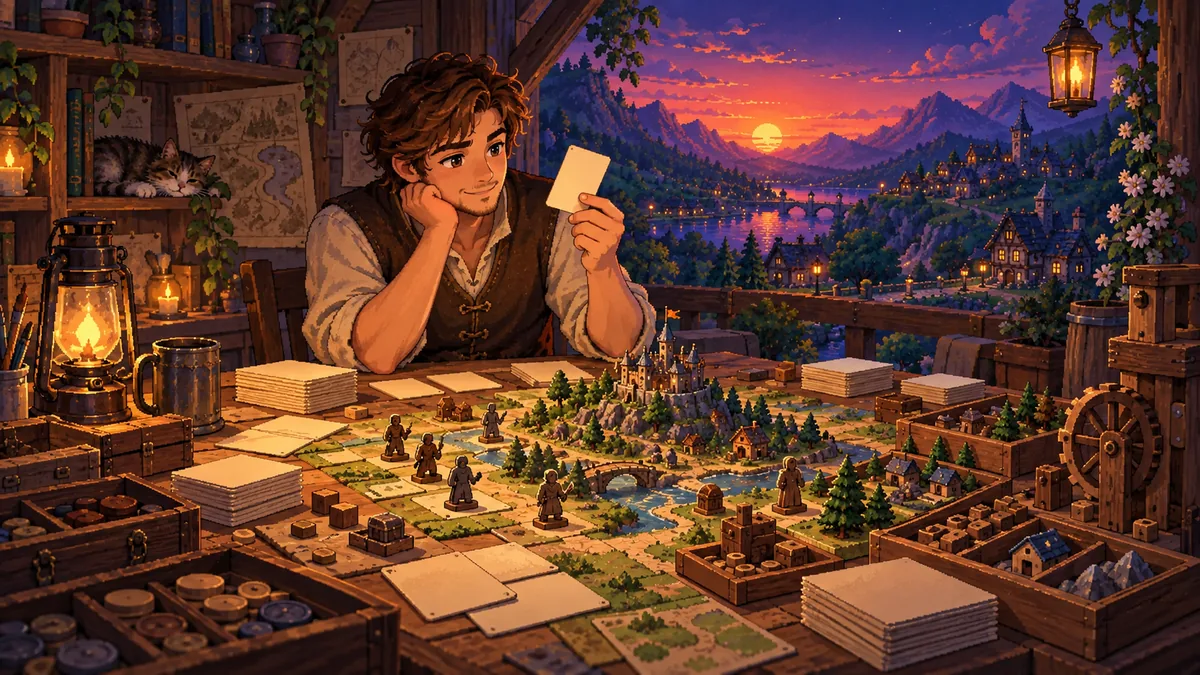
The Inscryption developer did not set out to make a full game at all. When the Ludum Dare prototype caught on, Mullins initially considered folding Sacrifices Must Be Made into a small anthology of three games, unsure there was a path to a complete release. The ideas that eventually made Inscryption what it became emerged during development rather than in any upfront plan, including a full-motion video component that ended up in the final structure.
The first act stayed close to the cabin-bound roguelike that the jam had established, but Mullins pushed the sacrifice theme much further than the original prototype. He described the escalation plainly: “maybe you sacrifice your body parts somehow… If you chop off your hand, then you can’t hold the cards. You cut out your eye and you can’t see half the playing field.” The mechanic stopped being a resource cost and became a physical consequence, one that made the player’s own body part of the game’s economy.
Part two took a decisive turn, and its inspiration came from an unexpected place. Mullins drew on the Pokémon Trading Card Game for Game Boy Color, specifically the idea of “de-making Inscryption into 2D” as core lore. The change was a narrative device: the first act’s antagonist, Leshy, became one of four Scrybes, each representing a different version of the game. The 2D segment was the story’s central conceit made playable.
The full vision was bigger than what shipped. Mullins originally planned full 3D sections for all four Scrybes, but he cut the sections belonging to Magnificus and Grimora, the two who never got their own acts. His reasoning was practical: he “didn’t think people had the stomach for three more different 3D sections” and had no interest in pushing the game another year or two. Instead of leaving those characters thin, he compensated by giving them significant narrative roles, so the game’s structure still felt complete even where the playable content was trimmed. The result was a game that felt deliberately shaped rather than unfinished, with each cut serving the pacing of the whole.
Metafiction Game Design: Making the Game Not What It Appears
The design philosophy behind Inscryption is a study in controlled misdirection, and metafiction game design was the discipline Mullins was practicing whether he named it or not. When the game was first announced, he called it a horror game, a label he later reconsidered. The hesitation was telling: the cabin sequence is unsettling, certainly, but horror undersells what the game actually does. A friend told Mullins he had nightmares from the menacing figure sitting across the table, and that reaction confirmed the atmosphere was landing the way it needed to.
His pre-Devolver marketing tagline captured the balancing act: “an inky black card-based odyssey.” The phrase advertised the card game surface without giving away a single layer beneath it, a small piece of copy that did real work. It hinted at darkness and journey, but said nothing about the game’s habit of tearing its own frame open. That restraint carried through to the art direction. The Leshy character came from a “forest demon” Google search, which led Mullins to the Slavic mythical leshy, a haunting painting of which he showed to main 3D artist David Hagemann. One image set the visual identity for the game’s most memorable antagonist.
Even the smallest early decisions pointed the same way. The Beaver was the first official card designed, and its style never changed between that initial pass and the release build. A single card, drawn before almost anything else existed, established the visual language the entire game would follow. That consistency makes the metafiction work. The game can only surprise players by first convincing them of its surface, and every element, from the tagline to the card art, was built to make that surface feel solid and complete.
Selling a Secret Without Spoiling It
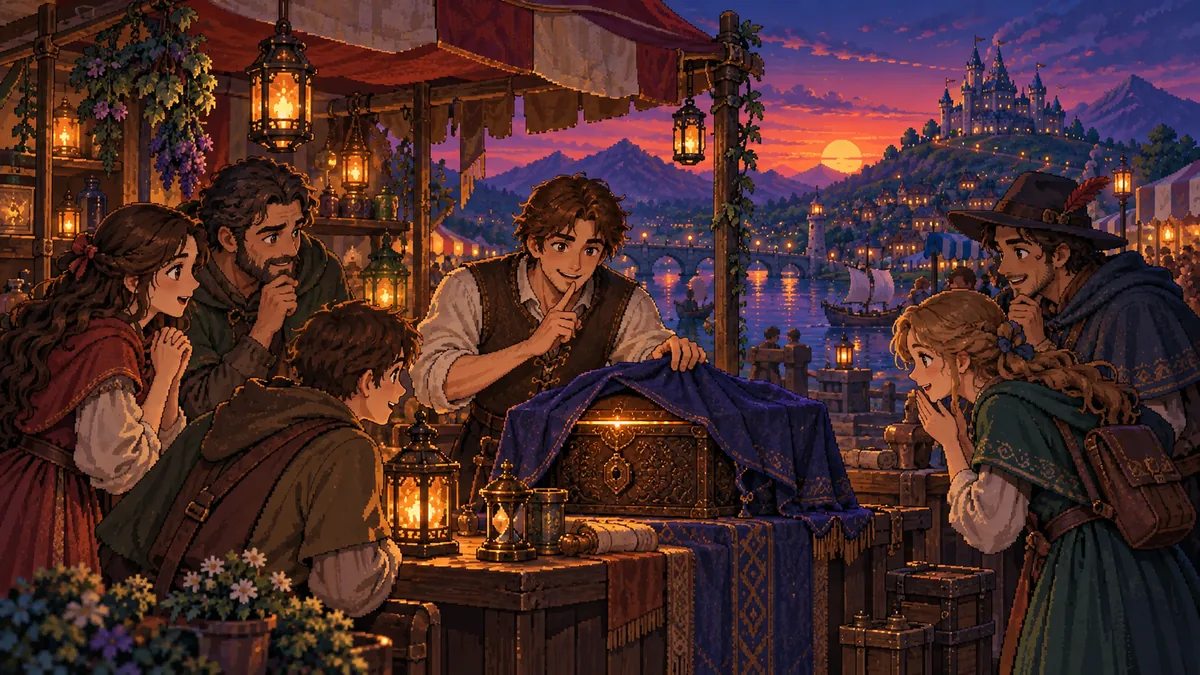
The marketing problem Mullins faced was almost architectural in its difficulty. The core selling point of Inscryption was a surprise, and a surprise cannot be shown in a trailer or a screenshot without ceasing to be one. Mullins himself framed the stakes bluntly, saying that “simply having a deckbuilding roguelike in the cabin with creepy puzzles wasn’t gonna be good enough, or not be enough of a twist for people who had really liked my previous games.” That sentence is the whole dilemma in miniature: the audience had been trained by Pony Island and The Hex to expect the rug pull, so a straight game would have disappointed them, yet showing the twist would have destroyed the very thing they were waiting for.
The reputation Mullins had built as a solo indie game developer did most of the work. He acknowledged the expectations directly: “because of my past two games, I feel that there are certain expectations to have something that doesn’t just play it straight. I think fans would be disappointed if it was exactly what it looked like. That’s not what they’re looking for from me,” so the campaign leaned on tone, mystery, and that very reputation rather than on footage of the twist. The “inky black card-based odyssey” tagline and the cabin imagery sold atmosphere, not plot, and the developer’s name itself became a signal that something was hiding underneath.
The decision to sign with Devolver Digital, Mullins’ first publisher after years of self-publishing, changed the practical machinery of the release. Devolver brought professional QA, trailer-making talent, and made console ports feasible, which mattered for a game that would eventually reach multiple platforms, but the central challenge of hiding the twist while selling the game remained Mullins’ own. A publisher can polish a trailer and fund a port; it cannot solve the fundamental paradox of advertising a secret. That problem had to be answered by the design itself, and it was, because the game’s reputation did the marketing that no trailer could.
Inscryption’s Success: Sales, Reception, and the Numbers
The Inscryption success story is, unusually for a game built on secrets, one that can be told in hard numbers. Devolver Digital reported 100,000 copies sold three days after release and 250,000 total shipped units nine days after launch. GameSensor estimated roughly $12 million in Steam sales and about 1 million copies in the first month, with over 70% of players English-speaking, 11% Chinese, and the rest spread across German, Spanish, and other languages. Devolver’s H1 2022 financial report put the game at 1.46 million units sold since its October 2021 launch.
The reception matched the sales curve. Inscryption was nominated for Game of the Year at the 25th Annual DICE Awards and won Game Design at the 18th British Academy Games Awards. Metacritic scored it 85/100 on PC and 87/100 on PS5, and Steam reviews sat at “overwhelmingly positive” with over 95% recommending the title.
Those figures matter beyond the obvious. A solo developer with a self-published first game and a modestly received second one jumped to a million-plus seller in months, and the only marketing asset was the developer’s own reputation for hiding something. These numbers are the clearest proof that a distinctive position beats a bigger budget: the game’s budget bought one person’s time, and its position bought millions of players.
Why a Distinctive Position Beat a Bigger Budget
The commercial record makes the case for indie game differentiation. Per GameSensor, Inscryption accounted for more than 95% of total sales across all of Mullins’ games, and it pulled in almost 200x more first-month Steam installations than Dread X Collection 2, the anthology of short games he contributed to around the same period. Those two numbers say the same thing from opposite directions: the project that leaned hardest into a singular, unapologetic identity absorbed nearly all of the audience’s attention and money.
The competitive edge was never budget or scale. Mullins spent most of his career making games alone or with a handful of contractors, and a bigger team or a louder launch would not have produced anything like Inscryption’s trajectory. What he owned instead was a specific, hard-to-copy mechanic: games that break their own rules in ways players cannot predict. That is not a feature another studio can purchase or bolt onto a project. It is a discipline, a willingness to let a game reach outside its own frame, and it compounds with every release.
That consistency built a lasting advantage. Once players associated Mullins with games that do not play it straight, each new release arrived with a built-in audience already hunting for the hidden layer. Pony Island taught that audience the pattern. The Hex reinforced it. By the time Inscryption launched, the marketing barely had to explain what the game was, because the developer’s name had become shorthand for the experience. A bigger budget cannot buy that kind of trust, and a competitor cannot copy it, because the surprise only works when the audience does not know what is coming.
Mullins has been explicit about the durability of the approach. “I think I just wanna keep doing what I’m doing. I’m not bored of it yet and I don’t think the fans are,” he said, and the sentence is a small thesis on how a gimmick matures into a creative identity. What reads as a trick in the first game becomes a signature by the third, and what looks like a signature by the third becomes a reason to follow the developer into the fourth. The audience doesn’t merely tolerate the pattern. They show up specifically because of it.
Daniel Mullins’ Next Act: Pony Island 2 and Turning a Gimmick Into a Signature
The next Daniel Mullins game was confirmed for a Gamescom 2026 showcase, and the details suggest the pattern is intact and deepening. Pony Island 2: Panda Circus will arrive as a sequel to the 2016 original, though Mullins has said its systems align closer to The Hex and Inscryption than to the game whose name it carries. The narrative follows an ancient crusader damned to hell, tormented by the Chinese god of death King Yan, a premise that keeps the dark, meta-layered storytelling front and center.
Mullins has been characteristically cagey about what the game actually does, and his description of it doubles as a mission statement for his entire career. “Expect the unexpected, but you can probably expect to expect the unexpected,” he said. “It’s gonna be the same kinda bull that you’re used to.” The joke lands because it is true on both levels: the audience does know what to expect from him, and they have no idea what form it will take. That tension, between the familiar signature and the unguessable execution, is precisely the thing players keep showing up for.
For solo founders, the lesson is simpler than it looks. A solo founder cannot outspend a bigger competitor, and Mullins never tried. What he did instead was out-position them with a point of view so specific that audiences learned to look for it. The first game established the trick. The second game proved it was not a fluke. The third game turned it into a reason to buy sight unseen. By the time Inscryption launched, the developer’s name had become the marketing.
The real takeaway from a career built on hiding games inside other games is that a distinctive position beats a bigger budget, and a gimmick becomes a signature across the second and third products. Mullins’ catalog is the proof, and Pony Island 2 looks set to test whether a fourth product can make the signature feel like a tradition rather than a repetition. If his track record holds, the only safe prediction is that nobody will see it coming.
Leave a Reply