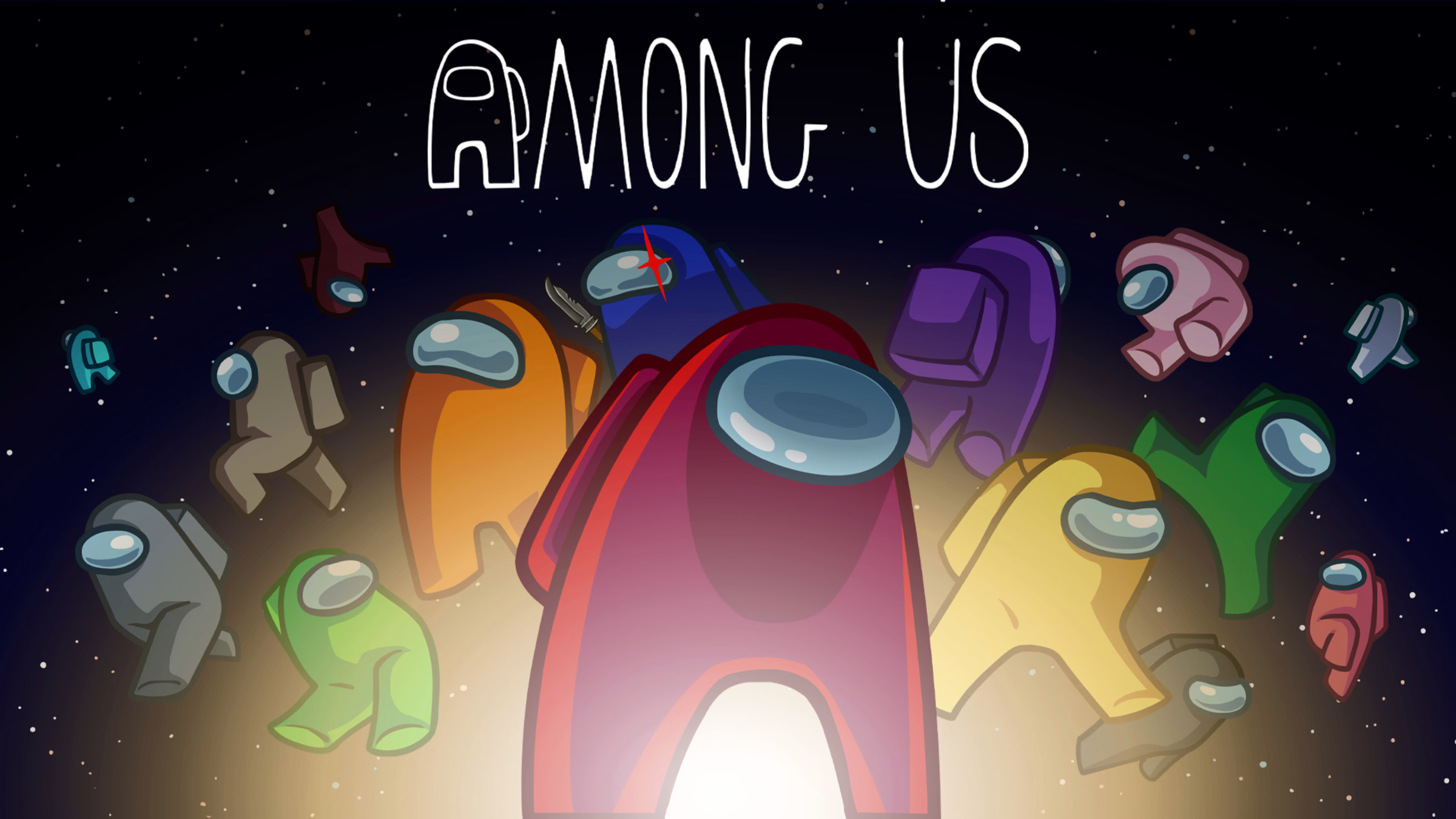
Shortly after Among Us launched in 2018, it averaged 30 to 50 concurrent players, according to Wikipedia. Most studios would have written the project off as a failed experiment and moved on to something else. The Innersloth founder story is what happened instead.
Then, on September 26, 2020, the game hit an all-time Steam peak of 438,524 concurrent players, per statistics trackers rec0ded88 and headphonesaddict. Nielsen’s SuperData later reported roughly 500 million monthly active users in November 2020, calling it “by far the most popular game ever in terms of monthly players.” The gap between those two numbers is one of the widest in the history of interactive entertainment.
How Among Us became a hit two years after launch is a story about a three-person team refusing to let a quiet launch decide their product’s fate. The team was Marcus Bromander, Forest Willard, and Amy Liu, who met at Oregon State University. Perfect timing and luck played a part, but the bigger factors were the team’s decisions. Innersloth kept updating the game through its dormant years, built cross-platform play before it was fashionable, and eventually made the counterintuitive call to cancel a sequel in favor of improving the original.
None of those decisions looked wise at the time. Each one kept the game alive long enough for distribution to finally arrive.
Who Made Among Us
Among Us was developed and published by Innersloth, an American indie studio based in Redmond, Washington. The company was founded in 2015 by Forest Willard and Marcus Bromander, who also goes by the handle PuffballsUnited, with Amy Liu joining as an artist shortly after the studio took shape. The three founders met while studying at Oregon State University, and their complementary skills formed the core of the studio for years.
Bromander handled the artist, animator, and game designer duties, while Willard worked as the sole programmer and head of business management. Liu rounded out the team as an artist, designer, and animator while also taking on promotional and social tasks, per Wikipedia and Screen Rant. Before Among Us, Bromander had built a following on Newgrounds by creating the Henry Stickmin series starting in 2008. Innersloth’s first release was Dig2China, which launched on Newgrounds in January 2015. The studio went full-time indie in late 2018 to focus on Among Us.
Innersloth operates as an LLC, and its structure reflects a deliberate preference for smallness. After the game took off, the studio employed five programmers, two artists, and one community director, according to the Innersloth press kit. The developers rarely meet in person and prefer remote work, an arrangement that predates the pandemic and has remained the studio’s default way of operating even after the game’s success made larger teams feasible.
Where the Innersloth Founder Story Begins
The idea for Among Us traces back to Marcus Bromander’s childhood, spent playing the party game Mafia with friends. That social deduction format, where players secretly assign roles and try to root out the impostor among them, stuck with him for years. When it came time to build a game around it, he also drew on the paranoid, shapeshifting tension of John Carpenter’s The Thing, a film whose central question, who can you trust, maps neatly onto the multiplayer chaos Bromander wanted to create.
Development began in November 2017, but not as a full-time endeavor. Bromander was still working on The Henry Stickmin Collection, the long-running Newgrounds series that had built his following in the first place. He paused that project to build the first map for the new game, a spaceship he named The Skeld. The name, which appears to be a play on the word “skeleton,” fit the game’s stripped-down ambitions at the time.
Those ambitions were modest. Among Us was originally conceived as a mobile-only local multiplayer experience with a single map and no audio at all. The lack of sound was a practical starting point, not a design statement. Forest Willard later added sound effects to give the game some atmosphere. The plan was simple: a small, self-contained party game for people in the same room, passing one device around or connecting over local networks.
The team’s decision to go full-time indie in late 2018 was a direct response to Among Us. Innersloth had operated as a side project studio for years, releasing games on Newgrounds and building a small but loyal following. When the Among Us prototype showed promise, the three founders committed to it completely, trading the safety of other income streams for the chance to see the game through.
Three people, two of them handling most of the design and programming, one handling art and social media, decided to bet their livelihoods on a mobile party game with no audio, one map, and a local multiplayer focus. Nothing about the pitch suggested a cultural phenomenon in waiting. It suggested a niche title for a niche audience, and the team was fine with that.
Why Did Among Us Get Popular
The question of why Among Us got popular has a straightforward answer: people watched other people play it. The game’s breakout began in July 2020, when Chance “Sodapoppin” Morris, a Twitch streamer with a large and loyal audience, started playing Among Us on his channel. Morris is widely credited as the catalyst for the game’s explosion on the platform, and the timing mattered as much as the content. Millions of people were stuck at home during the COVID-19 pandemic, looking for ways to connect with friends and strangers alike, and a social deduction game that encouraged talking, laughing, and accusing one another fit that moment perfectly.
Other prominent Twitch streamers and YouTubers picked up Among Us, and the game’s inherently social format proved ideal for streaming. Watching a group of friends argue over who the impostor was turned out to be just as entertaining as playing the game, and the format rewarded collaboration between creators who could invite each other into the same lobby. By September 2020, the game had reached its streaming peak, drawing 765,893 concurrent Twitch viewers and averaging 204,634 viewers that month, according to statistics tracker rec0ded88. Those numbers placed Among Us among the most-watched games on the platform at the height of its popularity.
The commercial scale matched the streaming frenzy. Among Us became the most downloaded game of 2020, with 264 million downloads worldwide and 41 million in the United States, per headphonesaddict. That figure is especially striking given that the game had been available for two years before the surge began. The downloads did not represent a new product finding its audience. They represented an old product finally being seen.
The Quiet 2018 Release and Early Player Numbers
The history of Among Us begins with a launch that almost nobody noticed. The game released on June 15, 2018, on Android and iOS under the AppID “spacemafia,” followed by a Steam release on November 16, 2018. There was no press tour, no trailer drop timed for maximum attention, and no launch-day event. There was just a small mobile party game from a three-person studio, appearing in app stores without fanfare.
The launch numbers from 2018 tell the story plainly. In its first six months, the Steam concurrent player count stayed below 100, according to helplama and headphonesaddict. By December 2018, the average concurrent count was 2, with a peak of 17. The following month, January 2019, the average was 4.7, with a peak of 37.
Marcus Bromander has been candid about why the launch went the way it did. He blamed the poor release on Innersloth being “really bad at marketing,” per Wikipedia. The studio had built a following on Newgrounds over the years, but that audience did not translate into launch-day visibility for a mobile game with no advertising push behind it. Among Us arrived with the profile of a hobby project, and the market responded accordingly.
What kept the game alive through those months was not momentum, because there was none. The team nearly abandoned the project multiple times, according to Wikipedia and Screen Rant, and only continued because of a “small but vocal player base.” That handful of players, spread across platforms and time zones, was enough to convince Innersloth that the game was worth another patch, another fix, another small improvement. Most teams would have read the numbers as a verdict and moved on. Innersloth read them as a starting point.
Updating Through the Dormant Years
Forest Willard has been blunt about why Innersloth kept going. The team “stuck with [the game] a lot longer than we probably should have from a pure business standpoint,” he said, per Wikipedia. That admission cuts against every conventional piece of game industry advice, which says to cut losses when a product fails to find an audience. Innersloth did the opposite, shipping updates as often as once per week through the game’s quiet period.
Those frequent patches were not dramatic additions. They were small, steady improvements that kept the game alive and kept the small player base coming back. The updates snowballed: each patch brought a few players back, those players told friends, and the trickle became a current long before the 2020 explosion.
The team also made structural changes that improved the multiplayer experience during the dormant years. They increased the maximum player count, added four servers and three regions to handle a growing international audience, and implemented longer multiplayer codes so players could share lobbies more reliably. None of these were headline features, but together they made Among Us a more stable and welcoming game to return to. Cross-platform play was supported from the Steam release in November 2018, which meant mobile and PC players could share lobbies from the start, a decision that would prove essential when the streaming wave arrived.
New content followed the technical improvements. The second map, MIRA HQ, was released on August 8, 2019, and the third map, Polus, followed on November 12, 2019. Both were priced at US$4 via in-app purchase, then reduced to US$2 on January 6, 2020, and finally made free on June 11, 2020. That pricing arc tells its own story about the team’s priorities: as the game gained visibility, Innersloth removed barriers to entry rather than raising them.
The Among Us launch story is often told as a sudden, lucky break in 2020. But the two years of quiet iteration that preceded it were the reason the game was ready to explode when the moment arrived. By the time streamers started picking it up, Among Us had three maps, cross-platform play, improved servers, and a player base that had been gently growing for months. The infrastructure was in place.
The Cancelled Sequel and the Streamer-Driven Explosion
By the time Among Us exploded in mid-2020, the game’s infrastructure was buckling under the weight of its new audience. Servers strained, cheaters proliferated, and the team found itself scrambling to keep pace with a player base that had grown from dozens to millions in a matter of weeks. Innersloth chose to double down on the game rather than abandon it, and the decisions the developers made during that chaotic stretch would define its trajectory for years.
The first move was announced in August 2020: Among Us 2, a sequel that would rebuild the game from the ground up. The original codebase was never designed to handle the scale it was now operating at, and a fresh start would give the team room to implement the features players were demanding. But on September 23, 2020, just weeks after the announcement, the sequel was cancelled.
The reason Innersloth gave was direct: the original codebase was “outdated and not built to support adding so much new content,” per Wikipedia and BBC. Rather than split the player base between two versions of the same game, the team decided to move all planned sequel content into the original Among Us. Every feature that had been earmarked for Among Us 2 would instead arrive as updates to the game people were already playing.
A sequel would have fragmented the community, forcing players to choose between the original and the new version. By folding everything into one product, Innersloth kept the existing player base intact and concentrated their development effort on a single codebase. It was a strategic choice that prioritized long-term cohesion over the short-term revenue bump a sequel typically generates.
The cancellation announcement came bundled with a list of immediate fixes. The team said it would address the server issues that had plagued the game during its rapid growth, tackle the widespread cheating that had become a serious problem, and implement a ban system to deal with disruptive players, according to Wikipedia. These were not cosmetic promises. They were recognition that the game’s success had created real technical and social problems that needed solving before the moment passed.
By the time Among Us 2 was cancelled, the game had become the third most popular title on Twitch and surpassed 10 million downloads on Steam, per The Curated Culture and BBC. This was not a studio quietly shelving a project because it failed. It was a team choosing to consolidate its resources around a product that had just become one of the most played games in the world.
What Solo Founders Can Learn from Among Us
For solo founders, the Among Us story offers something more useful than inspiration: a working model for how a product with a quiet launch can still become a success years later. The specific circumstances, a three-person team, a global pandemic, a streaming wave, are not replicable. The underlying principles are.
Listening to early users matters even when the numbers are tiny. Innersloth nearly abandoned Among Us multiple times and kept going only because of a “small but vocal player base” that showed up consistently, reported bugs, and asked for more. Those players didn’t generate revenue in 2018 or 2019. They did signal that the core loop worked, and that signal was worth more than any launch metric.
Over-scaling after a single hit can destroy what made the product work. After Among Us exploded, Innersloth made only two new hires to handle its newfound fame. The studio stayed small by design, kept its remote-first structure, and avoided the pressure to grow into something it was never meant to be. For a solo founder, the lesson is that a windfall does not obligate expansion. It can just as easily fund continued focus.
Reinvesting in an existing product beats chasing a fresh launch. The cancelled sequel is the clearest example of this in the whole story. Instead of splitting the audience between an old game and a new one, Innersloth folded every planned sequel feature into the original, keeping the player base together and concentrating its effort on one codebase. The 2020 wave landed on a game that had been steadily improved for two years, not on a product that had been abandoned for a sequel.
Distribution can arrive years after the product is ready, but only if the product is still alive. Among Us was updated nearly every week between 2018 and 2020, which meant that when streamers finally found it, there was a polished game with cross-platform play and multiple maps waiting for them. The lesson for solo founders is blunt: the work done in the quiet years is what determines whether a late distribution opportunity can be seized. A product kept alive and improving is positioned to catch a wave whenever it comes. A product left to rot is not.
The Among Us story does not guarantee that every patient indie game will find its moment. It proves that a slow launch is not a verdict on a product’s future, and that staying alive, staying focused, and staying responsive to a small audience are the conditions under which a delayed breakthrough becomes possible.
The Real Meaning of a Failed Launch
The numbers attached to Among Us today look nothing like the ones from its launch window. The game earned $86 million in its first three years, with the highest single-month player spending of $24.5 million recorded in October 2020, according to helplama. The United States accounted for $54.6 million of that total, a 63.4% share that reflects how deeply the game embedded itself in American streaming culture. By the end of 2025, total downloads had surpassed 720 million, per statistics tracker rec0ded88.
Those figures are worth setting against the game’s actual launch. A product that averaged two concurrent Steam players in December 2018 went on to generate eight-figure revenue months and hundreds of millions of downloads.
The team’s investment did not stop when the streaming wave crested. The fourth map, the Airship, released on March 31, 2021, drawing on the Henry Stickmin universe that had built Marcus Bromander’s following on Newgrounds more than a decade earlier. A major update on June 15, 2021, timed to the game’s third anniversary, added new colors and 15-player lobby support, according to Wikipedia. These were not the moves of a studio coasting on a moment. They were the moves of a team that had spent years treating the game as a living product and saw no reason to stop.
The industry took notice in ways that went beyond player counts. Among Us won The Game Award for Best Multiplayer 2020 and Best Mobile 2020, and the Golden Joystick Breakthrough Award 2020, per the Innersloth press kit. Those honors arrived at the height of the game’s popularity, but they validated something deeper: a three-person team that had refused to abandon a product the market had ignored for two years.
A failed launch means far less than the industry assumes. A quiet release is a starting condition, not a verdict. It tells creators where the product begins, not where it can end. The launch numbers for Among Us were bleak, and they were also irrelevant, because the team kept shipping. Every patch, every server improvement, every new map kept the game alive long enough for distribution to finally arrive.
The real meaning of a failed launch, then, is that it is only permanent when the creators stop. Among Us failed quietly for two years and became one of the most successful games ever made because three people in Washington state refused to let a slow start decide their product’s fate. That is the lesson every indie founder should carry: the market’s initial silence is not the final word. The final word belongs to whoever is still shipping when the audience finally shows up.

Leave a Reply