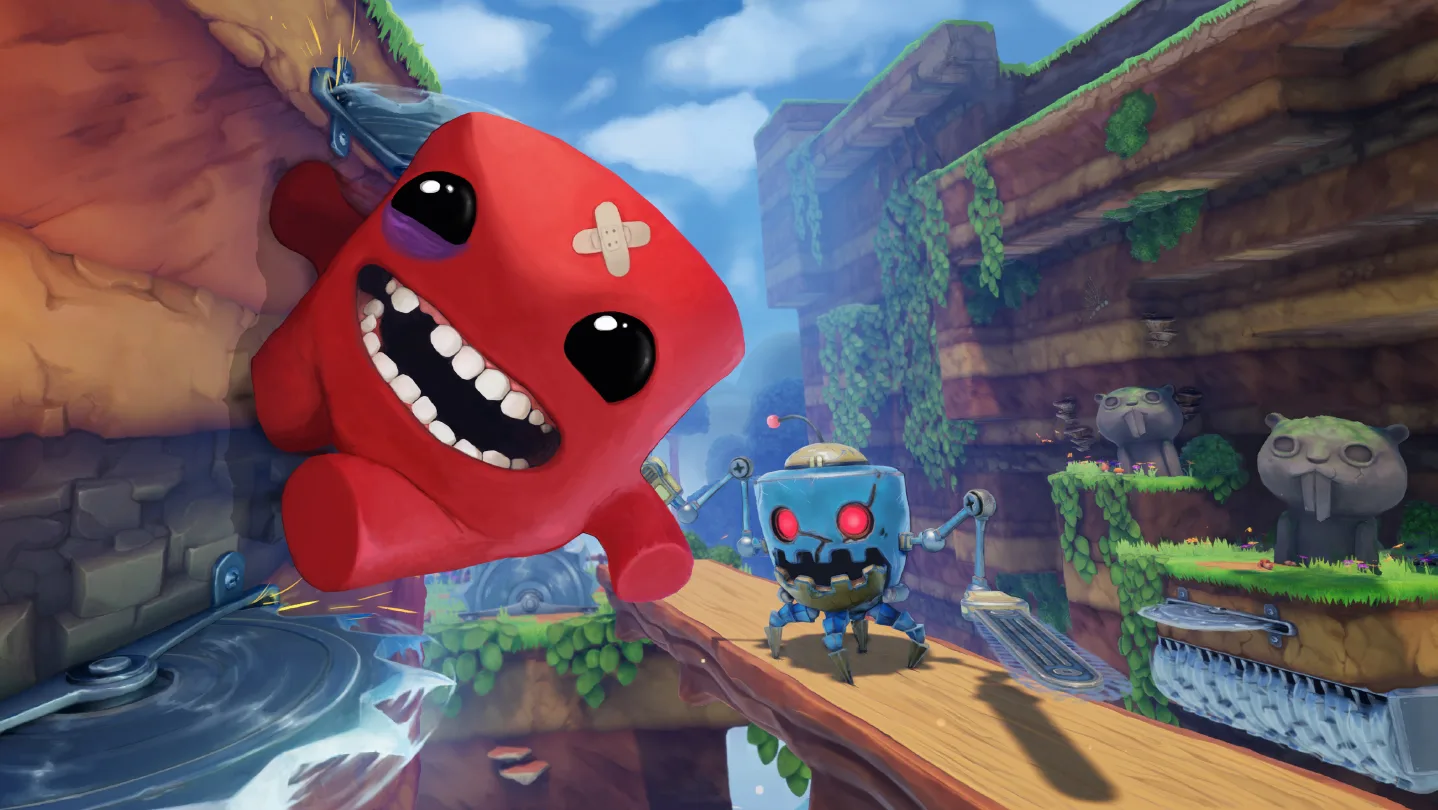
Super Meat Boy and The Binding of Isaac have sold tens of millions of copies between them, making Edmund McMillen one of the most successful independent game designers of his generation. But the road to that scale did not begin with a single lucky hit. The Edmund McMillen founder story starts with nearly 20 free Flash games released on Newgrounds, most of them built in weeks and played by anyone who happened to click.
McMillen, born March 2, 1980, in Santa Cruz, California, did not start in games at all. He came up as an independent comic artist and tried to publish a high-school comic collection called “This is a Cry for Help” in 2000. That attempt failed, and he turned to independent game development instead. His first published game, Gish (2004), was built with Cryptic Sea, and it set the pattern for what followed: quick, inventive projects released into the open rather than polished behind closed doors.
The Edmund McMillen Newgrounds era was a volume phase. Before Super Meat Boy existed, he had created Coil, Triachnid, Grey-Matter, and a steady stream of other named games, each one a small experiment that sharpened a skill or tested an idea. The original Meat Boy, an Adobe Flash game programmed by Jonathan McEntee over three weeks of free time, launched on Newgrounds on October 5, 2008. By April 2009 it had passed 840,000 views on the site and 8 million overall.
He was the original character artist and animator on Braid before those assets were replaced by David Hellman’s work, and in 2008 he compiled his first ten years of output into a CD also titled “This is a Cry for Help.” His projects did not all land, but he kept making them, and the audience kept showing up.
Super Meat Boy: A Two-Person Breakthrough Under Pressure
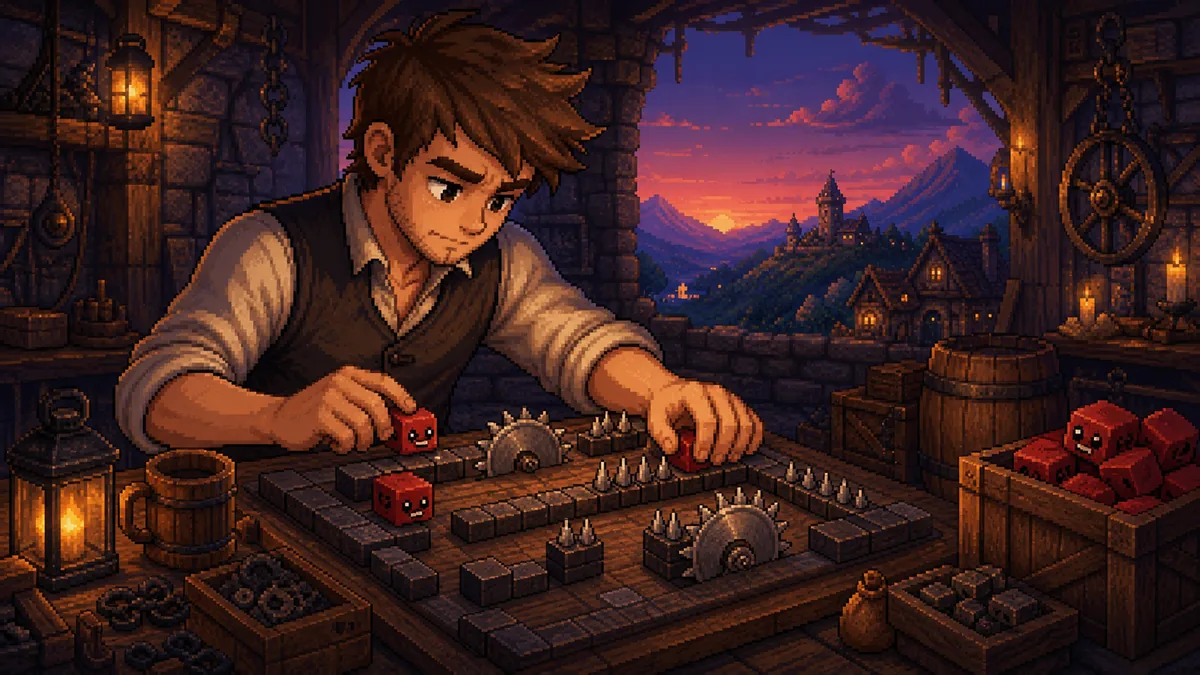
McMillen met programmer Tommy Refenes in 2008, and the Super Meat Boy development story started there. The two founded Team Meat with a shared, almost stubborn commitment: no third-party publisher would ever be involved. Development began in January 2009, with McMillen handling level design and artwork while Refenes built an original engine called the Tommunism Engine rather than reaching for something pre-made. It was a deliberately lean setup, with two people carrying a project that would eventually demand everything they had.
Geography made it harder. The Super Meat Boy developers lived on opposite sides of the United States and met in person only a handful of times across the whole project. Eighteen months passed from the first engine code to the final Xbox Live Arcade certification submission, most of it spent coordinating across time zones and trusting that the other person was holding up their end. The distance added friction to an already punishing process, and the pressure only mounted as deadlines closed in.
That pressure was documented in real time. Indie Game: The Movie, directed by James Swirsky and Lisanne Pajot, began filming in March 2010 at the Game Developers Conference and captured five straight days of footage around the October 20 release. During development he had emergency gallbladder surgery and landed $50,000 in debt from the lack of health insurance. At one point his bank balance sat at negative $800.
Super Meat Boy launched on October 20, 2010, on Xbox 360 via XBLA as part of Microsoft’s Game Feast promotion, then hit Steam on November 30. Microsoft had told Team Meat their price was too high and their visuals too rough next to contemporaries like Comic Jumper and Hydrophobia, and the push to finish in time for the promotion took a real toll. Team Meat later described that sprint as “by far the biggest mistake” they made during the game’s development.
The game sold over 400,000 copies worldwide, collected more than 15 Game of the Year awards, and was the fourth-highest-rated PC game of 2010. By January 2012 it had passed 1 million copies sold. The tight platforming and the level design that made every death feel like a lesson rather than a punishment earned that reputation, and the game became a reference point for the entire genre it helped define.
The Binding of Isaac: A Week-Long Experiment That Outgrew Everything Else
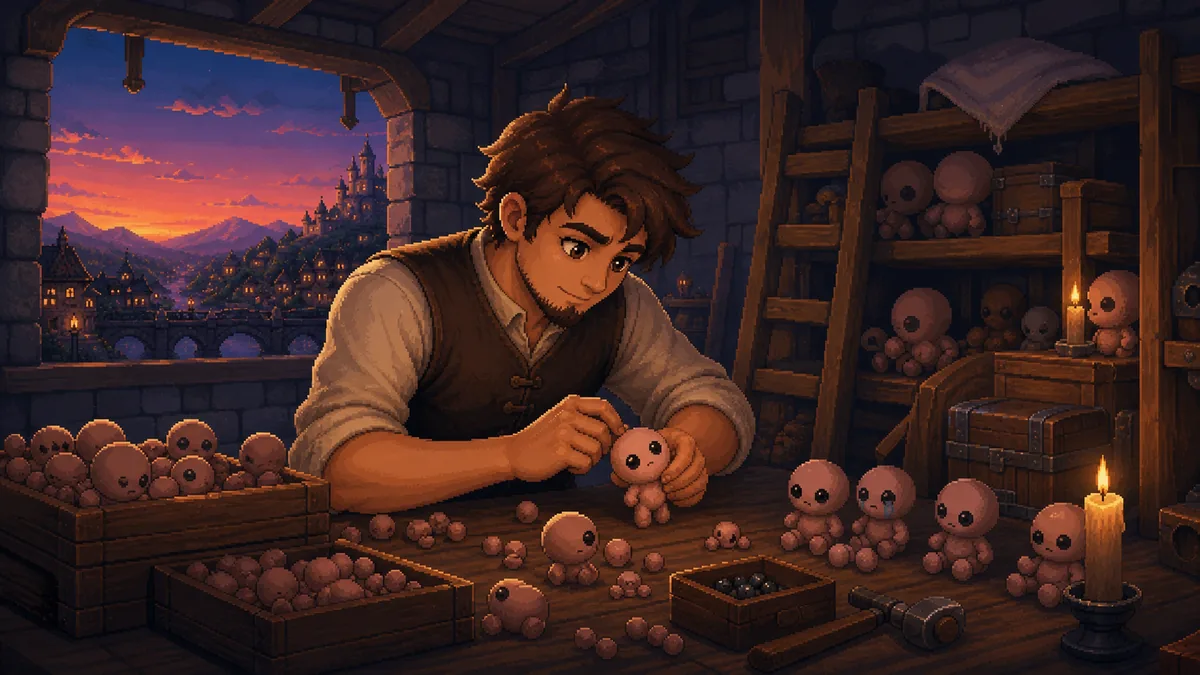
A week-long game jam in 2011 gave The Binding of Isaac its start. McMillen and programmer Florian Himsl designed the game as a The Legend of Zelda-inspired roguelike built to showcase McMillen’s feelings about the positive and negative aspects of his religious upbringing. It was personal material, drawn from a childhood shaped by a born-again Christian mother and the anxieties that came with it, and it was never intended to be a commercial centerpiece.
McMillen had just come off Super Meat Boy’s financial success, which gave him room to take a risk he could not have afforded before. He released the game quietly on Steam in September 2011 without expecting many sales. The game was small, strange, and unapologetically about him.
The core loop was simple: descend through procedurally generated rooms, collect items that stack in bizarre and unpredictable ways, and die early and often. Every run was different, and every death pushed the player to try again. The religious themes were not decoration. They were the engine of the game’s imagery, from the crying child protagonist to the grotesque interpretations of biblical figures. The game sold 450,000 copies by late January 2012, and it kept climbing.
The game passed 700,000 copies in less than a year, a milestone McMillen announced in June 2012, boosted by the Wrath of the Lamb expansion released that May. By April 2013 it had reached 2 million sales. “In the first year we sold a million copies, and now we’re already up to two million,” McMillen said at the time.
Why did this experimental game outperform work positioned more commercially? The answer sits in two places. The first is personal authenticity. McMillen was not chasing a trend. He was processing his own background, and that sincerity carried through every sprite and sound. The second is replayability. The Binding of Isaac was built to be played hundreds of times, and the item combinations meant no two runs felt the same. Players did not finish it. They kept going back to it, and each return built word of mouth that no marketing budget could match.
Flash platform limitations prevented McMillen and Himsl from expanding it further, and the engine could not support the scope the game’s success demanded. That limitation did not close the book on The Binding of Isaac. It set up the next phase, one that would turn a week-long experiment into a decade of income.
The Remake and Expansions That Turned One Game Into a Decade of Income
The Binding of Isaac did not stop at its Flash-era ceiling. The Edmund McMillen games catalog changed direction in 2014, when Nicalis, working alongside McMillen, rebuilt the original from the ground up as The Binding of Isaac: Rebirth. The remake ran on a proper engine and added features the Flash version physically could not support, and it became the foundation every later expansion would build on.
Expansion | Release Date | Role/Notes |
|---|---|---|
Rebirth | 2014 | Remake by Nicalis with McMillen. Added features beyond Flash’s limits and became the foundation for all later expansions. |
Afterbirth | October 30, 2015 | Expansion. |
Afterbirth+ | January 3, 2017 | Expansion. |
Repentance | March 31, 2021 | Third and final expansion. McMillen credited as Lead Designer. |
The expansions arrived on a steady cadence over six years, each one extending the item pool, adding new bosses and floors, and giving returning players a reason to start another run. Repentance, the final chapter, closed the loop in 2021 with McMillen credited as Lead Designer.
Steam data puts the Binding of Isaac series at over 14 million copies sold on the platform, with estimated revenue above $90 million. The original Flash game alone accounts for over 8 million of those copies, holding an Overwhelmingly Positive rating with 95% approval across 45,064 reviews. Rebirth has pushed past 6 million copies on Steam with 97% approval from 260,819 reviews and an all-time peak of over 70,000 concurrent players.
Sensor Tower calculates Rebirth alone at $84.5 million in premium revenue across 8.3 million units sold, with a 96.9% positive review rate and an average playtime of 153 hours per player. VGChartz, tracking physical and digital shipments through a different methodology, puts the series total at 9,929,330 units as of July 1, 2018.
The industry pattern for most studios is to ship a game, spend a year or two on updates, and move on to the next project in search of a new hit. McMillen did the opposite. He took one small, deeply personal game and kept feeding it, letting each expansion refresh the player base and bring lapsed players back for another cycle. Rebirth set new concurrent player records in June and July 2020 during a sale, five years after its release, peaking at 156,156 players on July 7. A game that old should not be setting records, and the fact that it does is a direct result of continuous maintenance and expansion.
One product can be the whole business if it is good enough and kept alive long enough. McMillen did not need ten new games to build a decade of income. He needed one game he could keep improving, an audience that kept returning, and the patience to let compound growth do the work.
Later Projects and the Habit of Returning to What Works
Edmund McMillen kept making games after the Binding of Isaac expansions wound down, and the pattern was clear: he kept circling back to the territory that made his name. Across 72 credited games, the through-line is a willingness to revisit proven ground while still leaving room for the occasional new idea.
The End Is Nigh, a hard platformer squarely in the Meat Boy tradition, released July 12, 2017 on Steam, developed with Tyler Glaiel.
The Legend of Bum-bo, a prequel to The Binding of Isaac, released November 12, 2019.
Four Souls, a Binding of Isaac card game, funded in less than two hours in 2018.
Mewgenics, a 2026 turn-based roguelite, stands as his latest new project and the clearest departure from his usual lanes.
Super Meat Boy 3D, announced at Xbox Games Showcase 2025 and co-developed by Team Meat and Sluggerfly, released March 31, 2026.
In 2017, Tommy Refenes revealed that McMillen was no longer part of the studio and would not work on Super Meat Boy Forever. That game shipped anyway, releasing December 2020 on Switch and Windows before arriving on other platforms in 2021.
McMillen left Team Meat, then immediately shipped The End Is Nigh. The Legend of Bum-bo and Four Souls did the same for the Isaac audience, keeping that world alive even as the main game reached its final expansion.
The deliberate return to what works is not a lack of ideas. Mewgenics is genuinely new territory, and the willingness to try it suggests the returns to familiar ground are calculated, not reflexive. Edmund McMillen built a career on volume, kept the best parts of that early output alive through remakes and sequels, and still leaves room for a project that has nothing to do with either of his two flagship franchises.
Lessons From the Edmund McMillen Founder Story
The Edmund McMillen indie game career is a study in how sustainable creative work actually gets built. After genre labels and sales records are set aside, the underlying mechanics are the same ones that apply to any solo founder running a business: volume builds skill, one product can carry an entire operation, and material drawn from lived experience travels further than anything designed to be safe.
McMillen built skill through volume. He created nearly 20 Flash games on Newgrounds before Super Meat Boy existed. Each small project taught him level design, art, and audience awareness in a way that no amount of planning could. His first published game, Gish, came only after years of practice.
One product can be the whole business, and Super Meat Boy proved it. Super Meat Boy’s first-day revenue exceeded McMillen’s total revenue of the previous decade combined. The Binding of Isaac series has generated over $90 million on Steam through long-term maintenance of Rebirth and its expansions, each one refreshing the player base and extending the product’s life.
Personal material carries further than safe material, and The Binding of Isaac shows why. It drew directly from McMillen’s religious upbringing and was released quietly with no expectations. It sold 700,000 copies in less than a year and became his defining work, outgrowing projects with broader commercial positioning.
Solo founders should make many small projects before betting on one. When a product breaks through, they should keep expanding it instead of chasing novelty. They should mine their own specific experiences for material that cannot be copied, because no competitor can replicate the thing only they have lived through.
What McMillen’s career demonstrates is that sustainable independent creativity does not depend on a single stroke of genius. It depends on a practice of repeated output, a willingness to let one strong product compound over a decade, and the courage to build from personal truth rather than market prediction.
The founders and creators who last are not the ones with the best single idea. They are the ones who keep making things, keep feeding what works, and keep drawing from a source that no one else can tap.

Leave a Reply