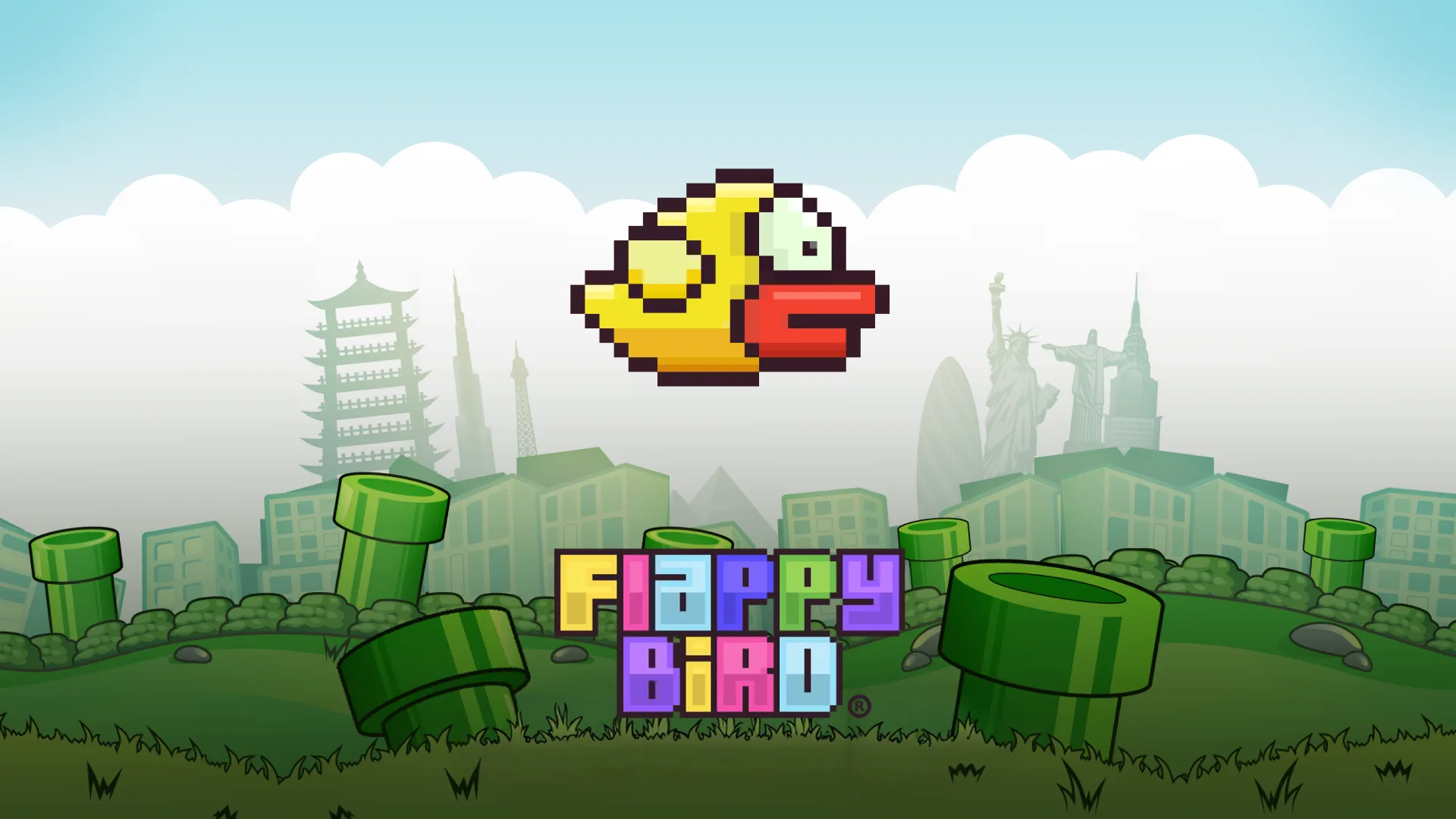
In February 2014, Dong Nguyen was dealing with one of the most improbable hits in mobile gaming history. Flappy Bird, a game he built alone in his parents’ house in Hanoi, Vietnam, was earning him a reported $50,000 a day from in-app advertising. It had been number one on the iOS App Store since January 17, 2014, and no paid marketing had pushed it there. At the height of it all, he pulled the game from the app stores. That decision is what sets the Dong Nguyen founder story apart from every other viral hit.
The removal happened on February 10, 2014, while Flappy Bird still topped download charts in more than 100 countries. Nguyen, a 28-year-old developer whose quiet life in Hanoi had been upended by a game he never expected anyone to notice, walked away from millions in revenue because the attention had become unbearable. The Verge reported his earnings at an estimated $50,000 per day from the game’s banner ads, a figure Nguyen himself said he couldn’t confirm.
This is the Flappy Bird creator story, and it isn’t the tale of a coder who struck gold and rode it to fortune. It’s the story of a developer who spent years building small, largely ignored games, hit a viral jackpot he never asked for, and then made a decision most people would consider unthinkable. His path from a bedroom in Hanoi to the top of global app charts, and his choice to walk away at the peak, raises a question worth sitting with. What does it actually mean to win?
Who Made Flappy Bird? Meet Dong Nguyen
The man behind Flappy Bird wasn’t a Silicon Valley prodigy or a studio veteran with a portfolio of hits. Dong Nguyen grew up in Van Phuc, a village outside Hanoi known for silk-making, in a family that couldn’t afford the handheld Game Boys other kids had. What they eventually did buy him was a cloned Nintendo, and it was enough. He became obsessed with Super Mario Bros., playing it endlessly and studying how the game moved, jumped, and punished mistakes.
That early fascination turned into something more active by the time he was 16, when Nguyen taught himself to code and built his own computer chess game. It was a modest project, but it signaled the self-direction that would define his career. There was no formal training pushing him toward game development at that point, just a quiet determination to make things work on his own terms.
At 19, while studying computer science at a Hanoi university, Nguyen placed in the top 20 of a programming competition and landed an internship at Punch Entertainment, one of the only game companies in the city at the time. Punch made cellphone games, a niche corner of the industry that few developers took seriously. Nguyen did. His former boss, Son Bui Truong, later said Nguyen “didn’t need a supervisor” and was allowed not to report to anyone.
That freedom was earned. It also explains a lot about who made Flappy Bird and why the game looked the way it did. Nguyen was not a developer who thrived on teams, roadmaps, or approval cycles. He was a lone builder who shipped small projects, iterated quietly, and moved on. For years, that approach produced a string of games that almost nobody noticed. It was only when one of those small projects caught fire that the same independence that made him a good developer made the spotlight unbearable.
The Small Games Flappy Bird’s Developer Built Before the Hit
Flappy Bird was not Dong Nguyen’s first game, and it wasn’t even close to his most ambitious. Under his one-person studio name .GEARS, Nguyen had spent years shipping small, simple releases. They fit a philosophy he had developed early, games for busy people, playable in short bursts with one hand. He once explained that he found Angry Birds “too busy” and “too crowded,” and that he wanted to make something for someone “holding the train strap” on the way to work.
That philosophy was already visible in Shuriken Block, which Nguyen released in April 2013. Players tapped to stop ninja stars from impaling five little men on screen. The game has been described as “deceptively ruthless,” which fits Nguyen’s pattern of deceptively simple mechanics, quietly punishing difficulty, and almost no marketing push. Shuriken Block languished on the iOS store, one more small release that found no audience.
The visual DNA of Flappy Bird had been percolating even longer. A year before the game’s release, Nguyen had drawn a pixelated bird riffing on Nintendo’s Cheep Cheeps fish and the green pipes of Super Mario Bros., a tribute to the game that had obsessed him since childhood. That sketch sat in his mind while he continued building and releasing small titles, none of which broke through.
When Flappy Bird finally arrived, it was not a sudden inspiration or a bet-the-company swing. It was the latest in a deliberate string of tiny, self-contained games built by a developer who valued simplicity above polish, reach, or revenue. The eventual explosion came out of a long pattern of quiet releases, and the market finally caught up to what Nguyen had been making all along.
How Dong Nguyen Built Flappy Bird in a Weekend
The game that would eventually define Dong Nguyen’s public identity took shape in less time than most people spend planning a vacation. Over two or three days during Vietnam’s Reunification Day holiday in April 2013, Nguyen coded Flappy Bird from his bedroom at his parents’ house in Hanoi. He coded alone with a laptop over a long weekend he chose to fill with work. There was no studio, no team, and no deadline pressure.
The design was stripped to a single mechanic. Players tap anywhere to keep a pixelated bird aloft and guide it through narrow gaps in green pipes. Any touch of a surface ends the game instantly, and the physics were tuned so that even the slightest mistimed tap is fatal. The game comes down to the bird, the pipes, and the next tap. There is no progression system, no power-ups, and no story.
The simplicity was deliberate. Nguyen modeled the gameplay on paddleball, the hand-and-ball toy where the goal is simply to keep the ball moving, and then reduced it further to just the bird and the pipes. Even the sound design reflected attention to detail. He sifted through hundreds of audio options before settling on a kung fu-style thwack for the bird’s death. That small choice gave the constant failure a satisfying punctuation.
Flappy Bird launched free on the iOS App Store on May 24, 2013, with almost no fanfare. Nguyen’s marketing amounted to a couple of tweets, and the game sat in relative obscurity for months. Much later, after a slow climb that had nothing to do with any promotional push, the game Nguyen had built in a single weekend found the audience that changed everything.
From Months of Silence to Number One
For a game that would eventually be called an overnight sensation, Flappy Bird spent a remarkably long time being nothing at all. It launched on May 24, 2013, and sat in the crowded middle of the iOS App Store for the next five months. A handful of people downloaded it, and everyone else ignored it. Dong Nguyen kept building other small games and tweeting about them, but Flappy Bird generated no buzz, no press, and no momentum.
The first real signal that anything was happening came on November 4, 2013, five months after release, when a Twitter user posted a message that read simply “F**k Flappy Bird.” It wasn’t a review, an endorsement, or a thoughtful critique. It was a burst of frustration from someone who had clearly just lost a game over and over again to a bird and two green pipes. That single tweet, born of annoyance, turned out to be the spark.
From there, the game spread the way nothing else in Nguyen’s career had. What had been a trickle of downloads became a wave, driven almost entirely by the game’s brutal difficulty. Flappy Bird was hard in a way that made people angry, and angry people talk. They posted screenshots of their scores, complained about the unfairness of the physics, and dared friends to last longer than they had. The game’s shareability wasn’t a feature Nguyen had designed in. It emerged from making something difficult enough that people needed to vent about it.
By January 17, 2014, Flappy Bird had climbed to the number one spot on the iOS App Store. Nguyen later described the rise with the phrase “no promotion, no plan, no logic.” People could not stop playing it, or at least could not stop trying to beat it. There was no ad campaign, no influencer push, and no carefully timed release strategy. Twitter, which had carried that first frustrated mention back in November, eventually carried more than 16 million Flappy Bird messages as the game’s reach expanded far beyond the initial wave.
By February 2014, Flappy Bird topped download charts in more than 100 countries and had passed 50 million downloads. His earlier, largely ignored games were being pulled along in the current. Shuriken Block and Super Ball Juggling, both released long before Flappy Bird and both commercial disappointments in their first lives, climbed into the iOS Top 10 alongside their breakout sibling, landing at #6 and #18 respectively. A developer who had spent years shipping small games that nobody noticed suddenly had three titles charting at once.
The chronology matters here. Flappy Bird did not explode the week it launched. It did not even explode the month it launched. It spent five months in obscurity, then caught fire through word of mouth and frustration, then took another two months to reach the top of the charts. The gap between release and dominance was not a few days or even a few weeks. It was roughly eight months. Calling that an overnight success ignores the patience, the persistence, and the long silence that preceded the storm. By the time Flappy Bird hit number one, Dong Nguyen had been building and releasing small games for years, and had watched this particular one sit ignored for half a year before it found its audience.
The Reported $50,000 a Day and the Weight of Sudden Fame
The money, when it came, arrived at a scale that was hard to process. The Verge reported that Nguyen was earning an estimated $50,000 per day from in-app ads at Flappy Bird’s peak. When asked about the figure, Nguyen declined to confirm it, offering a characteristically modest response. “I don’t know the exact figure, but I do know it’s a lot.” Even after Apple and Google took their 30% cut from the ad revenue, Nguyen estimated he was still clearing roughly $50,000 a day.
Some estimates told a different story. A separate source put peak daily ad revenue lower, at between $10,000 and $20,000, and reported Nguyen’s net worth in the range of $4 to $6 million. These numbers have never been independently verified, and they remain reported estimates, not confirmed figures. What is not in dispute is that a developer who had spent years releasing games that barely registered was suddenly generating income most studios would envy. That income came from a single weekend’s work.
The Dong Nguyen net worth question is a natural one to ask, but it misses the point of what the money actually did to him. The revenue did not bring comfort or security. It brought a level of attention that Nguyen had never wanted and was not prepared for. The pressure came from every direction at once. His family, who had no idea what was happening, only learned about Flappy Bird when his parents saw his photo in Vietnamese news reports. He had a sudden meeting with Vietnam’s deputy prime minister Vu Duc Dam, a level of official scrutiny that no amount of ad revenue could have prepared him for.
The ads themselves were part of the problem. Flappy Bird ran banner ads, and the game’s brutal difficulty meant players saw a lot of them, often in moments of frustration. Critics and users began questioning whether the game was designed to fail in order to maximize ad impressions, a charge Nguyen firmly denied. But the suspicion added another layer of hostility to the constant pressure he was already under.
The weight of being watched also took a toll. Nguyen was a private person who had built games alone, in silence, for years. Every move he made, every tweet he posted, every interview he gave was scrutinized by millions. He later said the game had become “a problem” and described the experience as making him feel like his life was no longer his own. The reported revenue was real, but so was the cost that came attached to it. By early February 2014, Nguyen had decided the price was too high.
Why Was Flappy Bird Removed? The Decision at Its Peak
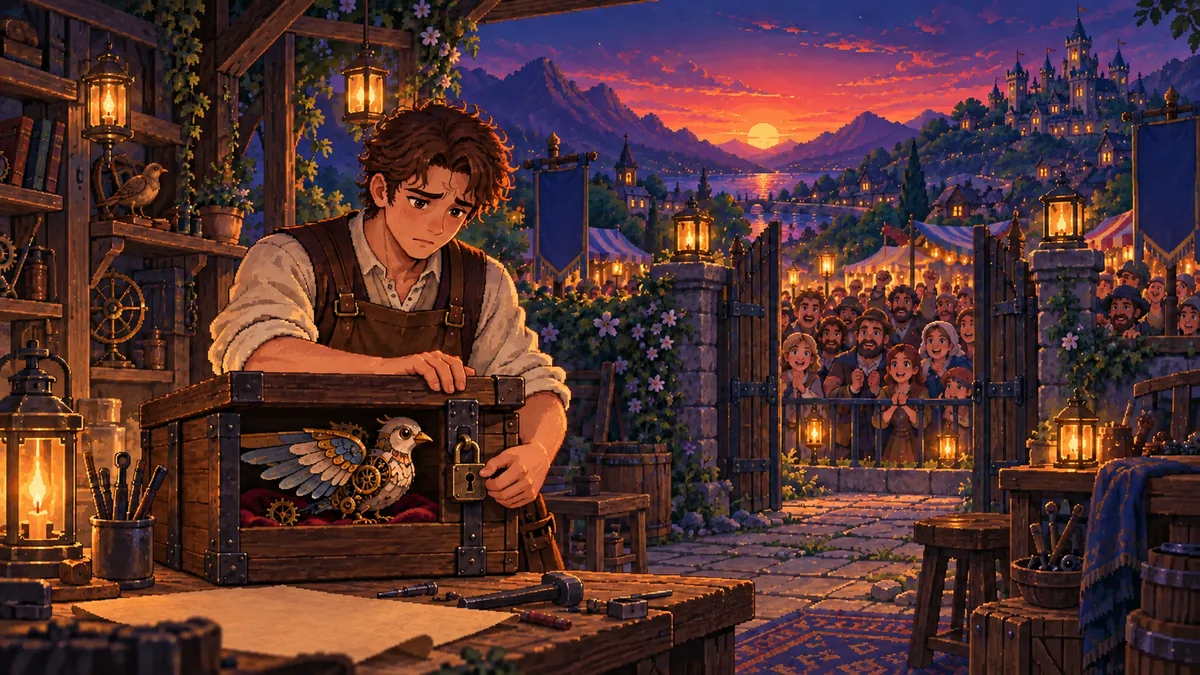
At 2:02 a.m. Hanoi time on February 9, 2014, Dong Nguyen posted a tweet that stunned the gaming world. “I am sorry Flappy Bird users. 22 hours from now, I will take Flappy Bird down. I cannot take this anymore.” There was no negotiation, no warning beyond those 22 hours, and no appeal to the platform holders or the press. A developer at the peak of his success was announcing that he was ending it.
In the final 22 hours before the takedown, 10 million more people downloaded the game, a final surge that pushed Flappy Bird’s total reach even higher before it vanished. The game Nguyen had built in a weekend, watched sit in obscurity for months, and then seen climb to the top of the charts was about to be gone, and people scrambled to get it while they still could.
Nguyen’s stated reasons were personal, not commercial. He had come to believe the game itself was the problem. “It happened to become an addictive product. I think it has become a problem. To solve that problem, it’s best to take down Flappy Bird. It’s gone forever.” He said the game “ruins my simple life” and that he “couldn’t sleep.” These were not the words of a developer negotiating a better deal or chasing a new opportunity. They were the words of someone who had watched something he built cause real distress, including to himself.
The messages he received in those final weeks made the decision harder to ignore. People wrote to him about losing their jobs over the game. A mother told him she had stopped talking to her children because of it. There were reports of kids breaking phones in frustration. “At first I thought they were just joking, but I realize they really hurt themselves.” A game designed to be punishing, played in short bursts, had become something darker in the lives of some of its players, and Nguyen took that responsibility seriously.
He was also clear about what the removal was not. Asked whether Nintendo had pressured him over the game’s obvious visual debt to Super Mario Bros., Nguyen denied any legal pressure. “It is not anything related to legal issues,” he said, and added, “I’m master of my own fate. Independent thinker.” The decision was his alone, made on his own terms, and he wanted that understood.
It would be easy to treat the removal as a mystery to be solved, a puzzle with a hidden corporate or legal explanation waiting to be uncovered. The evidence points somewhere simpler and more human. Nguyen looked at what the game had become, looked at what it was doing to his life and to the lives of people he heard from, and concluded that the cost of keeping it up outweighed everything the ad revenue could buy. He walked away at the top because staying was the thing he could no longer do.
What Happened to Flappy Bird After the Takedown
The day after Flappy Bird disappeared from the app stores, Dong Nguyen had a life to rebuild. He quit his day job, which he had kept through the entire rise, and began making plans that had nothing to do with game development. He was thinking about buying a Mini Cooper and an apartment, small anchors of a normal life that the money had suddenly made possible. He also got his first passport, a document he had never needed before because he had never had a reason to leave Vietnam.
The quiet months that followed were spent, at least in public, on what came next. In March 2014, Nguyen said he was working on three games at once, an untitled cowboy-themed shooter, a vertical flying game called Kitty Jetpack, and Checkonaut, which he described as an action chess game. The lineup was pure Nguyen, a mix of genres and ideas that had nothing in common except the one-person development process behind them. He was not trying to repeat Flappy Bird’s formula. He was back to building small, varied games the way he always had.
There was also the question of whether Flappy Bird itself would ever return. On March 19, 2014, Nguyen tweeted that a rerelease would not happen “any time soon.” Two months later, he told CNBC that the game would come back in August with multiplayer and be “less addictive.” August came and went, and no new version arrived. The promise faded without explanation, and the game has never been restored to the app stores since.
What happened to Flappy Bird after the takedown is partly a story of what its creator did instead. His next released game, Swing Copters, launched on August 21, 2014, on iOS and Android. It was a free download with a 99-cent in-app purchase to remove ads, and it was unmistakably from the same developer. Players tap to control a hat-wearing character flying upward through a vertical course, avoiding platforms and swinging hammers that seem designed to make every attempt end in frustration within seconds. The difficulty was brutal in the same way Flappy Bird’s had been, and the comparisons came immediately.
Swing Copters was followed in December 2015 by Swing Copters 2, released under his studio name DotGears. The sequel was “much more challenging” than the original, with movable swinging hammers that made the already punishing physics feel almost cruel. It followed the same monetization pattern, free to play with a 99-cent ad removal and 99-cent character unlocks. Neither game came close to matching Flappy Bird’s reach, which was never really the point. Nguyen had gone back to what he knew, small, hard games, built alone, released without fanfare.
The aftermath, taken as a whole, shows a developer who did not try to cash in on the moment. He could have rushed out a Flappy Bird sequel within weeks of the takedown, monetized the backlash, or sold the concept to a studio that would have squeezed every dollar out of it. Instead he bought himself a passport, made plans for a car and an apartment, and went back to shipping small games on his own terms. What happened to Flappy Bird after its removal was that its creator did exactly what he said he would do. He got his simple life back.
The Flappy Bird Copyright Scandal and Crypto Relaunch
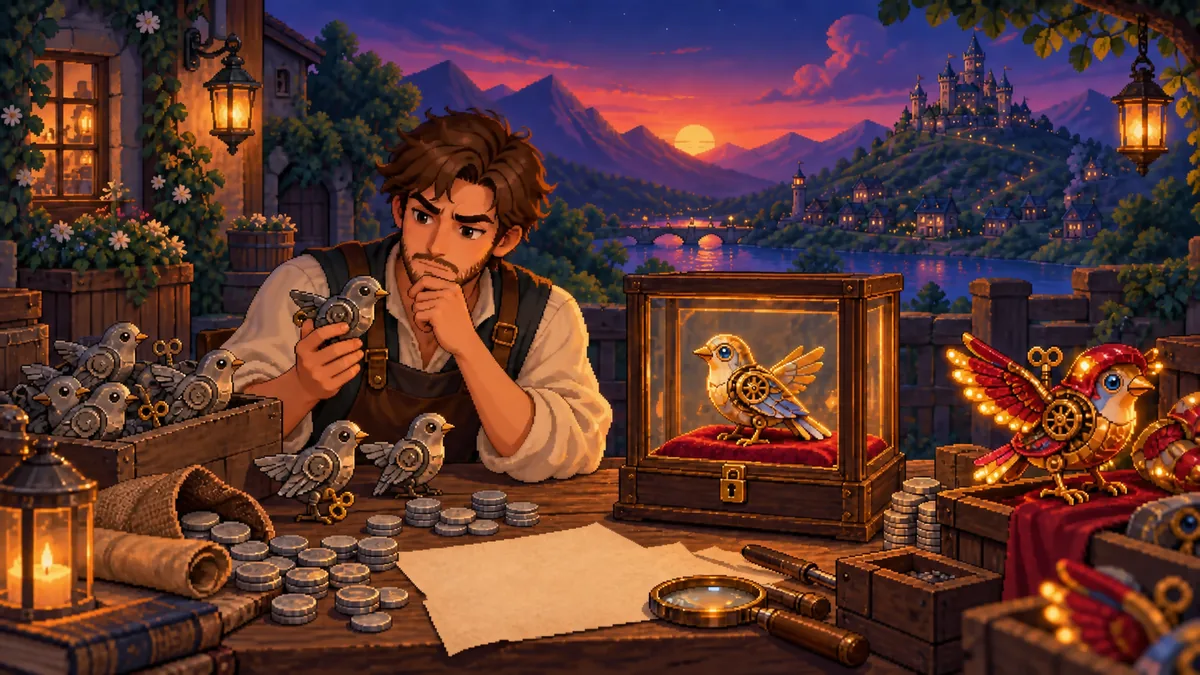
A decade after Dong Nguyen pulled Flappy Bird from the app stores, the game he abandoned found its way back into the news for reasons that had nothing to do with him. In September 2024, a group announced a relaunch of Flappy Bird with crypto elements, a GameFi project that promised to bring the game back with blockchain features attached. The announcement came with a refreshed website and plans for a comeback, but it quickly raised a question that had been dormant for years. Who actually owned the rights to the game Nguyen had built alone in his parents’ house?
The answer, it turned out, was no longer Nguyen. He had lost the Flappy Bird trademark after Gametech Holdings LLC filed a motion opposing his retention of it, arguing that he had abandoned the mark through years of non-use. When Nguyen failed to respond to the motion, the company won a default judgment. The trademark, which had been dormant since the game’s removal in 2014, passed to a party that had nothing to do with the game’s creation.
The loss of the trademark was the legal opening that made the crypto relaunch possible. With the rights no longer in Nguyen’s hands, a separate group was free to plan a Flappy Bird revival with crypto elements, and they did. The relaunch was framed around GameFi, a term for games that integrate cryptocurrency and blockchain mechanics, and it drew immediate attention from both fans who wanted the game back and critics who saw it as a cash grab riding on a decade-old brand.
Nguyen’s response was his first public appearance since 2017. He broke his social media silence in September 2024 to distance himself completely from the project. “No, I have no related with their game. I did not sell anything. I also don’t support crypto,” he wrote. The statement was blunt and final, a developer who had walked away from the game once and was now publicly walking away from its unauthorized resurrection.
The Flappy Bird copyright scandal is unusual in that it involves a creator who did not want his creation back. Nguyen had spent years avoiding the game’s shadow, building new small titles and keeping his distance from the brand. He did not fight for the trademark because he had no interest in using it. That choice, consistent with everything he had done since 2014, left the door open for others to claim what he had abandoned.
If Nguyen ever re-releases Flappy Bird himself, he has said it will come with a warning he first offered years ago, “Please take a break.” It is a small line, but it captures the entire arc of his relationship with the game. He built something that people could not put down, watched it consume his life, and has spent the decade since making clear that the one thing he wants players to do with his creation is put it down.
The Dong Nguyen Founder Story and Success on His Own Terms
The question of why Dong Nguyen deleted Flappy Bird has been asked, re-asked, and turned into conspiracy material for a decade. The answer he gave at the time remains the most credible one. The game had become an addictive product that “ruins my simple life” and kept him from sleeping. There was no legal threat forcing his hand, no secret acquisition deal, and no pressure from Apple or Google. He said it plainly, repeatedly, and then acted on it. The simplest reading of his words is the one that fits every other decision he made before and after.
What is easy to forget is that the removal did not erase the revenue. The millions who had already downloaded the game kept playing it, and the ads kept running, generating what reports called “tens of thousands of dollars” for Nguyen even after the takedown. The money did not stop because the game was gone. He walked away from a stream of income that was still flowing, which makes the decision less about money and more about everything else the game had cost him.
For solo founders, there is a lesson buried in that choice that has nothing to do with app store algorithms or ad revenue models. Virality is not the same as success. Flappy Bird was one of the most downloaded games in the world, a level of reach that most developers spend their entire careers chasing, and its creator still considered it a failure because of what it did to his life. He removed it because he decided that the maker, not the market, gets to define what winning means. The same question sits under how Markus Persson became so successful with Minecraft.
That is the part of the story that matters most, and it is also the part that gets lost in the retelling. The “overnight success” framing obscures the decade of small, ignored games that preceded it, the Shuriken Blocks and Super Ball Jugglings that built the habits and philosophy that eventually produced Flappy Bird. Nguyen did not stumble into a lucky weekend. He spent years making games nobody wanted before he made one that everyone demanded, and when the demand became destructive, he had the clarity to walk away.
From By Solopreneurs’ perspective, that is the real takeaway. A founder’s authority over their own work matters more than download numbers, more than revenue, more than anything the market can offer in exchange for control. Nguyen had the top game on Earth and gave it up because it stopped being his. He got his simple life back, and in the end, that was the only metric that counted.


Leave a Reply