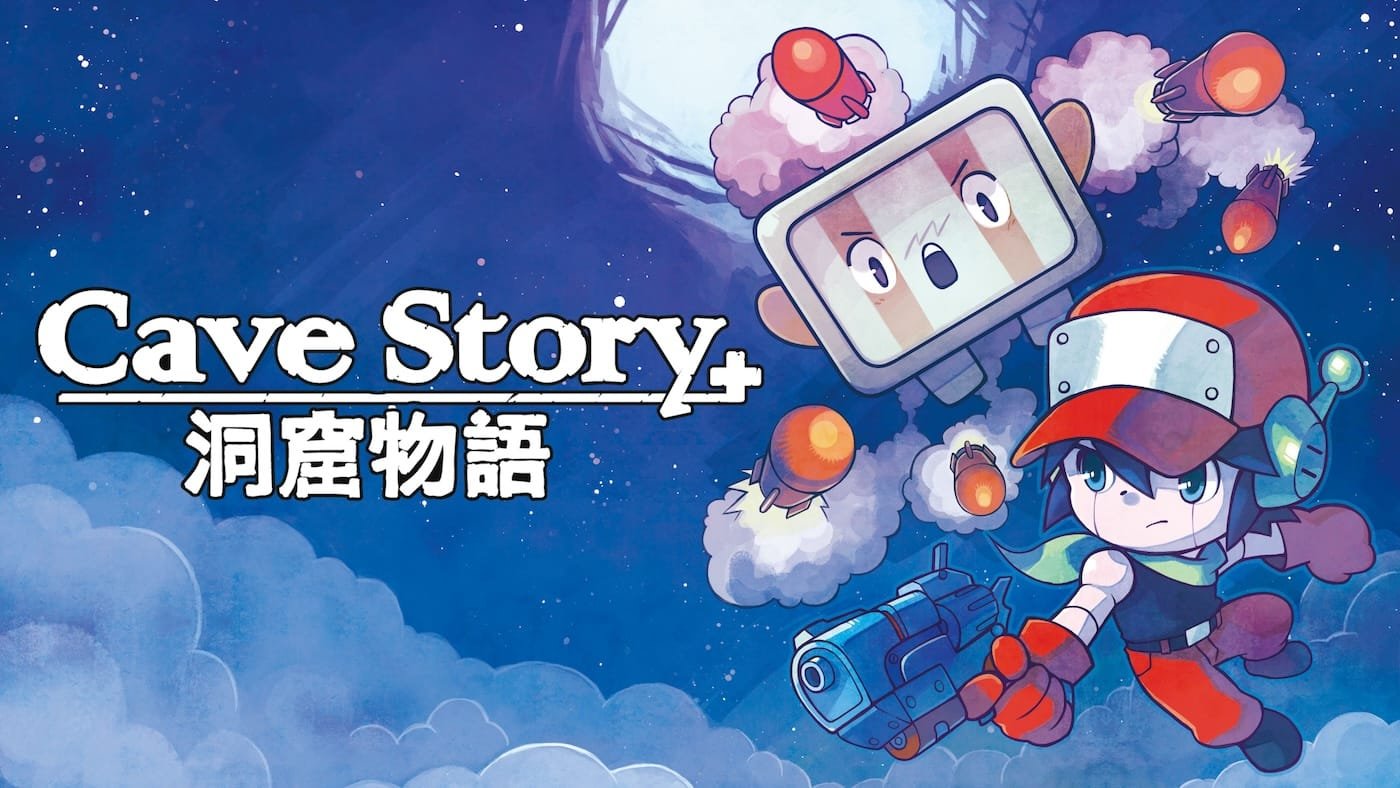
Daisuke “Pixel” Amaya made Cave Story. Every line of code, every pixel of art, every note of music, and every character design came from one person working in his spare time over roughly five years while employed at a printing systems company. When the game was finally released as freeware for PC in Japan in 2004, it carried no publisher’s name, no marketing push, and no price tag.
The Daisuke Amaya founder story rests on the quality of a complete, finished game built by a single developer during evenings and weekends. Western audiences found it through a 2005 fan translation by Aeon Genesis, and from there its legend spread on word of mouth alone.
This article traces the full arc from solo development to freeware release to commercial ports, showing what a multi-year unpaid project can ultimately become.
Daisuke Amaya’s Path from Salaryman to Indie Creator
He worked full-time as a programmer at a printing systems company, a job he described as being a “half-on-the-job salaryman.” Cave Story was built in the hours that remained after work, which helps explain both the game’s long development timeline and the care packed into every frame of animation.
He coded the original Cave Story in Visual Net 2003, using C or C++, an unconventional setup that nevertheless handled everything the game demanded. Quote’s walking took about one day to implement, while jumping took roughly a week.
He aspired to become a full-time game developer but had no definite plan for making that happen. What he knew for certain was that he preferred working on his own projects over joining a company.
That independence also explains the quiet years before commercial success. Earlier console port talks, including a possible Game Boy Advance version, never materialized before Nicalis eventually brought Cave Story to modern platforms.
The Five-Year Solo Development of Cave Story
Amaya’s own estimate puts the actual focused work at about two years, a number that becomes clearer when considering how much time he could realistically give the project while holding down a full-time job. The first two years of that five-year span produced work he ultimately scrapped entirely, discarded in favor of starting fresh. Everything after that went toward making the game appealing to audiences, not merely functional.
He described his method as working step-by-step, moving from “Point A, then moved on to the next point,” rather than following a grand design document or a detailed blueprint of the finished game. Each element was tackled in sequence, refined until it felt right, and then set aside for the next one. This piecemeal approach explains how a single developer could produce a game with Cave Story’s cohesion despite never mapping out the whole thing in advance.
A strict gamer friend reviewed early builds and delivered blunt critiques, including the memorable assessment “This part is not fun.” That feedback loop directly shaped the final game, pushing Amaya to revise sections that were technically complete but failed to engage.
Two years of actual effort spread across five calendar years, with the first chunk thrown out and the remainder guided by a friend’s honest feedback and Amaya’s own step-by-step instincts.
How Pixel Amaya Built Cave Story Alone
The design choices Amaya made while building Cave Story are just as revealing as the timeline behind them.
Amaya cited Metroid and Dragon Quest as his biggest creative inspirations, with other accounts additionally naming Castlevania and Mega Man as touchstones for the game’s structure and tone.
He made the main character a single, amnesiac protagonist so players could project themselves onto him, deliberately avoiding a defined backstory in favor of giving the audience room to inhabit the role.
The weapon power-up system, where weapons lose levels when the player is hit, was designed to keep players focused during combat, punishing careless play while rewarding deliberate movement.
Some items, such as Chako’s Rouge and Curly’s Panties, were created but left unused due to time and resource limits, a small window into the editing process that shaped the final release.
Why a Solo Developer Chose Pixel Art, Low Specs, and Persistence
Every major choice Amaya made during Cave Story’s development was pragmatic first, artistic second.
Pixel art was a practical choice as much as an aesthetic one. Amaya said that “using pixels is very convenient and makes it possible for one person to do things alone.” Pixel sprites are far easier for one person to produce, edit, and animate than detailed 3D models or hand-painted backgrounds.
The low system requirements were an intentional accessibility decision. Amaya kept the game playable on as many machines as possible so that nobody with an interest in playing would be locked out by their computer’s specs.
Amaya disliked tutorial-driven games and preferred players learn by doing, which shaped how he introduced mechanics step by step. Early areas quietly teach the player the game’s systems through encounter design rather than text prompts.
He had moments of wanting to quit making games entirely but decided he wanted to make more.
The Freeware Release and the Aeon Genesis Fan Translation
On December 20, 2004, Amaya released the game as freeware for PC in Japan. There was no storefront, no publisher gatekeeping, and no purchase decision to weigh. Anyone with a computer and an internet connection could download and play the whole thing.
That free distribution was strategic. Amaya built an audience first, knowing that a game people could try without risk would spread faster than any paid release. The audience that formed during those freeware years became the proof of demand that publishers and platform holders later pointed to when commercial versions arrived.
In 2005, Shih Tzu of the fan group Aeon Genesis completed an English translation, with assistance from Amaya himself. That collaboration between the developer and the fan translator gave Western players a fully playable version of a game they otherwise could not have understood. Cave Story’s worldwide fame grew rapidly in the years following that patch, carried entirely by players sharing it with each other.
The two major English translations of Cave Story have divided fan opinions. The Aeon Genesis translation is widely considered better at conveying emotion, capturing the warmth and melancholy of the game’s story in ways that feel natural. The later Nicalis translation, by contrast, is more accurate on naming but occasionally overly literal, trading some of the emotional resonance for precision.
The community’s investment in the game did not stop at the initial translation. In 2007, a fan-made complete translation patch based on the Aeon Genesis English patch was released, bundling the translated manual alongside the game itself.
From Freeware to Commercial Ports: Cave Story’s Development Continues
The biggest turn in Cave Story’s development came when Nicalis entered the picture. Tyrone Rodriguez, who headed the publisher, convinced Amaya that commercial publishing was viable. Amaya had previously rejected that idea because he doubted there was enough interest in his games. That conversation opened the door to a series of releases that brought Cave Story to audiences far beyond the freeware community that had sustained it for years.
Version | Platform | Release Date | Key Details |
|---|---|---|---|
Cave Story (WiiWare) | Nintendo Wii (WiiWare) | March 22, 2010 (North America) | 1200 Wii Points; first official English translation; enhanced hand-drawn artwork; remastered soundtrack |
Cave Story+ | Windows, Mac, Linux (Steam) | November 22, 2011 (Windows/Mac); December 13, 2011 (Linux) | Enhanced version available on Steam |
Cave Story 3D | Nintendo 3DS | Not specified in source material | Published by NIS America, produced by Nicalis; graphics completely redone in 3D; Amaya oversaw final checks on all graphics and music |
The WiiWare release marked the first time Cave Story had an official English translation, a milestone that shifted the game from community-patched freeware to a polished commercial product. Cave Story 3D later pushed the game into entirely new visual territory, with every graphic rebuilt from scratch and Amaya personally signing off on the final checks for all graphics and music.
No official sales figures appear in the source material. The commercial phase is best understood through platform reach and longevity rather than revenue claims. Cave Story appeared on WiiWare, DSiWare, Steam, and the 3DS within roughly two years.
Cave Story’s Indie Game Legacy and Influence
Few games are cited as often as Cave Story as a frontrunner of the indie game movement, and it frequently appears on lists of the most important indie games ever made. It was a complete and polished experience that demonstrated what a single developer could achieve outside the traditional industry structure.
Amaya’s own relationship to that movement was more modest than the accolades suggest. He considered himself part of the indie game scene, and in Japan he worked with the company Nigoro for distribution, connecting his solo work to a broader network of independent developers.
He could not read English, so he never followed the Western coverage that praised his work, reviews and retrospectives that shaped how international audiences understood the game. What he did see, and what genuinely pleased him, was his game ranked high on sites. The language barrier meant he experienced his success through rankings and numbers rather than through the words written about him.
He continued working his day job throughout the console releases, finding time to coordinate with Nicalis on the side rather than leaving employment to manage the ports full-time.
What Solo Founders Can Learn from Cave Story Developer Daisuke Amaya
Daisuke Amaya’s journey from evenings-and-weekends hobbyist to genre-defining creator is a story about patient, sustained solo work.
The game became legendary because it was complete, with every element shipped in a finished state. It got there without the most polished graphics or a marketing push. Amaya’s willingness to scrap two years of work and revise sections based on one friend’s blunt feedback speaks to a standard of completeness that many studio productions never reach.
Free distribution was strategic. It removed barriers and built the audience that later made commercial ports viable. The freeware release turned a zero-budget game into a word-of-mouth phenomenon, and that audience became the proof of demand that convinced a publisher the game was worth investing in.
The fan translation by Aeon Genesis was essential to the game’s Western reach, showing how community contributions can extend a solo project’s life. A developer who could not read English still found his game embraced by players on another continent, carried entirely by people who cared enough to translate it themselves.
At By Solopreneurs, founder stories like Amaya’s are examined because the path from freeware to classic demonstrates what patient, sustained solo work can produce.



Leave a Reply