
Launching a new SaaS or app feels chaotic, especially when you’re solo and buried in tiny tasks. LaunchPanda claims to lighten that load. I wanted to see if it actually trims the hours spent submitting to launch directories and helps win early backlinks and traffic founders want. It won’t write your launch story or help with timing. Think of it as a distribution helper that pushes what you’ve already prepared into the world faster.
Here’s the real test I care about: If an indie maker has a fresh MVP and a small audience, does LaunchPanda post the product across 140+ directories without burning a week on forms and copy-paste? I’m digging into how smooth the workflow feels, how much time it saves in practice, whether those backlinks move the SEO needle, and where the tool runs into walls. No spoilers – I’m curious if it turns into a quiet workhorse for founders who want wide coverage right after launch.
On this page
How LaunchPanda works with a reusable launch kit and smart directory matching
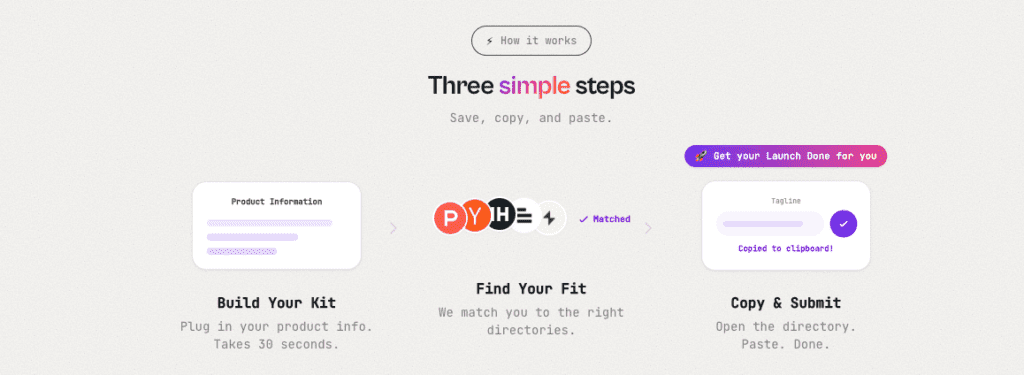
I like how LaunchPanda starts by pulling together everything needed to show a product clearly and fast. The launch kit asks for:
- Product name
- A sharp one-line value prop (80 – 100 characters)
- 3 – 5 feature bullets
- Screenshots around 1200×900 pixels
- A crisp 512×512 logo
- Category tags that fit the niche
- Pricing details
- Founder bio and social links
- Tracking URLs with UTM parameters for analytics
It puts all the pieces in one place so the next step moves without friction.
Their directory matching engine is the clever bit. It groups hundreds of launch sites by product type, like SaaS, AI tools, developer utilities, or Chrome extensions. It also checks what each directory expects. Some allow same‑day submissions, while others take a few days due to moderation. It flags whether you’ll fill web forms, send emails, or create accounts before submitting. This sorting saves time and prevents missed fields.
When it’s time to submit, there are two paths: Do‑It‑Yourself or Done‑for‑You. Want control? The DIY route gives a checklist, direct links, and prefilled snippets so forms go faster. Prefer to offload the grunt work? The team submits for you, sets up accounts when directories require them, and tracks approvals as they land.
Prep takes about two to three hours upfront to assemble the launch kit. DIY submissions roll out over one to three days because directories process at different speeds. Done‑for‑you batches usually go live within two to four days, depending on moderation queues.
It all adds up to a workflow built for speed, fewer mistakes, and fewer distractions, so indie founders stay focused on building instead of chasing endless submission tasks.
What you really get in time saved, backlinks, and early traffic
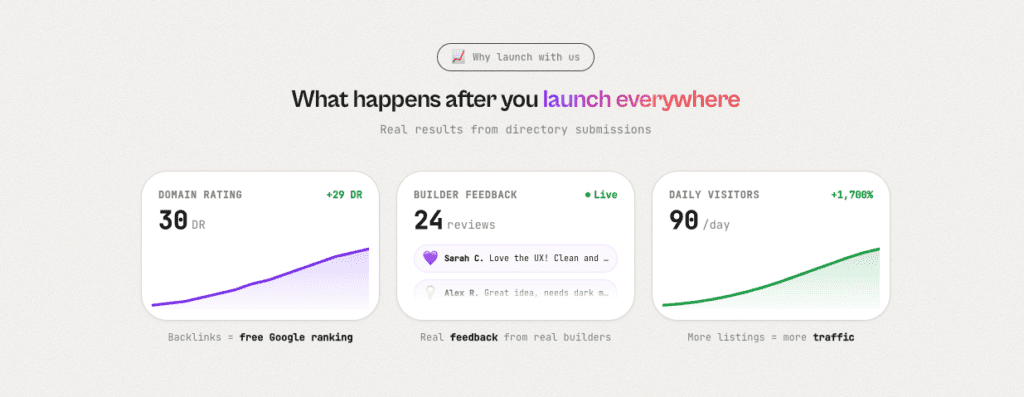
I’ve watched founders waste whole weekends hunting down launch sites and filling the same forms over and over. It’s draining. LaunchPanda cuts that grind. The centralized kit and checklist trim the work to a few focused hours instead of a marathon. Doing it solo usually lands in the 3 to 6 hour range, mostly clicking through prefilled forms instead of rebuilding everything. Go with the done-for-you option, and involvement drops to about an hour or two for approvals while their team handles submissions in the background.
Backlinks deserve a closer look. Smaller niche directories often give dofollow links, which pass ranking value and help SEO. Big communities like Product Hunt usually give nofollow links, which don’t move rankings as much but still drive discovery and referral traffic. I’ve seen those nofollow links push curious visitors to a site and nudge search engines to pay attention sooner.
Traffic after a launch swings based on how well titles and categories fit each platform. Most teams see 100 to 1,000 extra visits in the first few weeks. The sharpest bumps come on launch day from community-driven sites, with Product Hunt a prime example, and from niche directories that send email digests featuring new products.
Here’s the part that compounds. Consistent name, address, and product details across 50 to 150 listings send strong trust signals to search engines. This speeds up indexation for your brand name and often leads to sitelinks in Google within four to eight weeks. It’s a quiet but meaningful win for early-stage SaaS.
For solo founders with too much on their plate, the mix of saved hours, a healthier backlink profile, steadier traffic, and lasting SEO gains turns LaunchPanda into a practical ally for getting noticed without burning out.
Pricing explained for DIY and done-for-you plans and who should choose which
I see two clear paths with LaunchPanda: do it yourself for free, or pay for done-for-you help that takes the repetitive tasks off your plate. DIY suits people who want total control and don’t mind spending hours on account setup, email verification, and follow-ups. DFY suits busy weeks when your focus needs to be elsewhere.
Here’s how each option stacks up:
- DIY Plan: Free access to all directories and the launch kit builder. You complete every submission step, including account creation and email verification. The main cost is your time.
- Done-for-You Tiers: Prices run about $74 to $249, based on how many listings get submitted and the level of concierge support. Lower tiers cover around 40 to 60 submissions. Higher tiers push into 100 to 140+ and add extras like screenshot formatting and status tracking.
I’ve run the math. If a founder’s time is worth about $75 an hour, offloading 8 to 12 hours of grunt work saves roughly $600 to $900. DFY pricing lands below that for most launches, so it looks like a fair trade to free up a day and keep momentum.
One important limit stays in place: done-for-you won’t jump into community chats or reply to comments on Product Hunt. It won’t handle press outreach or craft a launch-day strategy either. It focuses on accurate form submissions, tidy asset prep, and up-to-date tracking sheets so you can see your status at a glance.
Limits, real-world use cases, and smart alternatives to round out your launch
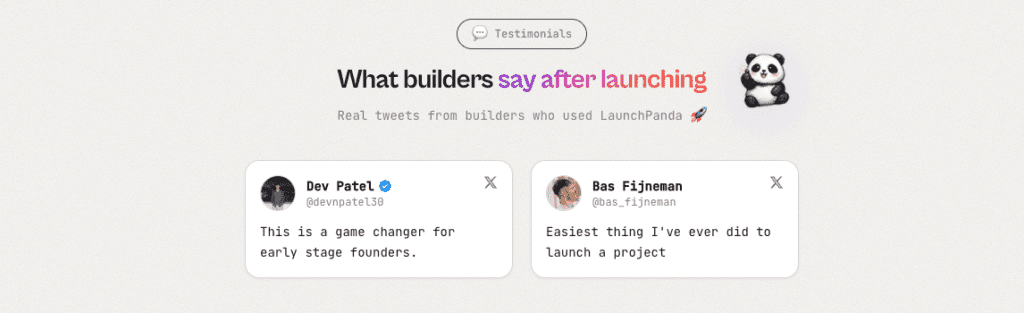
I think LaunchPanda works best when the product story is tight and assets are ready. It moves fast and spreads a launch across many directories, which saves time on repeat submissions. Still, expectations need a reset. Directory quality varies, some listings won’t drive much traffic, and moderation queues often delay visibility for days after the main buzz. Results swing based on category, audience fit, and even the season.
I’ve found it makes sense to treat LaunchPanda as broad distribution while running focused launches in key places. Own Product Hunt yourself. Nail the tagline, visuals, and timing there, since the community expects sharp messaging and engagement beyond a link drop. Do the same on Hacker News or Indie Hackers with thoughtful posts that lead with insight over sales. LaunchPanda doesn’t cover that work, and traction on those sites depends on it. This split lets teams move fast across many outlets while controlling the moments where story and timing matter most.
I’d also weigh simple alternatives. Keep an Airtable of launch directories and submit manually, or try one-off services like Submit.co for media outreach. Niche curators and newsletters in the same vertical help reach warmer, engaged readers. Each route trades cost, control, speed, and reach differently. LaunchPanda fits the quick bulk submission lane with decent tracking.
Before paying, read reviews that show outcomes. Look for traffic spikes, signups, backlinks, and clear lists of which directories approved submissions and how long responses took. Screenshots and live links help verify claims.
I’d try LaunchPanda if the goal is saving hours on submission grunt work while focusing energy on message tests and real community engagement where it matters.
Leave a Reply