Upwork is the big name in freelance marketplaces. It covers design, development, admin work, and marketing. The reach is huge, so most projects find a match. The scale also brings uneven quality and a heavier vetting lift.
Contra takes a different path for founders who want designers and creative talent. It’s smaller and centered on visual web work, with strong Framer presence. Portfolios come first, and browsing feels focused instead of noisy.
Founders care about speed to a short list, trust in skill before a call, total cost after platform fees, and wasted time on mismatched profiles. Picture a $2k landing page refresh due in two weeks, or a $12k brand plus website build over six weeks. Maybe a $3k per month design retainer. These cases show why platform choice isn’t only about talent. Speed matters. Pricing clarity matters. A smooth hiring flow matters.
This guide breaks down who shines where. It compares talent fit, pricing with fees, and the hiring path from search to contract. Whether you’re working with a tight budget or tight timeline, a sky-high bar or flexible scope, the right call between Contra and Upwork saves time and avoids headaches.
On this page
- How talent focus differs between Contra’s design niche and Upwork’s broad marketplace
- What startups actually pay on Contra and Upwork, from hourly rates to fixed packages
- Platform fees on Contra and Upwork and how they affect your total cost
- When to choose Contra or Upwork and how to run a fast, confident hire
How talent focus differs between Contra’s design niche and Upwork’s broad marketplace
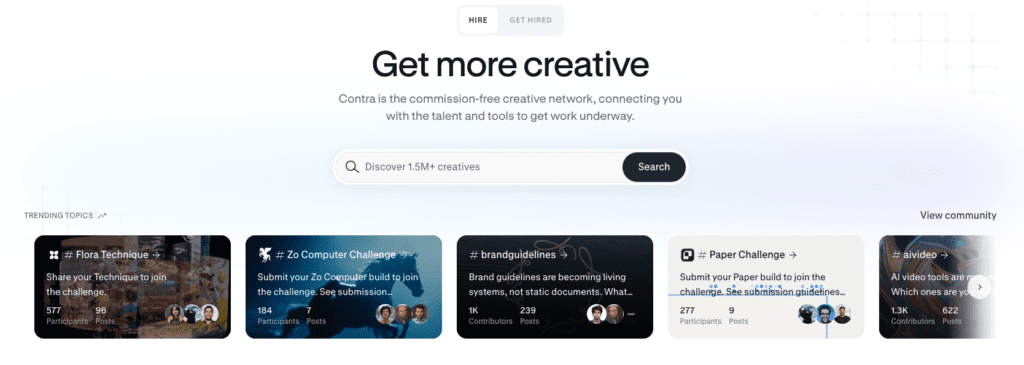
Contra skews toward design and web builds, with lots of Framer and Webflow pros. Portfolios often include live embeds and detailed case studies. It’s easy to see real sites, real flows, and real results without clicking through endless static shots. Writers and developers show up too, but the spotlight sits on creatives shaping crisp interfaces and brand systems.
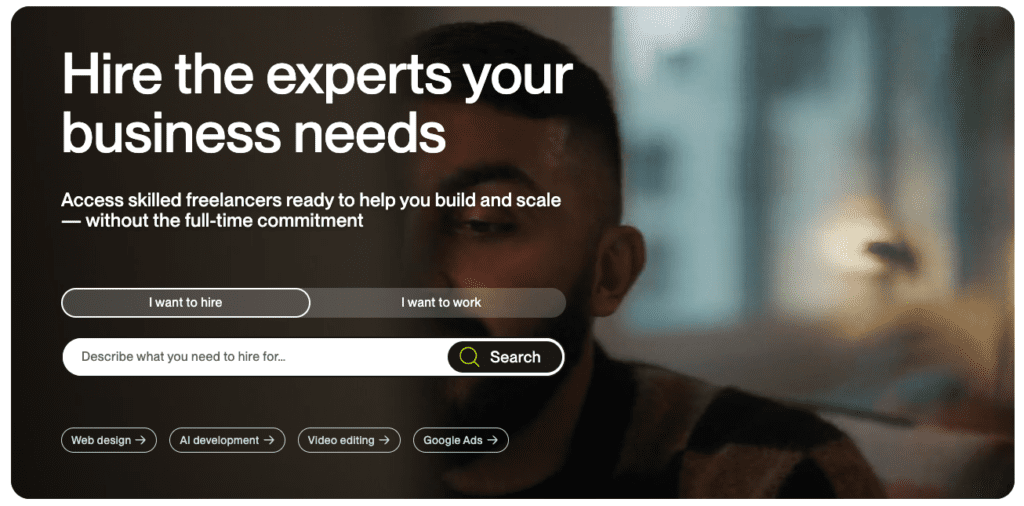
Upwork covers a far broader spread across creative and technical work, from UI/UX and illustration to 3D, front-end, and full-stack. Scale brings big variance in quality. Some freelancers stand out, others need closer review. Filters help sort the field. Job Success Scores, Top Rated badges, and verified histories tighten the list, though they add steps before hiring.
- Contra attracts startup-friendly work focused on design-led briefs like landing pages, brand kits, and Framer sites.
- Upwork includes tiny one-off gigs and large enterprise retainers across many disciplines beyond design.
- Proposals on Contra feel more curated due to a smaller pool, but Upwork often floods clients with choices across regions and price tiers.
- Clients seeking specialized UI or brand experts often choose Contra for its niche focus.
- Teams needing broad skill sets or fast access to varied talent often go with Upwork’s larger marketplace.
The cheaper end of the market works differently again, which is what Contra vs Fiverr compares for startups and solopreneurs.
If Contra is the side that fits, our full Contra review goes through what hiring a Framer designer there actually looks like.
What startups actually pay on Contra and Upwork, from hourly rates to fixed packages
Pricing on Upwork spans a wide range because the talent pool is huge and varied. Hourly design rates go from about $20 up to $150+ per hour, influenced by location, experience, and niche. Fixed-price work shows up often too. Landing pages or small sites usually fall between $800 and $4,000+, with scope and complexity pushing the number up or down.
Contra focuses on clear project packages instead of hourly billing, which makes scope and price easier to understand without time sheets. Common bundles include brand starter kits at roughly $1,500 to $5,000. Framer websites sit around $2,000 to $8,000, shaped by page count and animation depth.
Speed to quote differs a lot. Upwork brings a wave of bids within hours of posting, so market pricing becomes clear fast, but it takes effort to sort through proposals and spot the right fit. Contra lists package prices on profiles, so expectations line up early and decisions move faster for standard design needs.
Founders who want high-polish startup sites with a strong product story should plan about $3k to $10k on Contra to match with proven Framer designers who show solid case studies. Similar quality exists on Upwork, though it usually takes more screening. Deals under $1.5k often point to lighter UI work or clone-style builds that need closer oversight.
Platform fees on Contra and Upwork and how they affect your total cost
Clients usually see a marketplace fee of about 5% added to the agreed project price. For a $3,000 landing page refresh, the total lands near $3,150 before any other extras. Payment processing and currency conversion may add a bit more based on payment method and location. These show up during contract setup, so it’s smart to review the breakdown to avoid surprises.
Freelancers have platform service fees taken from their earnings, either tiered by lifetime billings with a client or set as a flat cut. Since talent adjusts rates to cover those deductions, client totals often end up higher than the base number in proposals. The listed price looks fixed, but part of it covers platform costs already baked into the quote.
Contra generally skips commissions for freelancers on many plans, shifting most fees to the client side. At checkout, founders see clear platform or payment processing fees, shown as either a percentage or a flat amount, depending on card or ACH payments. Transparent line items keep expectations aligned and reduce surprise markups.
Take a fixed $3,000 design package. On one platform, client fees and card charges push the invoice close to $3,200. On Contra, ACH checkout might put the total near $3,150, with credit cards a bit higher because of transaction costs. Running mock contracts on both platforms ahead of time gives a precise preview of the final payable total, which keeps budgets tight and avoids last‑minute shocks.
When to choose Contra or Upwork and how to run a fast, confident hire
Hiring feels different on each platform. Upwork pours in a lot of proposals through broad filters, which opens a massive talent pool beyond design but takes time to sort. Expect dozens or even hundreds of bids before a good match surfaces. Contra centers on browsing portfolios and direct outreach in a smaller, curated community. It’s easier to find designers who excel at polished web work like Framer sites or brand kits.
Portfolios tell different stories as well. Contra pushes detailed case studies with live links, so founders judge interaction quality and visual style fast. On Upwork, portfolios swing in quality. Some show strong examples, others lean on ratings, reviews, and Job Success Scores. More digging is usually needed to spot true standouts.
Both platforms secure payments through escrow and milestone releases, which keeps scope and budget under control as work moves forward. Staying on-platform preserves dispute protection and clean tax records. Remote teams rely on that.
- Choose Contra if the project centers on high-quality brand identity, landing pages, or Framer/Webflow builds with budgets between $3k – $10k where speed and visual polish matter most.
- Opt for Upwork when quick access to a wide range of skills is needed, including development or operations, or for cost-sensitive trials under $2k that require volume comparisons.
- Use Upwork’s proposal inbox for broad sourcing power, but plan to invest time vetting candidates thoroughly.
- Lean into Contra’s portfolio tools for faster confidence in designer fit without wading through endless profiles.
- Always plan milestone payments regardless of platform to maintain clear expectations throughout the engagement.
Define scope, budget limits, and timeline goals upfront. Shortlist 3 – 5 strong candidates based on portfolios or proposals, then ask for small paid samples or audits tailored to the brief. Run mini tests before full contracts to surface risks early and build trust on both sides.
This approach turns hiring from a gamble into a thoughtful investment, whether the choice is Contra’s focused design community or Upwork’s broad marketplace.
Leave a Reply