Fiverr works like a busy market. Millions of gigs cover almost every niche, with quick matches and low prices. It suits founders who need fast turnarounds and accept mixed quality while hunting for a solid fit.
Contra feels closer to a curated gallery. Fewer freelancers, stronger portfolios, and a clear tilt toward web and product design, with many pros known for Framer sites. The smaller pool cuts noise and highlights specialists who go deep on design problems.
For startups and solo founders choosing between Fiverr and Contra, the real choice is speed and volume versus depth and polish. How much risk fits the budget when quality swings widely, versus leaning on vetted work and clear case studies? The platform matters less than matching the project’s goals with a marketplace vibe that supports them.
Scope and talent quality compared for design work and beyond
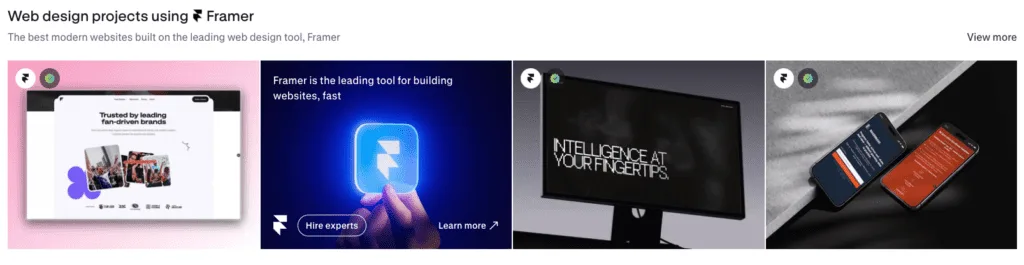
Fiverr covers almost everything, from quick logo edits and voiceovers to data entry and 3D modeling. Think of it as a big toolbox with tons of options for almost any task. Contra takes a more focused approach with web and UI design, brand identity, and a strong bench of Framer specialists. Startups that want sharp digital design often match better with Contra’s talent.
The way freelancers present their skills looks different on each platform, too. Contra freelancers go deep. Profiles often include full case studies that show the brief, the approach, and the outcome. Portfolios link to live sites and demos, so it’s clear how the work came together and what the results look like. Fiverr profiles lean more toward gig samples packaged into tiers. They’re quick to scan, but they don’t always show the thinking behind the work.
Finding talent works in distinct ways:
- Fiverr: Search relies on keywords tied to project terms, seller levels for experience tiers, and review volume that signals reliability.
- Contra: Discovery favors detailed portfolios with featured projects and referrals from its community, which elevates specialists over generalists.
For visual or complex projects – site redesigns, brand systems, motion-heavy interfaces – Contra’s case studies make scope and quality clear before a contract. Fiverr fits fast, repeatable services where clear packages and user feedback speed up shortlists without deep process reviews.
Pricing and fees explained, plus what your budget buys
Small projects on Fiverr often start under $100, which works well for quick site fixes or a few design assets. Larger, polished work, like full branding or professional web sections, tends to land in the low thousands and aims to stay accessible. Contra leans toward larger budgets. Designers quoting end-to-end Framer sites usually charge mid-four to low-five figures, which matches the deeper scope and tailored build.
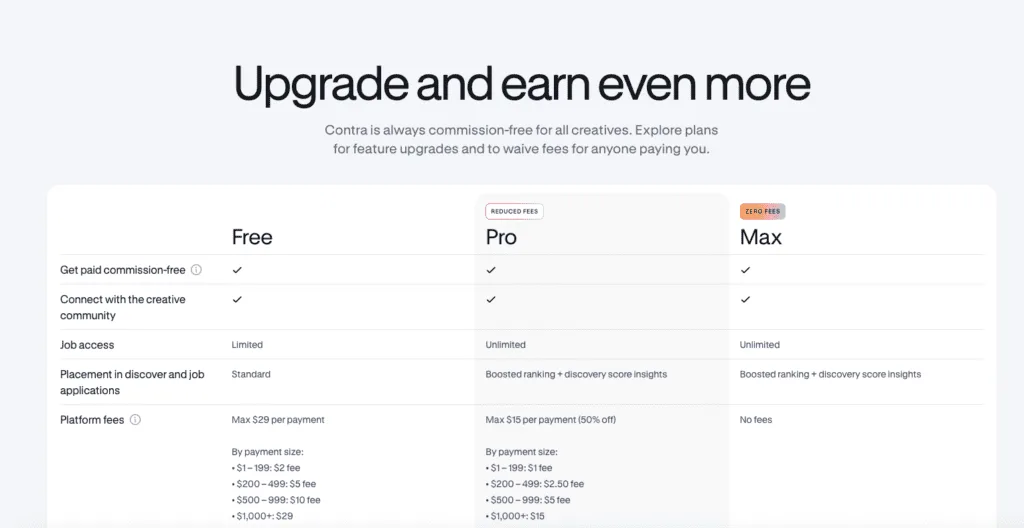
Fees work differently across the two platforms. Fiverr adds buyer fees on top of listed gig prices and takes a commission from sellers, so final costs aren’t clear until checkout. Contra shows transparent pricing in proposals and uses simpler payout rules for freelancers, with no hidden extras.
Pricing dynamics shape expectations:
- Fiverr’s large marketplace drives heavy competition, which sometimes pushes prices down and risks lower quality.
- Contra’s smaller network and focus on strong portfolios help maintain steadier rates that align with design value.
Negotiation also works in distinct ways. Fiverr’s preset gig tiers lock scopes unless clients request a custom offer, which limits flexibility and adds back-and-forth. Contra starts with a brief and proposal, so scope edits, milestones, and payment plans get set early, making changes smoother before work begins.
Hiring experience from search to kickoff on each platform
Finding a designer on Fiverr can feel like sorting through a crowded shelf. Filters help narrow by budget, delivery time, and seller level. Hiring moves fast, but it also gets tiring when the goal is a specific kind of website and not just a quick job. Contra flips the process. Search leans on skills shown in portfolios – tags like Framer, Webflow, and brand systems. Founders hiring for site design see a tighter list that prioritizes craft over price or speed.
Conversations work differently, too. Fiverr packages gigs with fixed scopes to reduce back-and-forth. Good for simple tasks, but gaps appear when the website needs change or grow. Contra invites more discussion before a contract. Early chats include site maps, brand guidelines, and component lists. Portfolios sit at the center of the exchange, so proposals match the actual plan.
Payments follow the platform’s structure. Fiverr often uses upfront escrow per gig or bundle. Clear, but rigid for multi-phase work like wireframes, then a design system, then build. Contra supports milestone proposals built for staged projects:
- Payments split across key deliverables (wireframes, design system creation)
- Milestones that reflect build progress
- Final QA sign-off before completion
This setup fits how many startups pace website work.
Quality signals don’t look the same. Fiverr leans on public review counts as a quick read on reliability. Fast to scan, but volume can hide depth. Contra emphasizes depth in the work itself. Case studies, client logos, and results such as conversion lifts or faster load times show what happened after launch. For founders hiring designers where outcomes matter, those details build trust.
Which platform fits your project, budget, and risk tolerance
Choosing between Fiverr and Contra depends on the job’s scope and how much collaboration it needs. Fiverr suits fast fixes on a tight budget, like landing page tweaks or quick illustrations. Contra fits bigger, higher-stakes work – full brand systems, deep UX audits, or Framer websites where craft and back-and-forth matter.
Quick snapshot:
- Fiverr: Fast turnarounds for small-scale work with tight budgets.
- Contra: Premium website builds with strong craft, especially from Framer designers.
- Both: Start small. A pilot milestone reduces risk.
Risk drops when vetting is sharp. On Fiverr, focus on Level 2 or Top Rated sellers with high completion rates and recent strong reviews. Contra rewards deeper research – portfolios with case studies that show results like faster load times or higher conversions deserve attention.
A small paid test helps confirm fit. Try a homepage wireframe in Framer or a token set for a design system before committing to a full build.
Before hiring, use this checklist:
- Pin down outputs: page count, components, CMS needs.
- Set a budget ceiling that matches quality expectations.
- Define a realistic timeline, and include collaboration time on Contra.
- Choose what matters more for this project – deep design expertise (including Framer) or speed and price flexibility.
This approach helps founders match the platform to their priorities instead of forcing one approach on every project.
If Contra is not in the running at all, the same question between the two largest marketplaces is what Upwork vs Fiverr sets out.

Leave a Reply