Once you know the four jobs any Stripe affiliate app has to perform, choosing the best affiliate software for Stripe stops being overwhelming. Every option in the Stripe App Marketplace, no matter how different the marketing pages look, is ultimately solving the same four problems.
Here’s what each tool is actually doing under the hood:
Tracking a referral means generating a unique affiliate link or coupon code and recording which partner sent the visitor, so the referral source survives all the way to checkout.
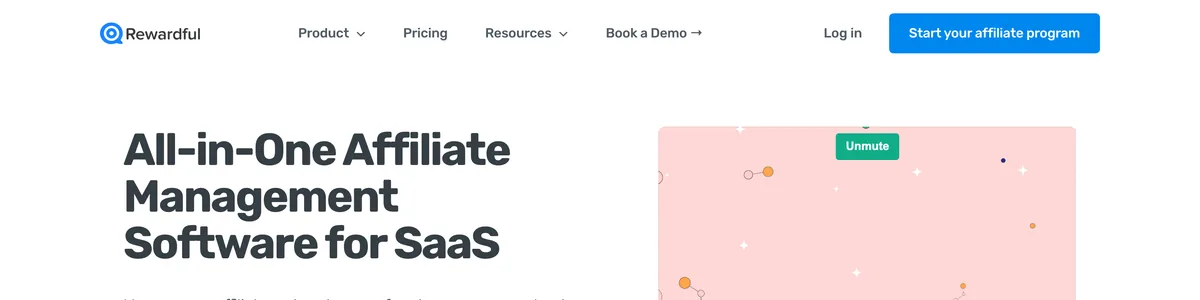
Attributing a Stripe payment means when a customer pays through Stripe, the app matches that payment back to the right affiliate using webhooks or a two-way sync. Rewardful is a verified Stripe partner with true two-way sync, which means subscription events, refunds, and affiliate-attributed revenue flow directly between Stripe and Rewardful without any manual intervention.
Calculating commission means the software applies your commission rules (percentage or flat amount, recurring or one-time) to the attributed revenue, while accounting for plan changes and refunds so nobody gets paid on money that came back.
Paying the affiliate means initiating mass payouts or producing a payment file you can process. Rewardful, for instance, offers managed payouts via PayPal and Wise mass payout, with no manual payment files or transfers to build by hand.
That last one is where a lot of founders get tripped up. It’s easy to assume payment is just a bank transfer you handle yourself, but the difference between a tool that cuts payouts automatically and one that hands you a CSV to process can be hours of admin every month.
This four-job lens is what we’ll use for every tool in the rest of this article. If a piece of software can’t do all four things cleanly, no amount of slick dashboards or fancy reporting makes up for it.
How to Choose Affiliate Tracking for Stripe

Before we compare individual tools, we’d settle four choices first. They determine which affiliate tracking for Stripe software actually fits your business, and getting them sorted up front makes the rest of the evaluation almost mechanical.
Compare pricing models before features. Revenue-capped tiers, flat monthly fees, revenue-percentage, and base-plus-marketplace-percentage all change what you pay as affiliate revenue grows. FirstPromoter, Rewardful, and others use revenue-capped tiers that auto-bump you to the next tier when your generated revenue exceeds the ceiling.
Check the payout method. Automated payouts via PayPal or Wise save hours of admin every month. FirstPromoter has one-click PayPal payouts, Rewardful uses PayPal and Wise mass payout, and some tools leave you to export payment files and process transfers yourself.
Look at the cookie window and tracking robustness. First-party tracking bypasses browser cookie restrictions and ad blockers entirely. Dub Partners uses 100% first-party tracking, which preserves attribution in situations where third-party cookies fail.
Confirm recurring commission handling. If you plan to pay affiliates on renewals, the tool must adjust for upgrades, downgrades, cancellations, and refunds. Trackdesk excels at recurring commissions with real-time monitoring. This one should be a hard requirement, not a nice-to-have.
In our opinion, pricing model is the first filter, then payout method, then tracking robustness, and recurring commission handling last. Most founders skip that final check and end up switching tools a few months in when they realize their renewals are being tracked wrong.
Percentage-of-Revenue Pricing vs a Flat Monthly Fee

The pricing model matters more than any feature at early scale, because it decides whether your affiliate software gets cheaper or more expensive exactly when your program starts to work. Two tools can track referrals, attribute payments, and pay affiliates identically well, yet one quietly eats into your margin as revenue grows while the other stays flat. Sorting out how each of them charges is the first real decision you make, so here’s how the three models break down.
Revenue-percentage pricing starts cheap and grows with sales. Reditus has a free plan that is genuinely free forever up to $12K ARR through user referrals, with value-based pricing that scales with affiliate MRR and no commission cuts on the free tier. You pay nothing until the program produces, and then the platform takes a cut proportional to what it helped generate.
A flat monthly fee charges the same price whether affiliates generate $1,000 or $100,000 in a month. Tapfiliate is the clearest example, with a fixed rate and no percentage of revenue or transaction fees layered on top. It is predictable, which founders love for budgeting, but it is potentially pricier at very low volume where a free tier would cost nothing.
Revenue-capped tiers sit between the two. FirstPromoter’s Starter plan costs $49/mo up to $5,000/mo in affiliate revenue, then auto-bumps to Business at $99/mo up to $15,000/mo, with 0% transaction fees across all plans. You get the predictability of a flat fee within each tier, but the ceiling forces an automatic upgrade as revenue crosses it.
The decision rule is really about scale. A percentage tool costs nothing at $0 revenue and scales up from there, while a flat fee becomes cheaper as a percentage of revenue at high volume. Base-plus-percentage tools like PartnerStack are the worst fit at small scale, because you’re paying a $1,000/mo base plus a 3 to 15 percent PartnerStack Fee before a single sale happens. That structure only makes sense once affiliate revenue is substantial enough that the base fee is a rounding error against what the platform returns.
Recurring vs One-Time Commissions for SaaS Affiliate Software
The single biggest structural choice a new affiliate programme makes isn’t which tool to buy. It’s whether you pay affiliates per sale or per renewal. A recurring commission pays the affiliate on each renewal payment from a referred customer, so a subscribed customer creates a payout month after month for as long as they stay. A one-time commission pays once per referred sale and then stops, regardless of how long the customer remains a subscriber. Everything else in your programme, from who applies to how you budget, flows from that one decision.
The reason this choice matters so much is that it changes who your affiliates are. Recurring commissions attract partners who care about retention and lifetime value, because their income is tied to keeping customers happy and subscribed. One-time commissions attract volume-focused promoters who want a quick payout and don’t care what happens after the sale.
Recurring structures can build you a loyal, invested partner base, but they also make your cost per acquisition less predictable, since you’re committing to payouts on revenue you haven’t collected yet. One-time commissions keep your cost per acquisition clean and predictable, but you’ll tend to attract affiliates who treat your product like a lead-gen opportunity rather than a relationship.
If you choose recurring, your Stripe affiliate software has to track billing events, not just initial sales. Upgrades, downgrades, cancellations, and refunds all need to flow back into the commission calculation so nobody gets paid on revenue that bounced. Trackdesk is a good example of a tool built for exactly this, with real-time monitoring of those billing events so commissions always reflect actual retained revenue. A tool that only handles first payments will quietly overpay you into the red or underpay your best affiliates, and neither is a good look.
For a solo SaaS founder, we’d lean recurring, provided the tool handles billing events properly. Your early affiliates are often your most engaged customers, and paying them on renewals gives them a reason to stay excited about your product long after the launch buzz fades. But there’s a legitimate case for one-time commissions if you’re cash-strapped and need every dollar of collected revenue to cover operating costs before you worry about affiliate loyalty. The right answer depends on whether you’d rather trade predictable acquisition costs for a partner base that’s genuinely invested in your retention.
Rewardful: Referral Software Built for Stripe
Rewardful is the closest thing the Stripe App Marketplace has to a default answer for referral software for Stripe. It’s a verified Stripe partner with true two-way sync, which means subscription events, refunds, and affiliate-attributed revenue flow directly between Stripe and Rewardful. No CSV exports, no reconciliation, no wondering whether the payment you see in Stripe matches what the dashboard claims. The integration is one click, needs no code, and averages fifteen minutes to set up, which is about the fastest we’ve seen any Stripe affiliate tool go from install to live.
Starter runs $49/mo up to $7,500/mo in affiliate revenue, Growth is $99/mo up to $15,000/mo, and Enterprise starts at $149+/mo. There are no transaction fees on any plan and no contract, which is rare in this category. A 14-day free trial gets you in, and annual billing throws in two months free.
The revenue caps are the one thing to watch. Once your affiliate program crosses $15,000/mo in generated revenue, you’re on Enterprise pricing, so the cost scales with success. That’s a fair trade for most early SaaS businesses, but it’s worth knowing the ceiling exists before you commit.
On the payout side, Rewardful handles the whole thing through Managed Payouts via PayPal and Wise mass payout. There are no manual payment files to build or transfers to process by hand, which is the difference between an hour of admin a month and a genuinely hands-off system. The tool also tracks recurring commissions and adjusts for upgrades, downgrades, cancellations, and refunds, so your affiliates only get paid on revenue that actually sticks. Coupon code tracking, first-touch or last-touch attribution, self-referral fraud detection, and multiple currencies round out the feature set.
Rewardful is trusted by 2,600+ teams. Podia doubled its affiliate revenue in five months after switching from Impact to Rewardful, and AI SaaS companies using the tool have attributed 15 to 20 percent of MRR to their affiliate programs while generating over $100K in affiliate-driven sales. The caveat is that Rewardful was acquired by saas.group, and some users report slowed product velocity and multiple pricing shifts since the acquisition. For a solo SaaS founder, the two-way sync and managed payouts make it a strong default, but keep an eye on where the product goes from here.
FirstPromoter: A Feature-Rich Stripe Affiliate App
FirstPromoter has been doing the job since 2017. It’s tracked over $30M/mo in affiliate revenue across 2,000+ customers. It also connects to Paddle, Recurly, Chargebee, and Braintree, so you’re not painting yourself into a Stripe-only corner if you ever expand your billing stack. It supports 190 currencies and converts payouts in 170 of them, which matters more than most solo founders initially realize once international affiliates start applying.
Starter runs $49/mo capped at $5,000/mo in affiliate revenue, Business is $99/mo up to $15,000/mo and unlocks Wise payouts and custom domains, and Enterprise starts at $149/mo. There are 0% transaction fees across every plan, which means the revenue caps are the only scaling mechanism. The feature set covers what you’d expect from a mature tool: a branded affiliate dashboard, one-click PayPal payouts, personalized referral links, coupon tracking, and customer incentivization tools that let you reward customers for referring without building a separate program.
The one caveat we’d flag for US-based founders is that FirstPromoter does not automatically generate or send 1099s. That means you’re handling tax paperwork yourself at year-end, which is a real administrative cost if you have a growing affiliate base. JustCall launched on FirstPromoter and reached $2.4M ARR in three years with 1,000+ affiliate partners. For a solo SaaS founder who wants a clean, Stripe-native dashboard with solid payout automation, FirstPromoter is a strong pick, provided the manual 1099 handling doesn’t scare you off.
PromoteKit, Partnero, and Trackdesk Compared
PromoteKit is the easiest entry point we’ve seen in this category, because it lives directly on the Stripe dashboard. There’s no separate account to create, no sync to babysit, and setup takes under ten minutes with no-code, low-code, or code-based options depending on how much control you want. It tracks referrals across Stripe Checkout, Stripe Subscriptions, and Stripe Payment Links, and supports custom domains for affiliate portals so your partners get a branded dashboard rather than a generic subdomain. Pricing is free for the first 3 referrals, then $29/mo for programs up to $10,000 in monthly referral revenue, which makes it one of the cheapest ways to test whether an affiliate program works for your product at all.
Partnero takes a different angle. It’s the only AI-powered affiliate and referral platform in this group. The AI handles program setup and partner discovery, which is genuinely useful if you’d rather not spend a weekend configuring commission rules and writing partner outreach emails by hand. It supports affiliate, refer-a-friend, and newsletter referral programs, tiered commissions, goal-based bonuses, and a white-label partner portal, with automated payouts via PayPal and Wise. Pricing runs $49 to $599/mo with a 30-day money-back guarantee, so there’s a real out if the AI-first approach doesn’t fit how you like to work.
Trackdesk is the one built for founders who take recurring commissions seriously. It has a free tier up to $1,000/mo in revenue, then Business at $249/mo and Enterprise at $499/mo, and its standout feature is real-time monitoring of billing events so upgrades, downgrades, cancellations, and refunds all flow into the commission calculation as they happen. That’s the exact capability we flagged earlier as a hard requirement for recurring structures, and Trackdesk does it natively rather than as an afterthought. A G2 rating of 4.8 suggests the execution matches the promise.
The free tiers break down this way. PromoteKit’s first 3 referrals cost nothing and Trackdesk covers up to $1,000/mo in revenue, while Partnero offers no free tier but backs itself with the money-back guarantee.
For a solo SaaS founder, PromoteKit is the most interesting of the three to us. The zero-code Stripe dashboard entry removes every barrier between deciding to launch an affiliate program and having one live, and the $29/mo ceiling is low enough to be a rounding error against the revenue even a modest program should generate. Trackdesk is the better pick if you’re already committed to recurring commissions and need the billing-event tracking to be bulletproof, but PromoteKit gets you moving fastest with the least commitment. Partnero’s AI angle is novel, but the $49/mo floor with no free tier makes it a harder first bet.
Dub Partners, Reditus, Endorsely, LeadDyno, and Refgrow
The remaining Stripe referral program software options worth a look split into two groups. The lean, budget-friendly tools get the job done, and the enterprise platforms are what most solo founders should skip entirely. Here’s how the smaller five stack up.
Dub Partners runs on 100% first-party tracking, which sidesteps browser cookie restrictions and ad blockers that quietly kill attribution in third-party setups. There’s a free tier for basic link management, Pro plans start around $30/mo, and global payouts plus tax compliance are handled automatically. For a founder with international affiliates, that last part removes a surprising amount of year-end headache.
Reditus is genuinely free forever up to $12K ARR through user referrals, with value-based pricing that scales with affiliate MRR and no commission cuts on the free tier. What makes it interesting beyond the price is the marketplace angle. Your program gets listed to 25,000+ B2B affiliates, which is effectively free distribution for a program that hasn’t built its own partner pipeline yet.
LeadDyno prices by number of active affiliates rather than revenue, which is a genuinely different model from everything else in this category. Lite is $49/mo for up to 50 affiliates, Essential runs $129/mo for 150, Advanced is $349/mo for 500, and Unlimited costs $749/mo with no cap. If you know you’ll never have more than a few dozen active partners, the Lite tier is one of the cheapest ways to run a real program, but the jump between tiers gets steep fast as your partner base grows.
Endorsely is free until your affiliates generate $1,000/mo in revenue, then Pro runs $39/mo up to $5,000/mo and Scale is $99/mo up to $20,000/mo. The Stripe connection is one click, it tracks affiliate links and discount codes, and commissions can be one-off, recurring, or tiered, with bulk payouts through PayPal. Its AI affiliate finder looks for people already promoting products like yours and drafts the outreach message, which is worth having when you’re starting a program with no partner list.
Refgrow offers a free plan with no revenue fee, supports Stripe, LemonSqueezy, and Paddle, and includes an embeddable widget. The multi-platform support makes it a decent fit if you’re not Stripe-only, and the free tier with no revenue cut is hard to argue with for testing the waters.
Where PartnerStack and impact.com Actually Fit
We want to be clear about PartnerStack and impact.com. Neither deserves to be ranked low so much as categorized honestly. Both are built for companies with actual partner teams, and both are the wrong shape for a one-person business. This isn’t a quality judgment. It’s a fit judgment.
PartnerStack’s Launch Plan starts at $1,000/mo on annual billing plus a 3 to 15 percent PartnerStack Fee on top, and it’s really only worth it once you’re past roughly $1M ARR. Below $500K ARR, that base fee plus revenue percentage is a financial burden no solo founder should carry. impact.com looks more approachable on the surface with Starter at $30/mo, but Essentials jumps to $500/mo and Pro to $2,500/mo, with a 2.5% transaction fee layered on. It’s also complex to implement without dedicated resources, which is why it’s best for established programs managing traditional affiliates alongside influencers and media partners through a marketplace of 90K+ broad partners.
Our verdict is straightforward. We’d steer a solo founder away from both unless they’ve already hired a partnerships person and crossed the $1M ARR threshold. These platforms earn their keep when there’s a team to run partner outreach, manage contracts, and chase relationships. For a one-person operation still figuring out whether affiliates will work at all, that’s overhead looking for a problem to solve.
The Best Affiliate Software for Stripe Compared
Before we give you our picks, here’s every tool in this article side by side.
Tool | Pricing | Free tier? | Notes |
|---|---|---|---|
Rewardful | $49/mo | No | Revenue-capped; true two-way Stripe sync |
FirstPromoter | $49/mo | No | Revenue-capped; no automatic 1099s |
PromoteKit | Free for first 3 referrals, then $29/mo | Partial | Lives on the Stripe dashboard |
Partnero | $49 to $599/mo | No | AI-powered; 30-day money-back guarantee |
Trackdesk | Free up to $1,000/mo revenue, then $249/mo | Yes | Real-time billing event monitoring |
Dub Partners | Pro from ~$30/mo | Yes (basic link tier) | 100% first-party tracking |
Reditus | Free forever up to $12K ARR through user referrals | Yes | No commission cuts on free tier |
Endorsely | Free up to $1,000/mo revenue, then $39/mo | Yes | One-click Stripe setup; AI affiliate finder |
LeadDyno | $49 to $749/mo | No | Priced by active affiliates |
Refgrow | Free plan | Yes | Supports Stripe, LemonSqueezy, and Paddle |
PartnerStack | From $1,000/mo plus 3 to 15 percent fee | No | Built for companies with partner teams |
The pricing column tells most of the story. The revenue-capped tools get more expensive exactly when your program starts working, while the flat-fee and free-tier options stay predictable. Which one is right depends entirely on where you are in that curve.
Best Overall for a Solo SaaS: Rewardful
Our pick for most solo SaaS founders is Rewardful, and it comes down to the two-way Stripe sync plus managed payouts. It’s a verified Stripe partner, setup averages fifteen minutes, and the PayPal and Wise mass payouts mean you never touch a payment file. With 2,600+ teams on the platform, it’s the fastest path from zero to a working affiliate program we’ve seen in this category.
The one thing to watch is the revenue caps. Rewardful’s pricing scales as affiliate revenue grows, and you’ll likely outgrow it somewhere between $1M and $2M ARR. That’s a good problem to have, but it’s worth knowing the ceiling exists before you commit to the platform.
Best for the Tightest Budget: Reditus
If you’re bootstrapping and every dollar counts, Reditus is the answer. Its free tier is genuinely free forever up to $12K ARR through user referrals, with no commission cuts on that tier, and the platform lists your program to 25,000+ B2B affiliates. That marketplace exposure is effectively free distribution for a program that hasn’t built its own partner pipeline yet.
Endorsely is the runner-up here. It is free until your affiliates generate $1,000 a month, PayPal mass payouts are included at that level, and the step up is $39 a month rather than a jump into three figures. Trackdesk used to belong in this paragraph and no longer does: its permanent free plan has been discontinued for new sign-ups, and paid entry now starts at $329 a month.
Best for a Company With a Real Partner Programme
PartnerStack and impact.com are the right tools, just not for you yet. Once you pass $1M ARR and have a dedicated partnerships hire, PartnerStack’s network of 144K+ vetted B2B partners and impact.com’s 90K+ marketplace make their base fees and percentage cuts worth paying. At that scale, the platforms earn their keep by putting your program in front of partners you’d never find on your own.
Until then, they’re overhead looking for a problem to solve.
The Takeaway
For a solo SaaS founder, the smart play is to start with a Stripe-native tool that handles recurring commissions and payouts automatically, and to switch to an enterprise platform only when you have the team and revenue to make it worthwhile. Rewardful gets you there fastest, Reditus gets you there cheapest, and Trackdesk covers you if recurring commissions are non-negotiable. Pick the one that matches your budget today, because the affiliate software that gets you launched is worth more than the one that’s perfect on paper but sits unused while you figure out the setup.


Leave a Reply