

You land on a website and it just feels different. Clean lines point your eyes where they need to go. There’s white space everywhere, but it doesn’t feel empty. The colors remind you of Nordic forests and cold water, and the fonts are plain but somehow they work.
That’s Scandinavian web design. Less stuff on the page means you can actually find what you need. No clutter fighting for attention. It looks good, sure, but it also makes you feel calmer while you’re clicking around. The design pushes you toward important things without being pushy about it.
Finding a Scandinavian web designer who can pull this off takes some work. You need someone who gets how to mix the aesthetic with actual usability. This guide covers where to look for these designers and how to hire one without second-guessing yourself. Your site should stand out, and this style does that without trying too hard.
Where to find Scandinavian designers online
Knowing where to find Scandinavian designers makes your search way less frustrating. You want creatives who understand that clean, minimal look but don’t sacrifice how things actually work.
Dribbble and Behance work well if you’re specific with keywords. Search “Scandinavian web design” or “Nordic minimal” and use location filters for Denmark, Sweden, Norway, Finland, or Iceland. This helps you find actual Scandinavian designers instead of just people copying the style. When you spot portfolios you like, save them and message through their profile emails or use the hire buttons if they have them.
Studios like Scandinavian Design Group, Bold in Sweden, Heydays out of Norway, and North Kingdom also in Sweden all do that sleek Nordic thing. If you want more options, directories like DesignRush or Clutch let you filter by region and services. You can narrow down to Web Design or UX specifically, which saves time.
Slack and Discord communities are less formal but surprisingly useful for finding designers. Groups like Designers Guild or DesignX let you post what you need. Mention style stuff like Nordic, minimal, or functional, and note you prefer CET time zones so communication doesn’t get weird with scheduling.
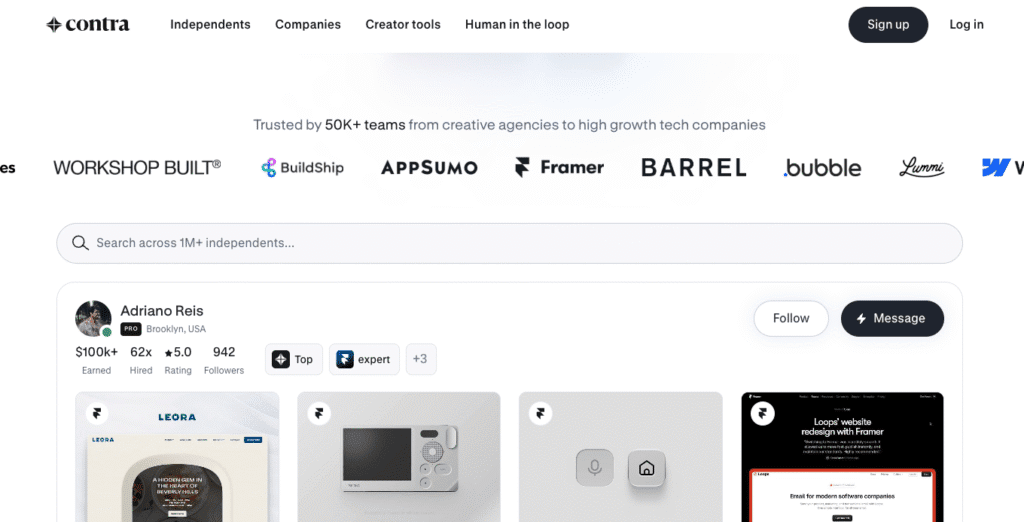
Freelance platforms give you more control upfront. Contra, Upwork, and Toptal have filters that let you require portfolio samples before you even start talking. Look for candidates showing ecommerce work – PDP and PLP pages especially – or anyone who’s worked with Scandinavian brands before. That experience usually means they get the subtleties of the style without you having to explain everything.
What to look for in a Scandinavian designer portfolio
When you check out a Scandinavian web designer portfolio, it’s easy to get distracted by slick images and nice layouts. What matters more is how these designs actually work when real people use them. You need proof that the clean lines and calm colors help users and improve business results, not just look good in screenshots.
Start with counting live websites – you want at least three real sites you can click through, not just static pictures. Nordic designers usually go mobile-first, so pull up the sites on your phone. Look for clear content hierarchy with proper H1 through H3 headings and consistent spacing. A lot of Scandinavian designers use 8pt grid systems, which is why everything feels balanced.
Classic Scandinavian style is pretty recognizable once you know what to spot. There’s generous white space around product blocks instead of cramming everything together. Colors stay muted with maybe one accent color standing out. Photos tend to use natural light without heavy filters, and icons stay simple without getting decorative.
Case studies separate okay portfolios from good ones. You’re looking for actual numbers here – stuff like an 18% increase in checkout completion or a 25% drop in bounce rate on product pages. These prove the design did something beyond looking nice. It helps if they mention tools like Figma, Framer, Webflow, or Shopify 2.0 since those are common in the Nordic design scene.
Check whether they understand the Scandinavian market. References to local brands matter. So do ecommerce details like VAT display rules, Klarna payment integration, and GDPR cookie compliance built into their work. These aren’t flashy but they show the designer knows what actually matters for Nordic users.
The best portfolios don’t just show off pretty designs. They connect subtle Nordic aesthetics to results you can measure, which is what separates someone who makes things look nice from someone who makes things work better.
How much a Nordic minimalist website design costs and what it includes
Getting clear on budget, scope, platform choice, and timelines before you hire a Scandinavian eCommerce web designer helps you avoid problems down the road. If you don’t nail down these details early, you’ll run into surprise costs or delays.
Budget Ranges show you how far you can go with your Nordic minimalist website designer. A solo designer handling strategy and UI/UX design usually charges between $4,000 and $12,000. That works if you’re running a smaller project or startup and want a clean Nordic look without too much custom stuff. Need someone to take your concept from design through to build? Especially on platforms like Webflow or Shopify? You’re looking at $12,000 to $40,000, though it depends on how complex things get. Boutique studios that specialize in high-end Scandinavian aesthetics with custom components and faster delivery start around $35,000. If your site needs lots of pages or intricate features, costs can hit six figures pretty fast.
For Scope Blueprint, most Nordic minimalist ecommerce sites keep the sitemap efficient. You get essentials like Home, product listing pages, product detail pages, About, a Journal or blog section, plus Cart and Checkout areas built for smooth conversions. Your designer will build a design system around tokens that cover type scale and spacing increments – often based on an 8pt grid that’s common in Nordic workspaces. Muted color palettes with one accent hue standing out subtly. Component libraries include cards that showcase products with neat spacing instead of cluttered tiles, plus modals used sparingly so they don’t distract users. Deliverables bundle everything into handoff packages with Figma libraries, style guides, and clickable prototypes so developers understand how each piece behaves.
The right tech depends on matching your site’s purpose with a fitting platform. Under Platform Fit considerations, Shopify 2.0 works well when you’re selling goods online. It has native support for ecommerce workflows and various Scandinavian-inspired themes that already carry that minimal look without extra coding. Webflow fits better for marketing-focused sites that need content management systems but not heavy shopping carts. Designers can create flexible layouts while keeping things visually lightweight. Framer plays a role when speed matters – it’s good for landing pages requiring quick launches where interactivity meets simplicity, though it doesn’t need full-fledged backend ecommerce functionality. Still polished enough to impress visitors right away. Confirming past published projects in these stacks helps you spot designers who actually know their stuff instead of just tossing buzzwords around.
Brace yourself for real-world timing by understanding typical phases. Under Timeline Reality concerns, discovery takes about one to two weeks aimed at digging into goals and user needs. UX/UI design stretches anywhere from three up to six weeks depending on feedback loops needed after initial wireframes land. Building out coded templates then spans two through six weeks based on intricacy, while quality assurance rounds including accessibility testing generally add another week before you hit launch-ready status. Set aside 10-20% extra time padding particularly if new content creation or photography shoots need slotting in mid-project since those tend to slow things down unexpectedly.
Scandinavian design templates and themes to start your brief
You don’t need to start from scratch with a Scandinavian web design project. There are ready-made resources that let you begin right now, and if you line up the right designer, the whole thing moves faster than you’d think.
Shopify’s got themes like Kubix and Prestige’s Clean presets that give off that Nordic vibe – lots of white space, clean lines, nothing fussy. Before you buy, check the license terms and make sure they handle accessibility properly. Webflow templates tagged as Minimal or Nordic work well if you want more control over layout without adding visual clutter. Framer kits tend to use neutral colors with strong typography, which is useful when you need something built fast and it still has to look right. Whatever you pick, verify it covers accessibility requirements if those matter for your audience.
Your brief needs enough detail that designers understand what you’re after. Describe your brand tone using words like calm or functional instead of vague phrases. Mention who you’re targeting – EU markets versus US ones can shape design choices more than you’d expect. Include specific goals like improving conversion rates or bumping average order value, not just “make it look good.” List technical needs upfront: Klarna integration, GA4 analytics, whatever tools you already use. Then attach three visual references that nail the aesthetic you want. This saves a ton of back-and-forth later.
On Dribbble, search “Nordic minimal web” and filter by availability plus the tools you need. That narrows it down to designers who can actually start when you need them and already work in your preferred platform. Message them with a straightforward outline of the project and your budget range. You’ll get faster responses that way, and you won’t waste time on people outside your price point.
Collect five portfolios that feel close to what you’re picturing. Set up short calls – 30 minutes is enough to figure out if someone communicates well and understands what you’re asking for. Pay your top two or three candidates for a moodboard or concept sprint, somewhere between $300 and $1,200 depending on scope. It’s not a huge expense, and it shows you whether they can translate the aesthetic into something functional before you commit to the full project.
Once you’ve seen those concepts, pick the designer whose vision matches what you need. Tie payment to clear milestones so you’re both aligned on deliverables at each stage. Then commission the full build.
This approach keeps you in control and makes sure the site doesn’t just look clean – it has to pull its weight for your business too. Starting with templates or themes cuts down the early decision-making, and vetting designers through paid concept work means you’re not guessing about fit.
Leave a Reply