
From a founder’s seat, Framer feels like a clean canvas for travel stories. Images stay sharp and load fast on any device because the platform auto-optimizes them. Smooth scroll effects and small hover touches add a bit of magic, and none of it needs a developer on call. Publishing is fast. No hosting drama, no plugin conflicts.
This guide explains what makes strong Framer travel templates work, with a focus on photos, narratives, and destinations. The ranking weighs visual storytelling patterns like hero media and immersive galleries that pull readers in. Image layout flexibility matters, too. Grids, masonry layouts, carousels, and lightboxes help viewers slow down and explore details.
Performance sits at the top. Core Web Vitals scores drive the picks because slow pages ruin the mood for travel.
Customization options carry real weight. CMS tweaks for trip maps or featured posts, variable depth for personal touches, and room to shape content all factor in. Each template has a sweet spot, as well. Some fit blogs, others match portfolios or brand sites.
Quick transparency note: affiliate links appear based on hands-on testing and careful review of specs and demos. Recommendations reflect real experience, not a sales pitch.
Minimalistique
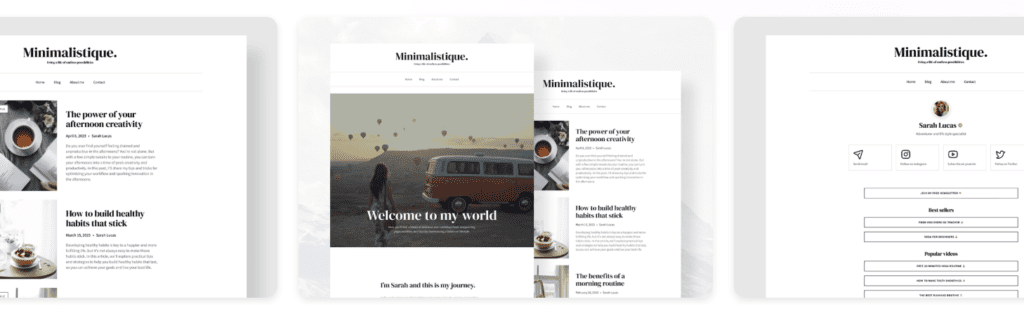
Minimalistique is best for personal blogs and clean travel storytelling
Minimalistique leans into simplicity. It’s designed for creators who want a calm, elegant layout where stories and photography carry the experience. Instead of overwhelming visitors with heavy layouts or flashy animations, the template keeps everything focused on readability and visual breathing space.
The homepage opens with a strong hero image that immediately sets the mood for the blog. Large typography and generous spacing guide readers naturally from the introduction into featured posts, making the site feel more like a curated journal than a typical content feed.
Content layouts balance storytelling with structure.
• Large hero sections highlight the main story or destination
• Clean blog grids keep navigation simple and distraction-free
• Author and category systems help readers explore related stories easily
Performance stays strong because the design avoids unnecessary elements. Images load quickly, layouts remain stable while scrolling, and the lightweight structure keeps pages responsive across devices.
Minimalistique works particularly well for personal travel blogs, slow-travel writers, and creators who want their stories to feel thoughtful and immersive. It’s also a strong choice for lifestyle bloggers who prefer understated design where typography, photography, and narrative do most of the work.
DreamyDetail
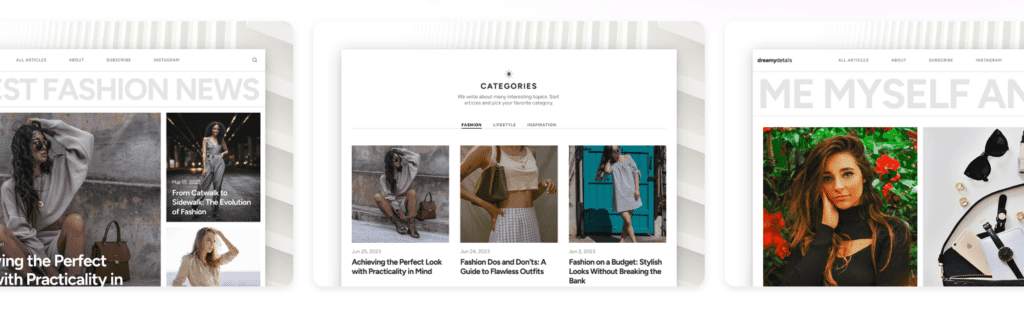
DreamyDetail is best for fashion and lifestyle travel creators
DreamyDetail brings a more editorial style to Framer travel blogs. It blends fashion magazine layouts with storytelling tools that work well for lifestyle creators, influencers, and travel bloggers who want a polished visual presence.
The template uses large image cards and stylish grid layouts to showcase content in a way that feels curated rather than chronological. Visitors quickly see featured posts, categories, and personal stories without needing to dig through long lists of articles.
The design focuses heavily on visual presentation.
• Elegant post grids highlight photography and outfit-style storytelling
• Category sections organize articles into lifestyle themes like fashion, travel, and inspiration
• Dedicated profile and social sections strengthen personal branding
Despite its visual style, the template stays practical for publishing. Blog posts use clean reading layouts, and the CMS structure keeps new articles easy to manage as the site grows.
DreamyDetail fits fashion bloggers, lifestyle influencers, and travel creators who mix destination stories with style content. It’s particularly useful for creators building a personal brand where imagery, personality, and storytelling all need space to shine.
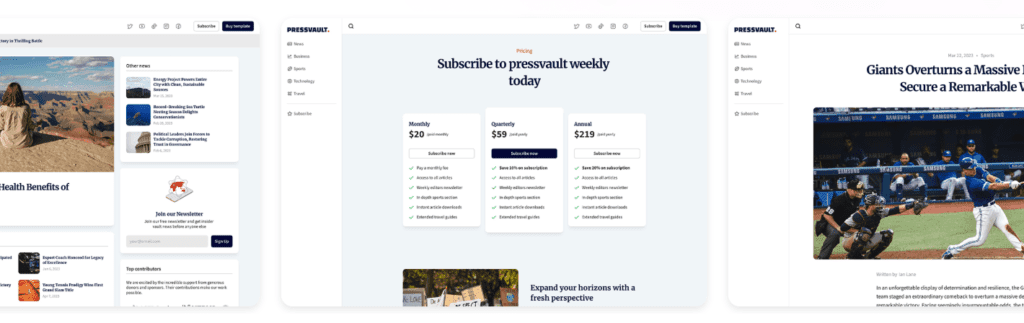
Pressvault is best for magazine‑style travel blogs and city guides
Pressvault is a Framer travel website template built for bloggers who want a clean, magazine-style look. It supports long-form stories with clear structure, so readers stay focused instead of getting lost in grids of thumbnails.
- Multi-column editorial layouts give articles space and break text into smaller sections while keeping pages tidy.
- Pull quotes and sectioned articles add rhythm and emphasis, highlighting big moments or key takeaways.
- Category hubs group destination series and trip diaries, guiding visitors into related posts instead of a generic portfolio grid.
It’s fast, even with lots of photography. Lighthouse scores hit above 90 for Performance and over 95 for Accessibility. Pages load quickly and work well for everyone. Lazy loading brings images in only when they’re on screen, which cuts bandwidth and speeds up page delivery. Responsive image sets match photo size to the device, so phones don’t download oversized files.
Pressvault fits travel magazines and bloggers who publish city guides and detailed narratives where categories, tags, and author bylines matter. The CMS supports Destinations, Stories, and Guides collections that cross-link in sensible ways, nudging visitors to explore more and spend longer on the site.
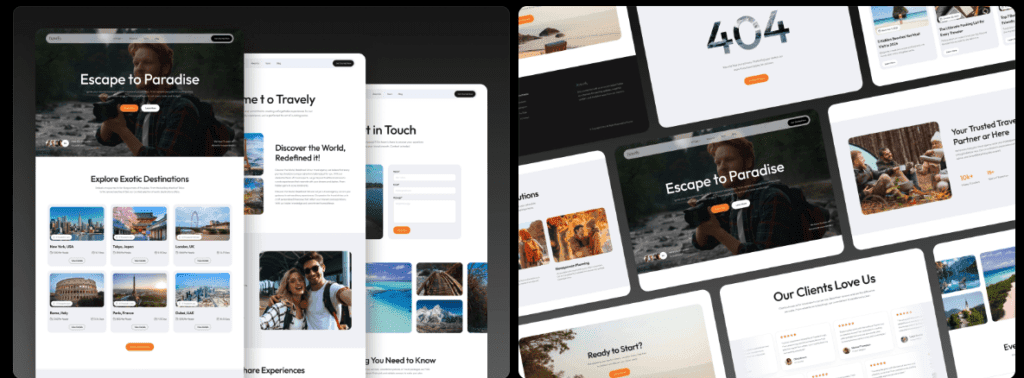
Travely is best for destination guides and fast‑scannable itineraries
Travely makes travel guides fast to scan with a card-style homepage. Travelers get quick destination guides and itineraries without slogging through long text. Trips break into small blocks – checklists, day-by-day plans, and map-friendly spots – that fit phones well. It suits “3-day in…” guides where readers want the essentials.
- Built-in call-to-action sections invite visitors to grab lead magnets like downloadable maps or jump straight into booking tours. These CTAs blend into the flow so they don’t feel pushy. Affiliate links sit in subtle blocks that support partnerships without breaking reader focus.
- Speed matters here. Compact images keep pages light, and prefetching between guide pages cuts wait time when hopping from one itinerary to another. Even on slow hotel Wi‑Fi or 4G, Travely targets sub‑2.5‑second loads by compressing hero photos and trimming unnecessary elements.
Customization stays simple with color variables so bloggers can tweak the vibe – from budget backpacker cool to luxury getaway chic – without touching code. The CMS includes reusable itinerary components like daily schedules, cost breakdowns, and packing lists. Creators can spin up new guides fast while keeping a consistent look across posts.
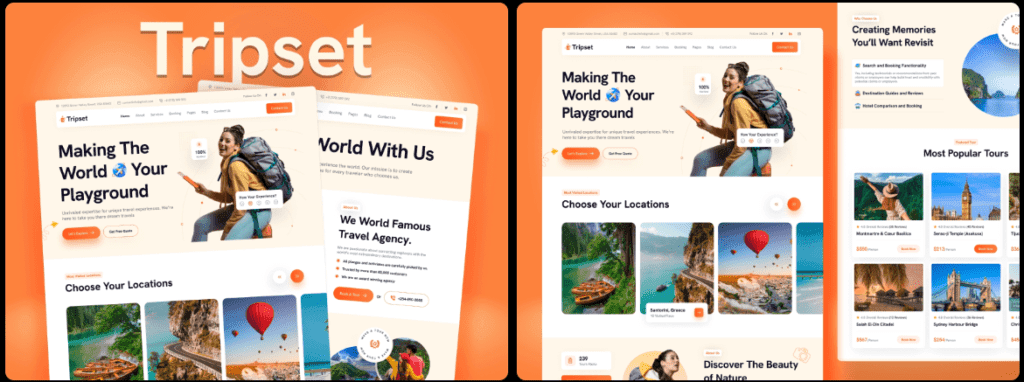
TripSet is best for photographers who want impactful galleries
https://www.framer.com/marketplace/templates/tripset/TripSet shines when photos lead the story. It’s built to showcase travel portfolios with full-bleed images that stretch edge to edge and grab attention fast. Masonry and justified grids let pictures flow in a natural rhythm without tight boxes. Hover captions show only on interaction, so frames stay clean until someone wants more. Galleries sort by location or theme, so visitors jump into a series without friction.
- Supports WebP and AVIF for sharp images at smaller file sizes
- Lazy loading shows images as they come into view, which speeds up pages
- Recommended exports balance detail and speed: 2560px wide for hero images, 1600px for grid images
TripSet also includes light case-study pages for behind-the-scenes notes, gear lists, or routes without turning the site into a wall of text. The focus stays on the visuals, with just enough context to tell the story.
It suits travel photographers who want sleek portfolios that impress clients fast, drone videographers who need dynamic layouts for aerial shots, and creative teams building pitch decks with client logos and testimonials. TripSet works as a polished media kit that showcases work professionally and invites exploration.
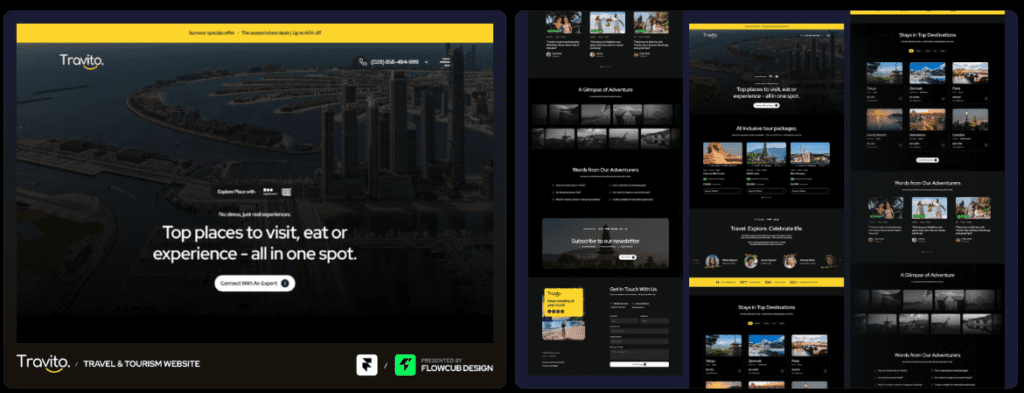
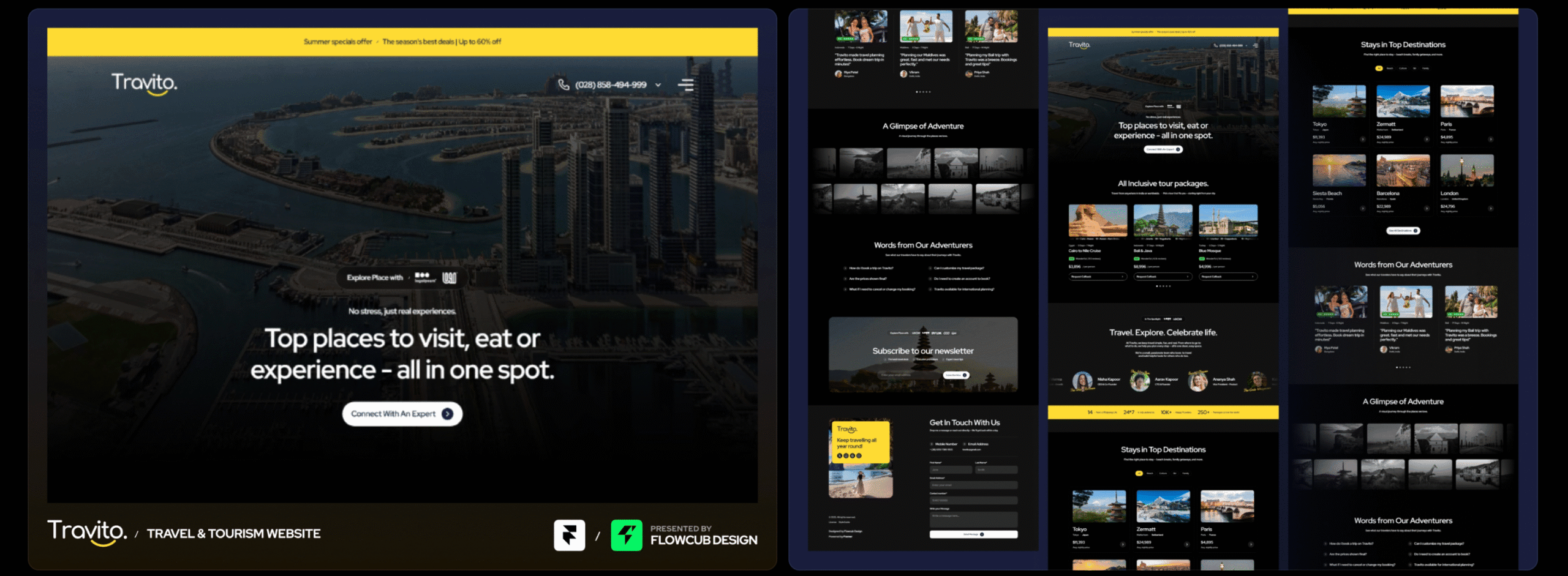
Travito is best for tour operators that need bookings and trust
Travito is a Framer template built for tour operators and small agencies that need a site that brings in bookings and builds trust. It goes beyond looks. Detailed itinerary pages include pricing tables, clear inclusions and exclusions, FAQ accordions that answer common questions, and date widgets ready to connect with Calendly, Typeform, or direct booking systems. Visitors find what they need fast and book without back-and-forth.
- Review and testimonial sliders show real customers in motion, not just static quotes.
- Partner logos add credibility by showing trusted collaborations.
- Policy pages sit in the main navigation, so visitors can check terms and conditions without hunting.
- Schema-ready sections support rich snippets for Organization and LocalBusiness details.
- Destination and tour collections include simple filters for duration, difficulty level, and price. People browse like a mini-directory without heavy plugins slowing the site.
- Sticky call-to-action buttons stay visible while people scroll, with above-the-fold contact options for quick reach-outs.
- Click tracking on Book now and Call buttons flows into analytics, so operators see which tours turn interest into reservations.
These features work together to build trust and make browsing practical. Tour operators get an attractive platform built to drive bookings while showing what actually works in their funnel.
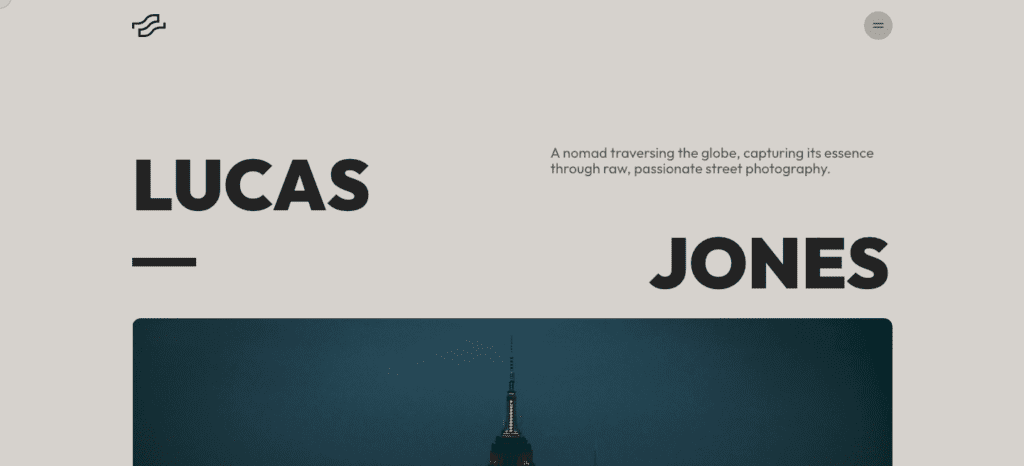
Madrid is best for minimalist travel portfolios with strong type
Madrid puts photos first with a clean, minimalist layout. Ample white space frames elegant serif and sans-serif fonts, so images and captions stand out without noise. A restrained color palette keeps attention on the work, and each sequence feels intentional and polished.
Performance holds up thanks to light animations and low layout shifts. For sharp images without slowdowns, keep hero files under 400KB at 60 – 80% JPEG quality or use WebP. This balance keeps Madrid sleek on any device while loading fast enough to keep visitors engaged.
Choosing a Framer portfolio template for travel creators comes down to the content and how the site will grow:
- Bloggers who publish long-form stories should choose Pressvault for editorial polish.
- Guide-makers get value from Travely’s scannable itineraries and clear calls to action.
- Photographers match well with TripSet or Madrid – TripSet offers dynamic galleries, while Madrid excels at minimalist portfolios with strong typography.
- Tour operators benefit from Travito’s booking features and trust-building tools.
Pick the template that fits your main goal instead of chasing extra features. It makes setup smoother and the site more rewarding over time. If this guide helped narrow your choice, supporting the work through the affiliate links keeps these reviews honest and well-funded.
Leave a Reply