
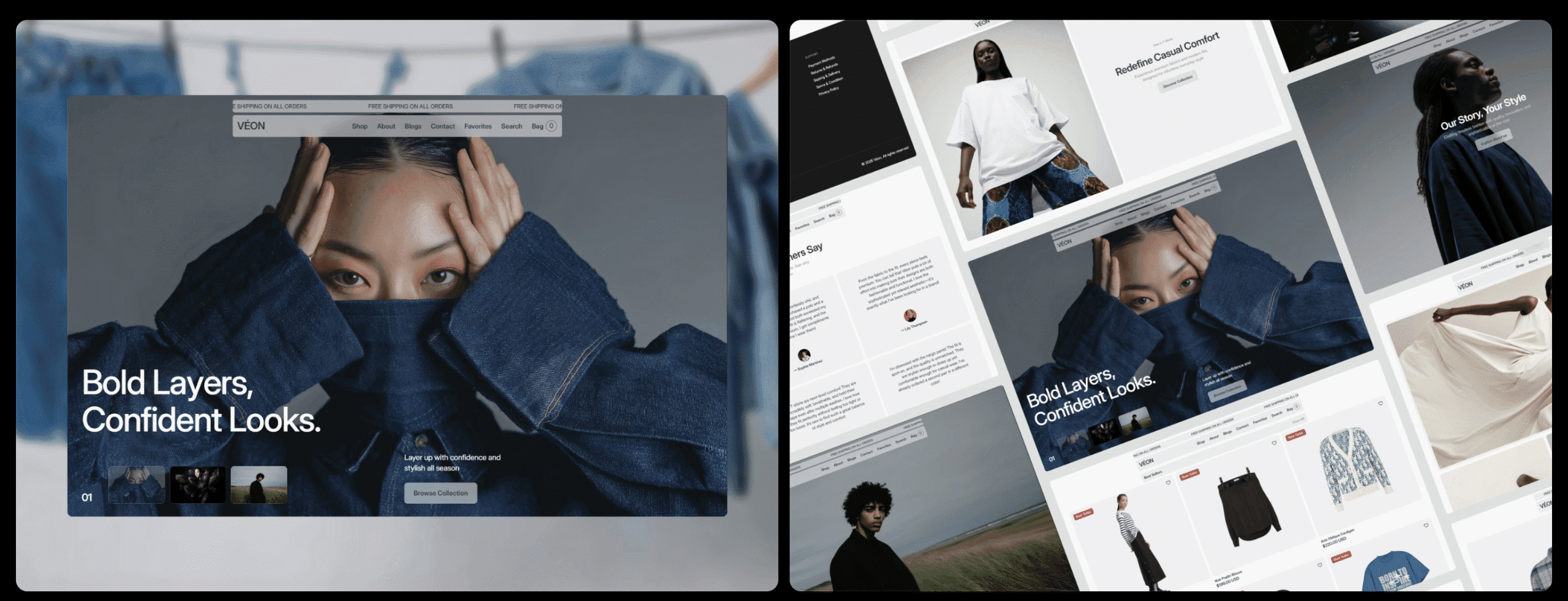
A smart Framer template sets up a fashion brand for a strong launch. Looks matter, sure, but speed to launch and conversion matter more. The right setup supports the brand story, keeps the site stable, and helps sales from day one.
This list scores templates across five pillars. Visual identity checks typography, art direction, and how photography is treated. Layout flexibility lets teams mix sections, variants, and CMS collections without friction. Ecommerce readiness covers carts, product pages with variants, and checkout flows that don’t stall. Performance uses Lighthouse and Web Vitals to keep pages fast. Ideal use cases match lookbooks, direct-to-consumer shops, and portfolios.
Each template was tested in Framer preview with real fashion assets. Editorial shoots, product variant images, and user clips were all run through typical workflows. Every pillar got a score from one to ten. Ties went to templates that save founders time without giving up polish. Some links are affiliate links and labeled as such, and they don’t affect rankings. They may earn a small commission at no extra cost.
Minimalistique delivers a clean editorial look with fast performance
Minimalistique is a sleek, editorial-style template for fashion brands that want a fast launch without losing style or speed. It loads fast and looks clean, so it’s a strong pick for teams who care about both aesthetics and performance.
Its visual identity leans on a serif-display font paired with a grotesk typeface, which gives it a refined, approachable tone. Full-bleed images stretch edge-to-edge on large screens, while smart scaling and spacing keep mobile layouts calm and readable. Hero captions include image overlays to maintain at least 4.5:1 contrast, so text stays legible across varied backgrounds.
Layout flexibility is a core strength. Masonry lookbooks, split-screen hero banners, and shoppable grids work as draggable blocks in Framer’s editor, so teams arrange content without touching code. It ships with over a dozen color tokens and adjustable typography scales via Framer Styles. Light and dark themes update in a few clicks – no plugins, no fuss.
Ecommerce features focus on smooth shopping. Product pages include size and variant selectors, and sticky add-to-cart buttons keep actions within reach. A thumbnail gallery supports zoom for close-up detail. Framer Commerce and Stripe handle checkout with dependable flows. An inventory notes field flags low stock in time to set expectations during busy sales.
Performance holds up under pressure. Mobile Lighthouse scores sit between 92 and 98 in tests. WebP images and lazy-loaded videos reduce bandwidth and speed up pages because media only loads when visible. Total gzipped JavaScript stays under 150kb, which helps mid-tier phones hit an LCP under 2.5 seconds and keep visitors engaged from the first screen.
Dreamy Detail elevates lookbooks with cinematic storytelling
Dreamy Detail gives fashion brands a cinematic feel that sticks with people. Luxury and avant‑garde labels use it when they want a site that feels like an experience, not a storefront. The tone is soft and immersive. Each scroll reveals something considered.
Soft gradients set calm backgrounds, and micro parallax adds gentle depth without stealing attention from the content. Editorial whitespace gives every section breathing room, which makes text easy to read. Vertical video reels land cleanly in 9:16 or 3:4, so hero videos don’t get clipped at the edges. They flow across screens in a way that feels intentional.
The layout feels alive. Timeline sections frame collection drops, designer notes, and behind‑the‑scenes moments. Brands tell their story like a magazine spread, guiding visitors through a campaign in sequence. CMS collections come wired for Campaigns, Press, and Stockists, with dynamic updates that keep content fresh without touching code.
Ecommerce leans into anticipation with pre‑orders up front. Product pages add countdown blocks for launch moments and “notify me” forms tied to Framer Forms to capture interest early. The cart flyout does more than hold items. It surfaces size guides and shipping estimators right when buyers weigh a purchase.
Performance holds up. Motion uses GPU‑accelerated transforms that stay smooth on modest devices. Reduced‑motion preferences get honored with quiet fallbacks that keep the look intact. Media boxes respect aspect ratios to avoid layout shift. Tests show a CLS under 0.05, so visuals stay steady while exploring this dreamy runway.
Lustro focuses on DTC conversions with strong merchandising
Lustro is a Framer ecommerce fashion template built to convert. It grabs attention fast and steers visitors toward a purchase without extra noise. Bold UI and sharp calls to action show shoppers where to click, so browsing turns into buying.
The visual style uses high contrast that jumps off the screen. Price tags and buttons follow a clear hierarchy, so key info gets seen first. Product cards scan fast. New, Limited, and Sale badges stand out. Color swatch thumbnails appear inside collection views, so shoppers preview options without extra steps.
Layout stays flexible. Collection pages switch between grid, editorial staggered, or horizontal scroll views without custom code. “Complete the look” upsell blocks pull related items via CMS relations, so brands show natural pairings and lift average order value.
Ecommerce features meet real shopper needs. Product detail pages support variant-level media, so each color or style shows its own images or videos. Back-in-stock alerts connect via webhooks to email tools, so interested buyers hear when items return. The cart adds cross-sells for last-minute add-ons, while checkout integrates with Stripe and supports discount codes applied at the cart.
Performance stays tight. Images are sized on the server with Framer’s DPR variants for crisp visuals without heavy loads. First input delay stays low under script-heavy setups thanks to deferred third-party embeds like reviews or chat widgets. Interactions stay responsive even when extras run in the background.
Calder Co. suits portfolios while Veon speeds up startup launches
Calder Co. puts portfolios first for designers, stylists, and photographers who need to show work with confidence. Editorial storytelling frames case studies and client credits in layered grids with light hover reveals. It feels like a digital studio where creatives pitch collections to buyers or press without clutter.
It’s not just a pretty face. Calder Co. brings practical tools for collaboration. Inline proofing pages let clients leave feedback right on the site. Password-protected galleries keep sensitive projects private. Navigation stays sharp with anchored smooth-scroll sections for quick jumps. The press kit page ships with downloadable assets managed in Framer CMS files, which keeps media kits organized and easy to share.
Veon goes lean for clothing startups that want to test demand fast. The homepage stays focused: a hero banner, three collection highlights, then clear product detail pages. Its minimal brand system can be adjusted in a couple of hours, so founders can update visuals quickly as their vision evolves.
Performance holds up on low-spec devices thanks to a small bundle size that reduces load times. Operations feel lighter too. Stripe-powered carts take payments without friction, and prebuilt shipping and returns templates reduce support tickets early on.
Pick based on brand stage and immediate needs, not trends. If rich portfolio storytelling matters most, Calder Co. delivers editorial depth. If a quick direct-to-consumer launch is the priority, Veon gets sales live sooner without extra layers. Start with the template that fits your next move – building lookbooks, setting up DTC carts, or crafting standout portfolios – and only customize what drives results.
Explore these ranked templates through the links here and save this guide to revisit when new drops land.
Leave a Reply