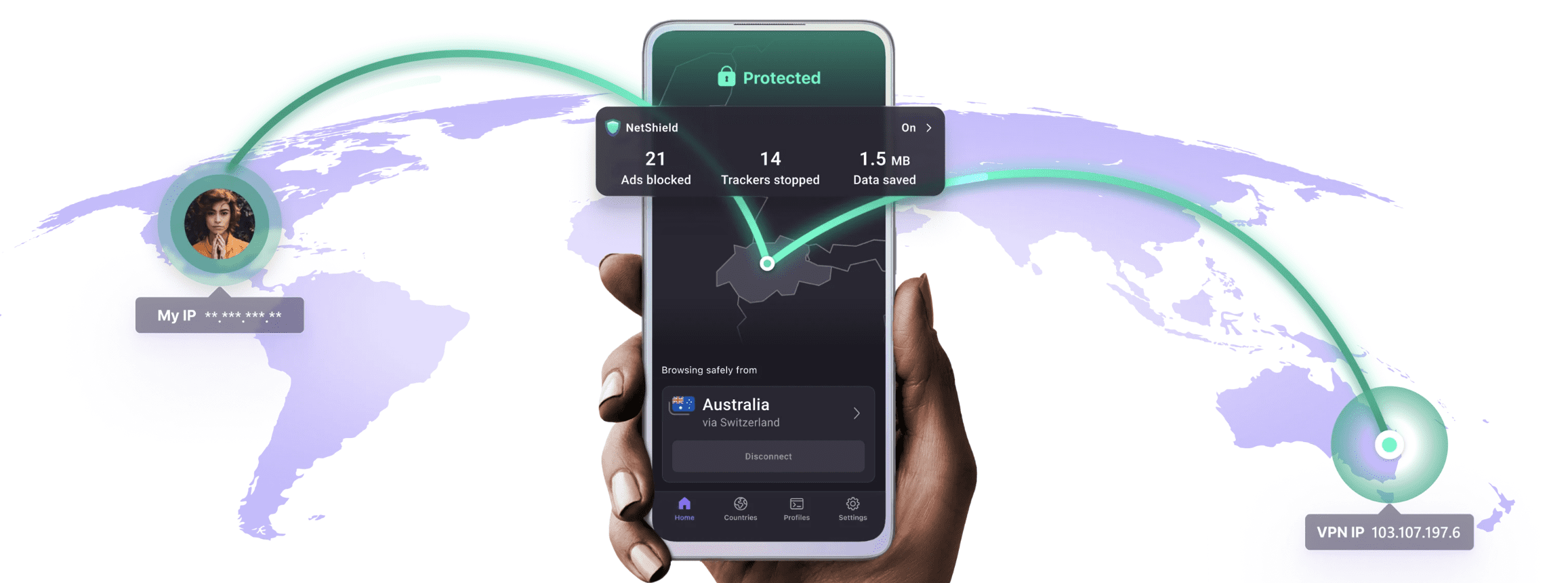
Proton VPN enters as a privacy-first service based in Switzerland, a country with strict data protection laws that carry weight. The company focuses on safeguarding user data and keeps the message plain. The brand builds on clear privacy principles and practical usability.
This review looks at what Proton VPN offers for people who want reliable protection online, whether streaming shows, traveling, or hiding personal info from snoops. It covers test results for speed, security tools like Secure Core multi-hop, Netflix access, and how pricing compares with rivals.
Read on for a Proton VPN review that explains why it’s a strong pick for privacy without giving up performance or paying too much.
On this page
Proton VPN features and Secure Core explained
Secure Core adds a strong privacy layer for people who want tighter protection. Traffic first goes through Proton-owned servers in privacy-friendly countries such as Switzerland, Iceland, and Sweden, then exits to the wider internet. These servers sit in locked, access-controlled facilities inside vetted data centers. Physical security plus jurisdictional privacy makes it hard for snoops to trace activity back to the source.

Protocols matter because they define how devices connect and encrypt data. Proton VPN supports WireGuard, OpenVPN, and IKEv2. WireGuard offers fast performance with modern crypto like ChaCha20/Poly1305. OpenVPN remains a staple with AES-256-GCM. IKEv2 delivers stable reconnects, which helps on mobile when switching networks. The apps choose sensible defaults per platform, and users can switch protocols when they want more control.
A kill switch comes standard on Windows, macOS, iOS, Android, and Linux. If the VPN drops, internet traffic stops to prevent IP or activity leaks. macOS has one caveat. Network Extensions may limit kill switch behavior when split tunneling is on, so protection might not trigger in every edge case.
Perfect Forward Secrecy rotates session keys so a single compromised key won’t expose past traffic. DNS leak protection sends lookups to Proton-operated resolvers, avoiding third-party snooping. To verify while connected:
- Connect to Proton VPN.
- Visit dnsleaktest.com.
- Run a standard or extended test.
- Confirm the IPs map only to Proton DNS servers.
Extra tools round out privacy and convenience. NetShield blocks malware domains and trackers through DNS filtering with three levels. Tor over VPN routes traffic into Tor after leaving Proton’s network for added anonymity. Split tunneling on desktop and Android lets selected apps bypass the VPN. Port forwarding supports certain peer-to-peer setups. Smart protocol fallback helps connections work on networks that try to block VPN traffic.
Proton VPN speed and Netflix streaming tests
Speed tests should feel like real use, not lab math. Baseline results came from an unprotected connection to set a clear reference. After that, tests ran on WireGuard and OpenVPN across nearby servers, cross-continent links, and far-distance routes. Each hop logged ping, download, and upload figures to show how distance and protocol changed performance.
WireGuard came out ahead. Short-distance servers held roughly 70 – 90% of base speeds, which fits its lean encryption model. OpenVPN trailed at about 45 – 70%, shaped by CPU load and busy servers during test windows. Independent reports match this pattern: WireGuard balances speed with strong security, while OpenVPN is heavier but widely supported.
Streaming went smoothly. US Netflix worked on the first try through American servers. BBC iPlayer in the UK opened fast as well. Disney+, Prime Video, and 4K YouTube all played without stutter. A quick server switch helped when captchas or geo-blocks appeared.
Heavy use didn’t rattle it. A 4K stream, big file downloads, and a video call ran together without dips or kill-switch interruptions. NetShield and the kill switch stayed quiet in the background, kept privacy in place, and didn’t slow traffic.
Mobile use showed the same stability. On fast 5G and café Wi‑Fi with captive portals, reconnections happened fast after sleep or network changes. When networks tried to block VPN traffic, protocol fallback took over and kept the session alive with little hassle.
Proton VPN speed and performance tests point to strong results on WireGuard and steady behavior under load. Does Proton VPN work with Netflix and streaming? Yes, with quick access to US Netflix, smooth BBC iPlayer, and reliable playback on Disney+, Prime Video, and YouTube, especially after swapping servers when needed.
Proton VPN server locations and Windows app notes
Proton VPN covers about 60 countries and more than a hundred cities. Coverage includes privacy‑friendly places like Switzerland, Iceland, and Sweden. Those locations get extra care because the company owns hardware there for Secure Core routing. Traffic first goes through these hardened servers, then out to the wider internet. Many servers are bare metal. Some are virtual to fill gaps where owning hardware isn’t practical yet. Peer‑to‑peer is allowed on select servers built for it so the rest stay fast.
Special servers sit at the heart of the service. Secure Core entry points live in those privacy‑first countries. Tor over VPN exits send traffic into the Tor network after it leaves Proton’s system to add another layer of anonymity. Plus servers, including streaming‑optimized options, show up clearly labeled in the apps. Those help users get into services like Netflix or BBC iPlayer without trial and error.
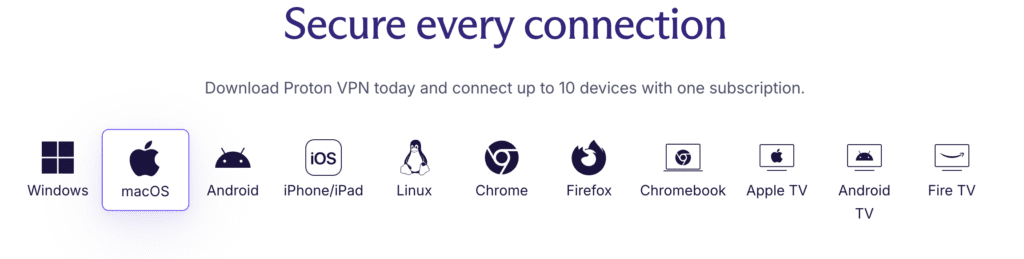
Windows users get a lot of control and a deep feature set. Protocol choices include WireGuard, OpenVPN, and IKEv2, so it’s easy to favor speed or compatibility for a given network. Split tunneling lets specific apps use the VPN while others go out normally. Port forwarding supports peer‑to‑peer setups. NetShield offers three levels to block trackers and malware domains. The kill switch has two modes: regular protection, or strict, which blocks all traffic if the VPN drops. Auto‑connect on startup turns protection on as soon as the system boots. Minimum supported version is Windows 10.
Platform behavior differs in a few places. On macOS, Apple’s Network Extension model limits kill switch behavior during split tunneling, which leaves rare edge cases for leaks if settings aren’t dialed in. iOS supports IKEv2 and WireGuard but has no split tunneling due to OS rules. Android includes split tunneling and DNS customization in settings. Linux offers both CLI tools and GUI clients, though features don’t always match the desktop apps.
Day‑to‑day use feels straightforward, but the settings pages skew toward power users. Newcomers might need a moment to get comfortable. The map view makes it quick to pick a location, while the list view shows live status and tags like Secure Core or Plus. Quick Connect prefers nearby fast servers unless preferences say otherwise. A discreet icon mode keeps the interface out of the way in the taskbar or menu bar.
Proton VPN pricing and free plan review with verdict
Privacy comes first here, and streaming stays smooth without giving up speed or security. Apps go through regular audits. Secure Core routes traffic through trusted countries before it hits the open internet, adding an extra layer of protection. WireGuard support delivers fast connections that hold up for HD streams and video calls.
Pricing matches the premium focus. Monthly options include VPN-only plans or bundles with Proton Mail, Drive, and Pass, which suit people who want one suite for privacy and storage. Annual billing drops the effective monthly rate, so long-term subscribers spend less over time. A 30-day money-back guarantee gives a safe window to try it.
The free plan stands out for unlimited data. It limits servers to a few locations, caps speeds to a medium tier, allows one device, and includes basic NetShield. Streaming platforms and peer-to-peer sharing aren’t supported. Good for light browsing, not for heavy use.
Rivals often force upfront payment or squeeze free tiers, so a no-data-limit free plan feels rare, even with firm restrictions. Payments include credit cards and PayPal, plus privacy-friendly choices like Bitcoin or cash through Proton Mail support, which keeps sign-ups more anonymous with a Proton Mail account.
There are trade-offs. Prices sit above budget providers. macOS users may see occasional kill switch quirks with split tunneling. Some settings target power users who want granular control.
Who benefits most? Privacy-focused travelers who need stable global access, people who want reliable Netflix across regions, and users serious about keeping activity private. Newcomers or anyone who wants something simple should try the free tier first to learn the basics.
If buying:
- Test speeds on the home network early
- Confirm Netflix region access works as expected
- Check kill switch behavior on the operating system in use
This approach reduces surprises during the refund period and helps users see where Proton VPN excels, especially when comparing Proton VPN pricing and plans or reading a Proton VPN free plan review.
Frequently asked questions
Is Proton VPN anonymous?
Proton VPN makes tracing hard rather than delivering total anonymity. Secure Core routes traffic through Proton-owned servers in Switzerland, Iceland, and Sweden before it reaches the wider internet, so activity is difficult to trace back. Tor over VPN adds a layer. Paying by Bitcoin or cash with a Proton Mail account keeps sign-ups more anonymous.


Leave a Reply