
Most big games push 3D spectacle and giant launches. Terraria went the other way. A tiny Re-Logic team shipped a modest 2D sandbox with tight controls, chunky pixel art, and worlds that felt alive. Players dug into cavern networks, found rare ores, crafted better gear, and took on bosses that asked for real planning. Sessions stretched. Curiosity kept pulling people back.
Sales told the story. By 2022, it crossed 40 million copies. Not from glossy trailers or huge ad buys. Updates did the heavy lifting. Frequent patches added biomes, items, events, and quality-of-life tweaks, which nudged veterans to return and gave newcomers a smoother on-ramp. Momentum built in public, not in press releases.
Timing helped too. YouTube and Twitch were heating up for gameplay-first titles. Terraria’s systems threw off moments worth sharing, from risky spelunking runs to sudden boss invasions. Creators surfaced clever tricks and odd edge cases. Viewers saw possibility and jumped in.
The lesson for indie teams lands here. Make every player’s journey feel open, surprising, and worth retelling. Focus on freedom over flash. Respect timing, sure, but don’t chase fads. Keep updates steady and meaningful. Use Steam visibility windows well. Nurture reviews, since honest player feedback compounds. Expand to consoles with fair pricing and avoid paywalls that split communities.
Terraria’s success story isn’t mystique. It’s craft, cadence, and care – Shipped early, improved often, and shared widely.

On this page
- The Terraria founder background and early team constraints
- Key moments on the Terraria launch timeline
- Terraria Steam release strategy that built a discovery loop
- How Terraria Steam reviews and ratings kept momentum alive
- The Terraria console signing deal and the making of Terraria for consoles
- Terraria marketing strategy for indie games you can copy
- Terraria story and development choices that drove retention
- How Terraria became a bestseller – A 90‑day plan for your indie launch
The Terraria founder background and early team constraints
Andrew “Redigit” Spinks and Whitney “Cenx” Spinks drove Terraria’s early development with a tiny core team. Andrew wrote code and shaped design. Whitney designed too, and ran community efforts, giving players a direct line to the creators. They worked with sharp artists and composer Scott Lloyd Shelly, but budgets were tight, so every pixel mattered.
The tech stack stayed familiar: C# with XNA, then MonoGame. Knowing the tools sped up iteration. Features moved from idea to build fast. Tweaks to gameplay landed in days or weeks, not months.
Budget limits pushed a practical art approach. Reused tilesets, procedural generation, and careful placement built a dense world without expensive bespoke assets. The goal wasn’t flashy effects. It was depth, discovery, and performance on modest hardware.
Influences were clear. Minecraft’s open-ended sandbox met Metroid and Castlevania’s exploration and progression. Terraria leaned toward faster combat and frequent boss fights, layered over 2D play that ran well on everyday machines.
Community contact stayed constant. Forums first, then Twitter and Reddit once those took off. Feedback shaped balance and fixes in public, from toning down overpowered swords to smoothing multiplayer sync.
Updates landed often and stayed free. Instead of long gaps between releases, players saw steady patches that kept the game lively long after launch.
Clear roles and a small decision loop kept work moving. Features didn’t linger half-done. Quality held because choices reached the build quickly.
Takeaways for indie teams:
- Choose a tech stack the team knows to speed up iteration.
- Match scope to team size, focus on systems and reuse instead of piles of unique art.
- Stay close to players and adjust based on what they say.
Most of those constraints came from how the project started, which we trace in the Andrew ‘Redigit’ Spinks founder story.
Those same constraints, a single developer and no marketing budget, shaped another breakout a few years later in the story of Toby Fox and Undertale.
Key moments on the Terraria launch timeline
Terraria moved from early prototype to Steam release in May 2011 in under a year. The pace kept interest high. Word spread fast across forums and early streams, and once it hit Steam’s front page, sales climbed within days without a big launch show.
Patches arrived weeks after launch, with new items, strange biomes, and tougher bosses. Frequent updates turned early buyers into active community voices who shared tips and discoveries. Players kept coming back, not just for one run, but for the next surprise.
In 2012 and 2013, larger drops changed the game’s rhythm. Hardmode raised the stakes with stronger enemies and bigger rewards. Each major patch pulled Terraria back into the spotlight, bringing in new players while veterans returned for new goals.
Quiet stretches followed, though development never stopped. The community carried the torch with guides, mods, and wild builds. Re-Logic queued up heavyweight releases – 1.3, then 1.4 – Which sent player counts soaring again. Parallel work expanded beyond PC to consoles and handhelds. Testing on PC first kept features tight before ports rolled out.
From the 2011 release through the early Twitch surge into 2013, creators posted let’s plays, secret reveals, and boss breakdowns. Videos lined up with update timing, so buzz stayed steady.
Terraria’s launch timeline looks like a series of rolling waves, not one big spike. Each content burst landed near peak visibility, so every update felt like a small launch of its own.
Terraria Steam release strategy that built a discovery loop
Steam shoppers saw a clear, colorful store page that made the pitch in seconds. Bold pixel art promised a deep 2D world. The trailer showed blocks snapping together, fast combat, towering bosses, and quick co-op moments within the first few beats. Screenshots highlighted biomes and gear variety without burying first-time visitors.
Launch pricing sat under $20, which felt like strong value for a long-running adventure. A low barrier to entry turned casual scrollers into buyers across Steam’s huge catalog.
Release timing lined up with a quiet window for 2D sandbox games on Steam, which drew in Minecraft-curious PC players searching for something new. Early traction fed into “Also Played” visibility and pulled more eyes to the page.
Frequent patches kept Terraria near the “Recently Updated” feed, a discovery lane many indies overlook while chasing one big moment. Steady updates brought veterans back with fresh reasons to play, and newcomers saw an active project with momentum.
Modding arrived quietly at first, then grew fast. Community tools like tModLoader evolved into creative hubs before official support landed, which stretched the game’s lifespan well beyond the base content and kept engagement rising.
Accessibility mattered as much as marketing. Smooth performance on modest PCs expanded the audience, and broad regional availability meant no major market got left out. Low system requirements let almost anyone jump in.
Built-in Steam features reinforced social play. Cloud saves protected progress across devices, achievements added short-term goals that encouraged daily sessions, and quick drop-in co-op led to natural friend referrals through shared runs.
Discounts showed up during seasonal events, but in measured steps. Thoughtful price cuts converted wishlists without training the audience to wait forever or raising doubts about the game’s value.
Terraria’s Steam release strategy worked because every piece supported the next – From the store page to pricing, updates, mods, performance, and platform features. The whole setup fed long-term discovery and steady growth.
How Terraria Steam reviews and ratings kept momentum alive
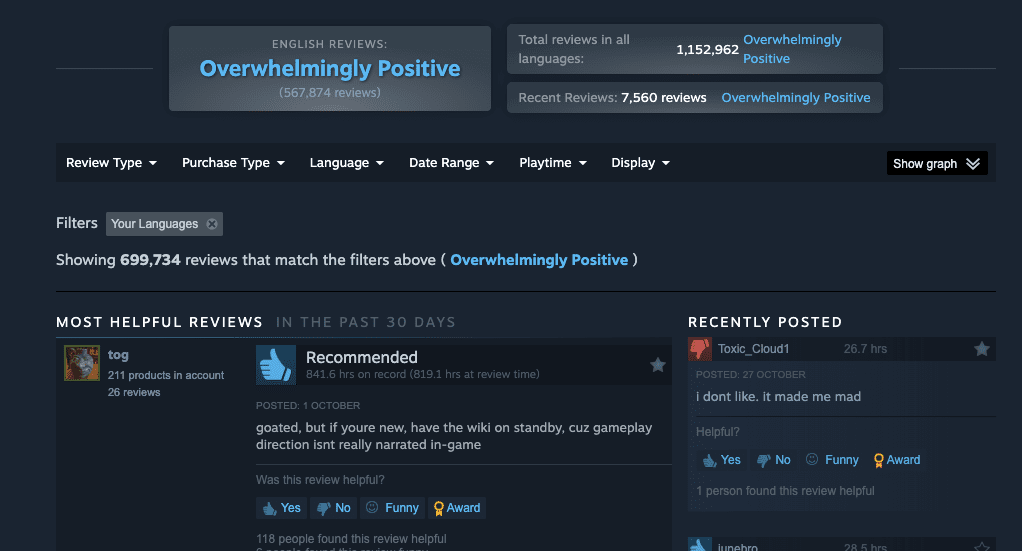
Early Steam reviews for Terraria set the tone fast. Thousands showed up in the first months, most stamped “Very Positive,” which pushed fence-sitters to buy. Seeing that kind of happy crowd gave shoppers confidence and turned skimmers into fans. Momentum kept going. Each major update brought a fresh burst of “Recent Reviews,” a regular reminder the game was active and improving.
The volume alone matters. Hundreds of thousands of reviews aren’t just stats. A pile that big makes it harder for new titles to pull attention away. It’s social proof with staying power. When buyers see that mountain, they read it as a steady, long-lived hit, not a short fad.
Across those pages, the same notes repeat in a good way: deep gameplay, strong value for money, near-endless replay value, and co-op sessions that keep groups coming back. Boss fights and co-op stories show up often, so community praise ends up reinforcing core marketing points without sounding staged.
Developer replies helped too. By answering threads about balance tweaks and quality-of-life fixes right where players raised them, Re-Logic showed they were listening. That approach lowered frustration and built goodwill.
YouTube kept discovery rolling outside Steam. Boss guides, base tours, and challenge runs pulled millions of views over the years, each one acting like free exposure that sent curious players to the store page.
Twitch wasn’t always the front page for Terraria, but update windows sparked spikes. Streams with creative builds and hard fights drew new viewers at key moments. It added steady threads to the game’s growth, even without topping charts.
Design that encourages shareable moments feeds the loop. Clever contraptions, tense bosses, and surprising interactions give creators endless ideas. Those videos feed into Terraria Steam reviews and ratings, which feed into sales. The cycle keeps running.
The Terraria console signing deal and the making of Terraria for consoles
Terraria’s jump from PC to consoles in 2013 came together through a publishing and porting deal with 505 Games. The partner handled hard parts like certification, QA, and retail distribution. Those pieces can swamp a small indie team, so the deal used revenue sharing with advance payments to fund the work. Xbox and PlayStation came first, with Nintendo systems following later.
Moving Terraria to consoles wasn’t only about performance. The team added controller-friendly menus, better inventory navigation, and split-screen co-op. Couch play changed the feel of the game. Friends could explore worlds on the same TV, which drew in players who prefer local co-op to solo play or online sessions.
Boxed copies mattered as well. Store shelves reached players who shop physical first, especially in regions where discs still sell. Staggered launches across platforms stretched interest over time. Each release created its own news cycle and marketing push.
Platform support helped. Dashboard features and sale placements put Terraria in front of huge console audiences. Behind the scenes, keeping PC and console versions in sync was tough. Each platform’s certification rules slowed patches, so updates sometimes landed at different times and frustrated fans waiting for parity.
Communication had to be specific and steady. Players needed clear timelines and scope for each patch. For teams considering a similar move, an experienced publishing partner reduces risk. Contracts should lock in update cadence, QA resources, and certification support to keep content flowing and expectations realistic.

Terraria marketing strategy for indie games you can copy
Marketing focused on real gameplay, not mood pieces. Short trailers and GIFs showed lava flowing, wires triggering traps, and mobs swarming. Viewers saw complex systems in motion, so they understood the depth fast. No glossy ad spend needed, just honest footage that sparked curiosity.
Community work did heavy lifting. Official forums came first, then active groups similar to subreddits and Discord communities built around support and feedback. Superfans wrote guides, answered questions, and welcomed newcomers. Help felt organic because players owned the conversation.
Patch notes doubled as content. Visual callouts and GIFs highlighted features and fixes, so updates were easy to skim and easy to share. Gaming sites picked them up. Social feeds spread them further. Updates turned into mini-events that indie teams can reproduce for steady momentum.
Visual identity stayed consistent everywhere, from icons to thumbnails. Same logo, same palette, same art style. Scrolling a crowded feed, players spotted it in a second. Recognition compounds reach.
Influencer outreach stayed practical. Early access keys went to mid-sized YouTubers with steady viewers and tight communities. Engagement beat raw reach because those audiences pay attention and try what their favorite creators recommend.
Update timing matched sales events and genre festivals. Fresh content during those windows increased feature chances and front-page placement without complex ad buys. Smart calendar work, bigger visibility.
Paid ads were rare. Platform discovery and word of mouth did most of the work, which kept acquisition costs near zero. That matters for an indie budget chasing organic growth over costly ad cycles.
Merch and music rounded out the brand. Shirts, OST releases, and small collectibles gave creators more reasons to post and spotlight the game. Extra touchpoints reinforce identity and feed a loop of user content, which fits a Terraria marketing strategy for indie games focused on authenticity and community reach.
A solo developer did something similar with a deckbuilder, and how Balatro turned into a viral indie hit follows the same community-first pattern.
Terraria story and development choices that drove retention
Bosses work like milestones that nudge progress without busywork. Eye of Cthulhu, Wall of Flesh, each signals a new phase and becomes a shared topic across forums and Discords. Players trade stories, swap loadouts, and compare routes. Momentum grows from those touchpoints, not from a checklist.
Hardmode flips the save file into a tougher, richer version of itself. Credits don’t end the loop. The same world evolves, enemies hit harder, rewards climb, and fresh goals appear. Playtime stretches because the map changes under the player’s feet, not because a sequel drags them back.
Item variety feeds curiosity. Thousands of tools, weapons, and armor pieces encourage experiments instead of funneling everyone into one “best” build. That sparks deep wiki culture around sidegrades, niches, and odd perks. Guides and pages become a living map of choices, which pulls in newcomers searching for Terraria story and development details and practical tips at the same time.
Drop-in co-op stays simple and fast. Friends jump into a world with little fuss, and sessions spin up in minutes. One person buys it to join a buddy, others follow, and a small group turns into a regular night.
New seeds change the terrain, biomes, and routes. Each world feels distinct. Players share seeds, show off bases, and pass screenshots around. That social loop spreads the game quietly, one recommendation at a time.
Official support for tModLoader kept modding central, not scattered. Community-made content sits close to the base game, so players try new packs without hunting through sketchy links. Modders extend systems, add bosses, and remix balance, which keeps the sandbox fresh year after year.
Quality-of-life updates removed friction. Auto-stack, smart cursor, tighter controller support – Small changes add up over long sessions and help during chaotic fights. Less menu wrangling, more action.
Fair pricing sealed long-term trust. No pushy microtransactions, no drip-feed upsells. People feel safe recommending it, because value is clear on day one. That goodwill fuels steady word of mouth and keeps interest high for anyone exploring Terraria story and development over time.
How Terraria became a bestseller – A 90‑day plan for your indie launch
Terraria became a bestseller by running a simple loop that kept getting stronger. The team built systems that created surprising, shareable moments. Creators posted those clips. Positive reviews piled up. Store visibility rose. Sales funded steady updates. Trust grew because the game kept improving.
For indie teams ready to use a similar approach, here’s a clear 90-day plan:
- Lock a vertical slice that shows real depth in under 30 seconds. Hook players fast.
- Prepare sharp Steam assets: clean screenshots, a tight trailer, and plain-language descriptions.
- Lock dates for the first three post-launch updates with features listed. Ship patches on a steady rhythm.
- Set a price that reflects strong value for playtime. Use small seasonal discounts early on, and hold deeper cuts until the update cadence is proven.
- Reach out to about 20 mid-sized creators who match the genre. Send tailored pitches with an update calendar, plus visual patch note templates so each patch lands as news.
If console releases are in scope, line up porting partners early with clear docs on engine details and platform targets. Plan features like co-op or seed-sharing from day one, since they spread by word of mouth without extra ad spend.
This week matters. Map these steps to the current build. Write the plan and share it with peers to keep momentum when work gets tough. Running a public demo? Gather feedback, make changes fast, and push toward moments players don’t want to stop playing. That’s how Terraria became a bestseller.
👉 Consider reading Why Stardew Valley Became so Popular
Leave a Reply