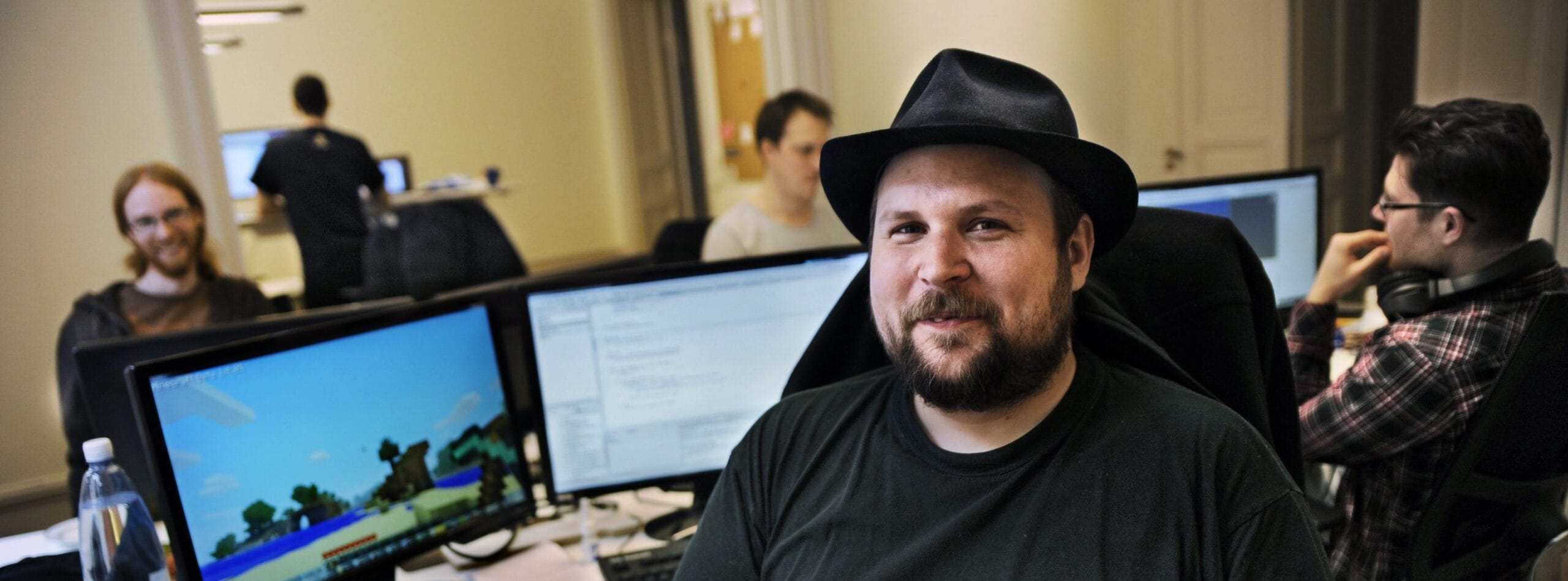
I remember how Notch started as a solo dev fiddling with a tiny Java sandbox, with no plan to turn the indie scene on its head. He tossed “Cave Game” into small forums where modders and curious players hung out, a rough alpha meant for tinkering, not glory.
No polished launch. No huge budget. He set a low Alpha price that felt fair, enough to keep updates coming without pushing people away who wanted more. Updates landed fast and often. It felt like opening a new toy every few days, and his notes owned every bug and fix.
The spark didn’t come from ads. It came from YouTube Let’s Plays around 2010, first-time players fumbling through survival, and threads that lit up across forums and Reddit. I watched those clips pull in more eyes each week, and the chatter carried Notch’s rise to popularity in the indie game scene far beyond what anyone expected.
No flashy hooks at the start. No celebrity boosts. Just steady releases, messy builds, and a community that read every patch note like news from a friend. The small backyard project kept growing until it sat right in the middle of gaming culture.
On this page
How Notch went from hobby coder to founder
Markus Persson’s development journey from hobbyist to founder started well before Minecraft took off. He spent years writing games at King.com and jAlbum, shipping small projects and learning what worked. Java and Lua weren’t just toys for him. They trained a habit of quick prototypes that grew fast, almost like practice runs for the system-driven sandbox he’d later ship.
- Survival mode landed in June 2009. The game shifted overnight from a safe playground to a world with real threats. Players still built, but now they had something to survive. It wasn’t a small tweak. It raised the stakes and pushed deeper challenges next to freedom.
That summer felt charged. New dangers added urgency, and every update pulled the community in tighter.
- Mojang (originally Mojang Specifications) took shape in 2009 – 2010 as sales outgrew a one-person setup. Payments, support, and release pipelines needed structure, so the ideas pipeline could keep moving and turn into a real business.
- By late 2009, development settled into a weekend rhythm with community polls guiding what to ship next. Fans knew when to expect updates and got a real say in direction. It built trust and kept momentum steady.
Tracking features online turned into a spectator sport. During Alpha in 2010, Redstone builds spread across forums, then sprawling biomes arrived. Each update fit Persson’s tech-first, toys-not-stories philosophy, giving builders flexible tools instead of fixed narratives.
Minecraft’s early timeline and key development choices
I think the magic of Minecraft’s early days came from how fast it grew without losing its simple core. It started with Classic in May 2009, a plain block-placing sandbox that felt like a sketch of something bigger. Then September 2009’s Survival Test flipped the mood with real danger. Blocks were no longer just toys. They were tools for staying alive.
Indev and Infdev, from late 2009 into early 2010, added crafting and real exploration. The game began promising freedom with rising stakes. June 2010’s Alpha hit a rhythm. Frequent updates landed, Redstone arrived with real logic tricks, and biomes stretched the world. December 2010’s Beta stabilized it while still teasing what was next. Full release at Minecon on November 18, 2011 made it official. An indie experiment had become a global hit.
- Classic (May 2009)
- Survival Test (Sept 2009)
- Indev/Infdev (late 2009 – Early 2010)
- Alpha (June 2010), Beta (Dec 2010), Full Release (Nov 18, 2011)
I’ve always seen the hook as simple actions paired with deep outcomes. Place a block, break a block. Then the systems bloom: recipes to learn by trial, Redstone contraptions that feel like pocket engineering, and no scripted story pushing players down a path. Progress stayed visible and earned. Iron to diamond felt like real advancement, not a quest marker.
The way it reached players mattered as much as the features. Markus “Notch” Persson avoided Steam at first and sold from his site through user accounts. Direct sales meant instant access for buyers and feedback flowing straight to the developer. That connection shaped updates in a very practical way.
Mods took things further. Texture packs remixed the look. Server tools like Bukkit emerged in early 2011 and opened the door to custom multiplayer rules, minigames, and admin controls a tiny team couldn’t ship at the same pace. Community creators multiplied ideas faster than official patches. Content didn’t just expand. It branched in every direction as fans and developers pushed the same world from different angles.
Markus “Notch” Persson and Minecraft’s early development showed a clear pattern: ship something usable, listen closely, then ship again soon. The Minecraft founder story and early development timeline wasn’t a straight march to 1.0. It was a steady loop of small bets that kept the core intact while widening what players could do every week.
Minecraft sales and awards under Notch’s leadership
I watched Minecraft’s sales swell under Notch’s lead and it still feels wild. By April 2011, over a million people had already paid for the game, well before 1.0. That milestone wasn’t hype, it was proof the idea had legs. Fast forward to the Microsoft deal in 2014, and sales had cleared 54 million across PC, console, and mobile. Awards tracked that rise too. The game was a finalist for the Seumas McNally Grand Prize at IGF 2011 and won the Audience Award, a nod from players and indie peers who saw how fresh it felt.
Hitting one million paid accounts so early showed how fast it jumped past normal indie growth. Word of mouth pulled hard, and the loop was simple: someone tried it, told a friend, and the circle widened.
Big press attention didn’t hurt. PC Gamer and Rock Paper Shotgun covered it through 2010 and 2011, and those stories taught people what survival sandboxes looked like in practice. I saw weekends where YouTube builds and Let’s Plays pushed sales in waves. A cool base tour on Friday, a spike by Sunday.
Community servers made it stick. Paid slots and whitelists formed small economies, owners curated groups, and friends followed friends in. Third‑party server lists tracked those weekend concurrency bumps, and it became a rhythm the community expected.
Minecraft sales and awards under Notch’s leadership weren’t a fluke. The sales milestones, the IGF recognition, the press cycles, and the server scene reinforced each other. Mojang didn’t need to start from zero after the acquisition – They were scaling something already surging.
Notch controversies and community reaction
Public comments from Markus Persson, known as Notch, sparked waves of debate around Minecraft. His tweets didn’t land well with many fans, and the mood in the community shifted. Some people grew frustrated, others drifted away. The split felt subtle at first, then obvious. Mojang later pulled direct references to him – Like removing “Created by Notch” from some launch screens in 2019 – To center the game rather than one person.
I remember the Beta era for different reasons. People grumbled about slower updates and odd design calls, not just drama on social sites. What stood out was how transparent Persson stayed during development. Public Trello boards, long changelogs, clear reasoning. It let players see the roadmap and the trade-offs. That sense of access kept many engaged even when they didn’t love a change.
Media coverage shifted over time. Early praise for an indie hit gave way to closer scrutiny of Persson’s behavior. Mojang adjusted. The story moved from “singular founder” to “team effort,” which changed expectations. It took pressure off one person and made the studio’s work feel bigger than any individual.
The community, though, carried the game forward. YouTube Let’s Plays exploded with new ideas. Classrooms adopted it for lessons. Servers kept humming regardless of patch cycles or headlines about the creator. Minecraft’s momentum became its own engine. The game grew past any single voice, even one that once defined it.
Markus Persson (Notch) controversies and public reception shaped the conversation, but the player base shaped the outcome. That’s where the staying power came from.

How Minecon, creators, and schools cemented Notch’s impact
Minecon 2011 in Las Vegas felt like a turning point. It wasn’t only a launch party for Minecraft’s full release. It pulled thousands of players and creators into one space and made the community feel real. Those early gatherings set a rhythm the scene still follows. Fans met developers, swapped ideas, and felt involved in the game’s evolution. The rituals stuck even after Notch stepped back. Minecon turned into an annual celebration of a community that powered the game forward.
I saw the influence spread fast outside convention halls. Schools picked up Minecraft around 2011 to 2012 through teacher-led pilots, then MinecraftEdu, and later Minecraft: Education Edition in 2016. The classroom shift mattered. It showed families, teachers, and administrators that a sandbox game could teach collaboration, logic, and creativity at scale.
The design blueprint changed expectations across the industry. After Minecraft’s breakthrough, voxel worlds and survival-crafting projects flooded the scene. Terraria hit in 2011. Roblox’s user-generated content model found fresh momentum. Simple actions with deep systems invited endless invention. Players set goals for themselves instead of following scripted stories or leaning on graphics arms races.
Notch’s cultural impact on gaming and game design shows up in those ripples: Minecon and related events, classroom adoption, and a wave of games built around player creativity.
For indie developers today:
- Share your development journey with public build diaries or blogs early on.
- Release playable prototypes fast to gather real player feedback instead of waiting for perfection.
- Host regular community rituals, like a monthly playtest stream or a small online convention, to keep engagement alive.
- Build mod support with stable APIs and permissive guidelines so creators can expand your world without bottlenecks.
I’ve watched indie developers rally around Notch’s approach. He used transparency, smart Alpha pricing, a strong creator ecosystem, and steady community gatherings to build momentum. Minecon and Notch’s community events history made that momentum visible. Criticisms of Notch and community reception have shifted over time, but the structural lessons stuck. Teams that follow this model don’t just ship a game. They grow a community that carries the game far beyond launch day.

Leave a Reply