
I’ve watched founders and niche site folks grind through 30-plus posts per cluster. It’s a slog, but Machined AI helps cut that load. It handles keyword discovery, clustering, outlines, first drafts, internal links, and pushes content to a CMS. Work that drags on for weeks drops to days, sometimes hours.
It doesn’t fix rankings by itself. Think of it as a multiplier. Edits still matter. Brand voice, accuracy, and compliance need real attention.
Costs come in two parts. There’s the platform subscription, then usage fees from your own model key, like an OpenAI API key. That mix changes the cost per article compared to hiring writers or stitching tools together.
Here’s what I’ll cover next: how the workflow actually feels, pricing quirks, strengths, and gaps. The goal is to help decide if it fits your SEO toolkit.
On this page
- How a seed keyword becomes a 30 plus article cluster with Machined
- Why speed, internal links, and full-topic coverage make Machined useful
- Where automated SEO tools fall short and how to manage the risks
- Machined.ai pricing with BYOK explained and real per-article costs
- Direct CMS publishing with Machined AI and a responsible rollout plan
How a seed keyword becomes a 30 plus article cluster with Machined
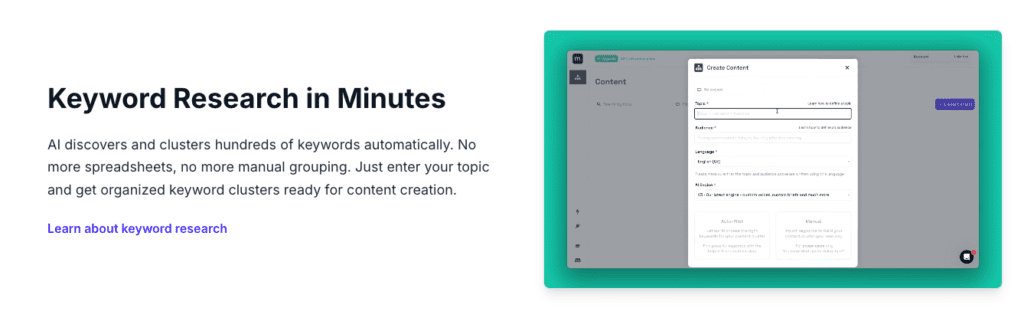
Machined AI turns a few seed keywords or a tight niche into a full content cluster, often 30-plus articles. Think small idea in, large set of related posts out.
- Start with keyword expansion. Machined scans SERPs and competitor pages to surface connected terms from the seeds. It groups keywords by meaning and search intent, then forms clusters that match site structure. Picture one pillar page supported by 20 to 40 focused posts.
- Each URL in the cluster gets a primary keyword, supporting terms, and clear intent labels for informational or commercial searches. This mapping prevents overlap and keeps themes clean across the site.
- For drafting, Machined builds outlines modeled on top-ranking pages, adds prompts for each section, then generates long-form drafts. You set tone, reading level, and word count so the output fits your brand voice.
- Internal links follow the cluster plan. The platform suggests anchor text tied to the structure, with links from supporting posts to the pillar and context-appropriate links across sibling articles.
I’ve seen full draft sets for about 35 articles land in under 24 hours with this setup. A small team doing research, briefs, and writing by hand would spend two to four weeks on the same scope.
Why speed, internal links, and full-topic coverage make Machined useful
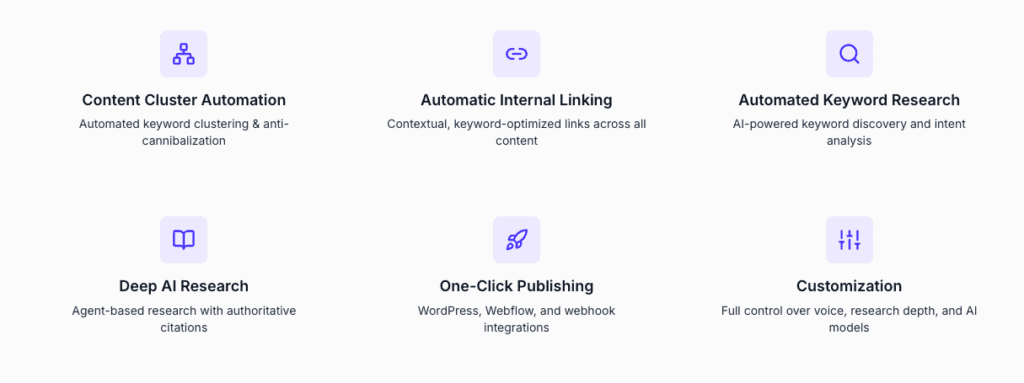
I think Machined AI stands out when a team needs big content clusters fast without losing consistency. Skip the trickle of single posts. Spin up 30 to 50 pages in tight batches with the same structure and voice. Launch full topic hubs in days. For niche sites building authority, that pace matters.
Batch runs reduce context switching, so every piece fits the bigger plan. Internal linking automation suggests link graphs and anchor text, keeping pages connected and avoiding orphaned posts with no inbound links. Editors keep final say before publish. Smart suggestions remove guesswork and speed up reviews.
Cover a cluster end to end to boost topical authority, not just a few scattered posts. Machined’s consistent use of headings, FAQs, and summaries helps search engines read the site as a thorough resource, not loose fragments. I’ve seen these patterns increase crawl clarity and reduce thin coverage.
One workspace replaces a pile of tools: keyword research, clustering sheets, brief templates, AI writers, link planners, and CMS exporters. Solo operators who run everything themselves cut overhead and keep work moving. Fewer tabs, fewer handoffs, fewer places for errors.
Publishing turns straightforward with direct WordPress or Webflow integration. No copy‑paste mistakes or missing metadata. Templated slugs and tags apply consistently, so URLs, titles, and taxonomies stay tight. Reliability gets baked into the process from draft to publish.
Where automated SEO tools fall short and how to manage the risks
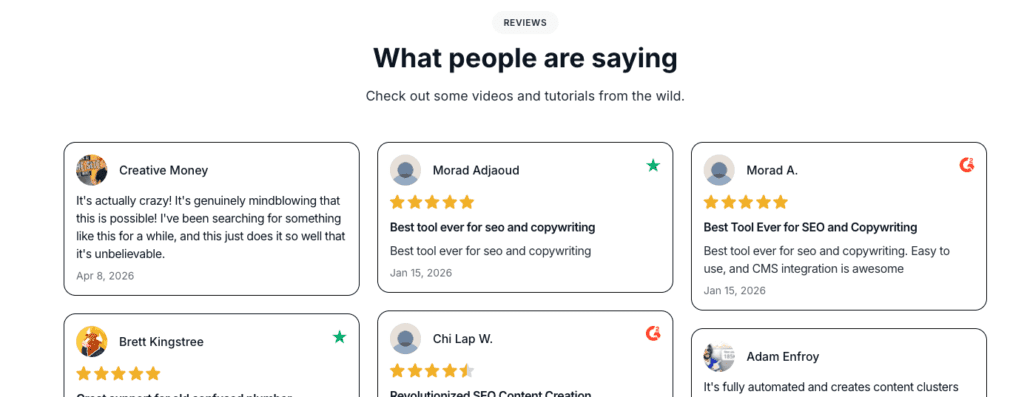
AI drafts feel fast, but they aren’t ready as-is. Skip edits and you risk pushing out outdated, shallow, or generic work. Facts need checking, real examples or screenshots add proof, and tone has to match the brand before anything ships.
- Quality control matters. AI pulls old info or weak sources. Editors verify details, cite solid references, and add original insights so readers get value beyond boilerplate.
- Risk spikes when scaling fast. Dump 30 to 100 AI-first posts without staggered reviews, and you’ll see repetitive intros and duplicate phrasing slip in. Thin content drags rankings down instead of lifting them.
- Cannibalization shows up even with tight clusters. Overlapping subtopics or fuzzy intent make pages fight each other. Watch Search Console queries, spot overlap early, then merge or deindex to fix it.
- APIs add fragility. Workflows depend on external services staying online and under quota. An outage or rate limit mid-batch stalls production without warning.
- E-E-A-T takes more than text. Add real author bios, clear source citations, and original elements like screenshots or test results. These trust signals reduce “AI-only” footprints and align with Google’s expectations.
Speed is useful. Pair it with careful human review to protect quality and scale with less risk.
Machined.ai pricing with BYOK explained and real per-article costs
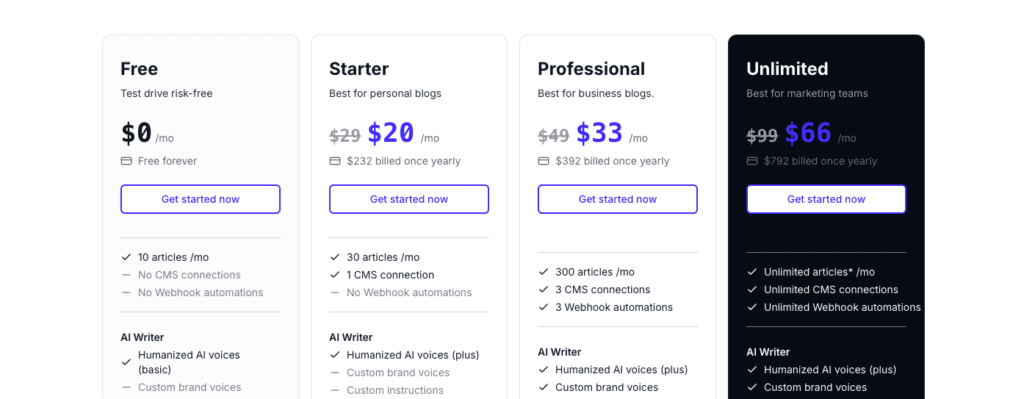
Pricing has two parts. You pay for the Machined.ai subscription to access all features, then cover model usage with your own API key, like OpenAI. Costs are based on tokens. Longer drafts with research and multiple revisions use more tokens, so budget some extra for retries and edits.
- A typical 1,800 – 2,200 word draft often falls in the 20,000 – 40,000 token range once planning, writing, and follow-up tweaks are counted. With models like GPT-4o-mini or sonnet-class, that usually comes out to a few dollars per piece at current rates.
- Outsourcing the same article to human writers often costs $80 – $200 based on quality and niche complexity. Editor time adds $20 – $40 per article. Machined ends up cheaper when producing high volumes.
- Hidden expenses matter. Editors still spend hours on fact-checking for sensitive topics (YMYL). Image sourcing or licenses add fees. CMS quality checks take time. These eat into savings if ignored.
- The sweet spot shows up with clusters of 30+ posts. Upfront setup spreads across many articles, so each piece costs less. For small batches or one-offs, traditional writers or simpler AI tools may make more financial sense since subscription costs disappear.
Machined fits fast scaling and big projects. Per-article costs drop compared to fully human workflows. Smaller projects might not justify the fixed fees.
Anyone testing those plans should check the current Machined AI coupon code before the first invoice.
Direct CMS publishing with Machined AI and a responsible rollout plan
I see Machined AI as a turbo boost that turns rough ideas into draft-ready pages fast, especially for big content clusters instead of one-off posts. It won’t replace careful editing or strategy, but it adds a strong layer that shortens the path from concept to a published site with consistent structure and scale.
When it’s time to push content live, direct CMS integrations with WordPress and Webflow speed things up. Titles, slugs, metadata, categories, tags, and internal links get set automatically. Double-check user roles and API credentials before bulk uploads. A staging setup helps. Publish in small batches, like 5 to 10 posts, to preview internal links and catch awkward anchor text before anything goes public.
Forget AI detection scores. They swing wildly and miss the point. Make content original instead. Add citations, real examples, author bylines, and specific insights. These build trust far better than trying to beat a detector.
Watch the signals that matter. Track how many pages get indexed soon after publishing. Look at impressions and clicks by cluster. Check crawl depth through internal linking. Note editorial updates after publish. If possible, compare these against a manually created cluster to see where Machined adds value or needs tuning.
Start with a pilot batch in a non-YMYL niche. Measure cost per published piece alongside early Search Console signals like traffic growth or ranking shifts. Use this data as a compass before rolling out bigger launches across multiple clusters. This keeps teams nimble and builds confidence in sustainable fit.
Trying Machined isn’t a flip-the-switch move. Layer smart automation on top of solid SEO fundamentals. Run the first cluster test with care. Watch performance. Decide if scaling fits current goals.


Leave a Reply