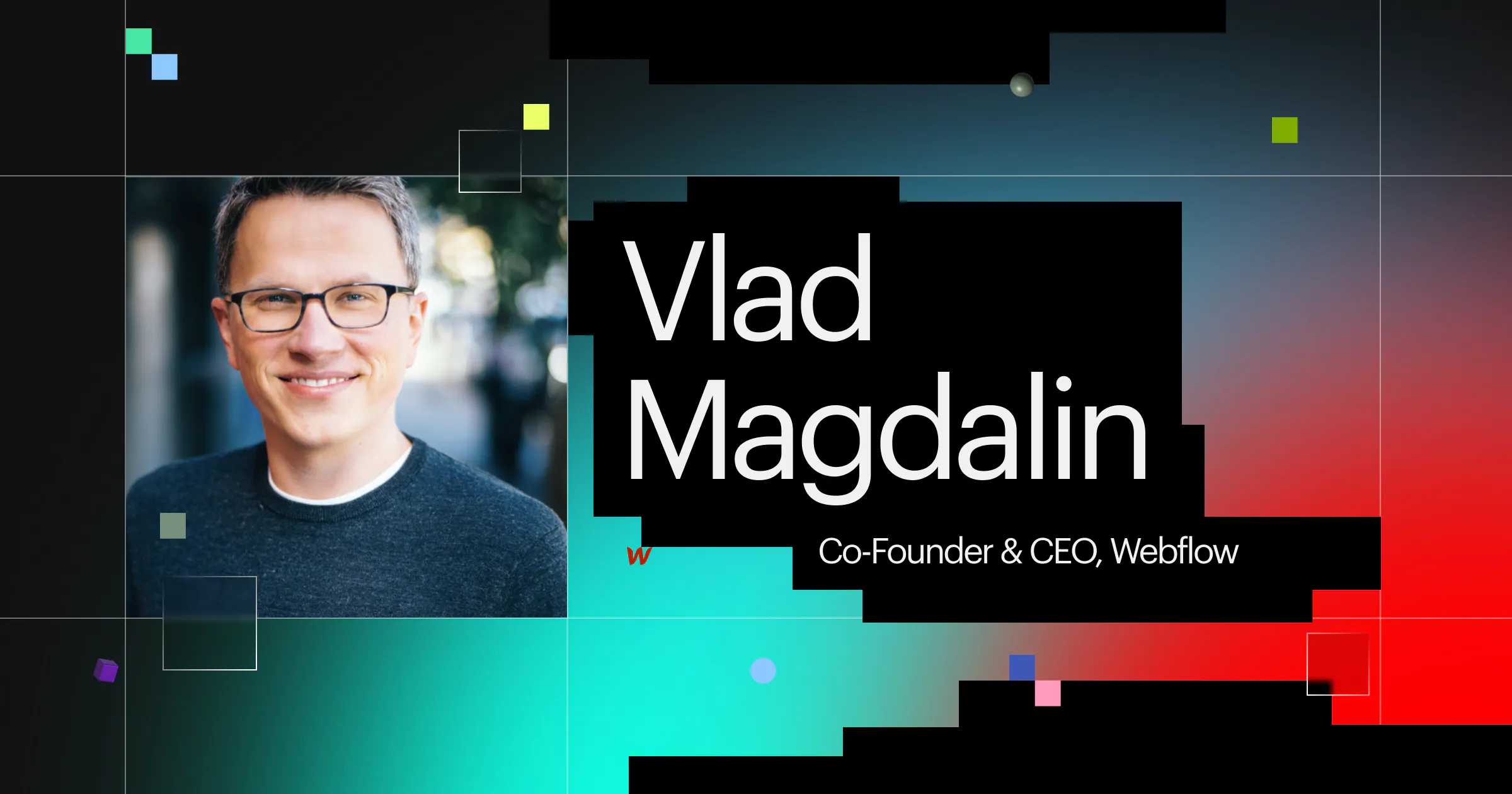
Early in the 2010s, Vlad Magdalin kept running into a loop many designers knew too well. Teams would craft detailed mockups in Photoshop or Illustrator, hand them to developers, then wait while the designs got translated into HTML and CSS. Revisions took days or weeks as engineering rebalanced priorities, and CMS plugins strained under custom tweaks.
WordPress themes felt brittle. Visual tools spat out messy code no one wanted to maintain. Small teams lacked budget for an engineer every time a layout needed a nudge. Vlad straddled both worlds with design instincts and code skills, so the pain felt obvious from either side. He wanted a way for designers to build real websites visually while still shipping clean, production code. No cookie-cutter templates. No mess.
Squarespace and Wix focused on simplicity with pre-made layouts. Pros wanted deeper control over styling and content without diving into PHP or plugin chaos. The gap between creative vision and execution stayed wide, and it blocked teams from moving fast.
Webflow emerged in that gap. It gave designers visual control and clean code, plus a CMS that didn’t buckle under custom work. More freedom, less waiting.
On this page
- Why rigid early web tools pushed Vlad Magdalin to build a new path
- How Vlad, Sergie, and Bryant aligned on building for production-grade sites
- From prototype to product market fit with the Designer, CMS, and hosting
- What Y Combinator changed for Webflow’s focus, distribution, and culture
- How Webflow evolved into a no-code platform with community momentum
Why rigid early web tools pushed Vlad Magdalin to build a new path
Vlad Magdalin, Sergie Magdalin, and Bryant Chou shared a vision that mixed sharp design sense with solid engineering. Vlad paired design instincts with real coding skill. Sergie shaped brand identity and user experience. Bryant led the deep technical work as CTO and solved tough engineering problems. Their strengths fit together into a balanced team ready to rethink how websites get built.

They aligned on a core principle: stay true to the web platform. No proprietary layout tricks or hidden layers. Every action in Webflow’s interface would map to real CSS properties like flexbox and positioning. The HTML structure stayed semantic and clean, with no black boxes or tangled code under polished visuals.
They made choices early that set the tone. Webflow ran in the browser with JavaScript for live site design. Services influenced by Node.js and Go powered the pipeline behind the scenes. Hosting launched later, after they locked in the Designer and CMS. Exported code was human-readable from the start, so developers could continue where designers stopped without friction. The focus stayed narrow: marketing and content-driven sites, not complex app features like authentication or intricate logic.
Designers didn’t need to open a text editor. The goal was full visual control in the tool. Advanced users still had the option to export clean code for custom work when needed. That mix of accessibility and extensibility set Webflow apart early, creating space between rigid templates and developer-only workflows.
How Vlad, Sergie, and Bryant aligned on building for production-grade sites
Webflow moved from a rough prototype to a polished product by making small, practical changes focused on real users. The visual Designer worked like a true web layout tool, where each box acted like a CSS box on a page. The style panel followed how CSS actually cascades in browsers, so designers who knew web basics didn’t hit a wall with code. Reusable classes kept styles consistent across pages. Versioning and undo gave people room to test ideas and fix mistakes fast.
Next came the CMS, built for visual thinkers. It replaced developer-heavy workflows with collection fields and dynamic lists, so editors could add or update content without touching layout. Template-driven pages kept similar content aligned and stable, which cut down on delays tied to design changes.
Integrated hosting pushed things further. Built-in CDN and SSL removed setup pain during launch. Publishing felt fast and straightforward. Exporting clean code stayed on the table for teams that needed full control or self-hosting.
Pricing changed as features matured. Experiments balanced site-level limits like traffic or form submissions with account-level options such as project counts or code export. Real activation signals, like published sites and connected domains, shaped tiers to match how people actually used the product.
Quality stayed non‑negotiable. Visual accuracy built trust – pixels lined up, and layouts rendered predictably. The output stuck to clean HTML and CSS, which made exported projects easier for developers to pick up. Accessibility stayed front and center too. Semantic tags clarified structure, alt text prompts raised content quality, and early ARIA mapping supported assistive tech.
From prototype to product market fit with the Designer, CMS, and hosting
Y Combinator gave Webflow a hard push to tighten focus and move faster. Weekly goals kept the team honest. Frequent user interviews kept decisions tied to real needs, not guesses. The pitch got sharper, too: “a visual development platform that ships production code.” That line made the value obvious.
Access improved right away. Launch posts put Webflow in front of tech folks who love trying fresh tools, and the founders’ network brought early users and partners into the mix. Onboarding got stricter and more helpful. First-timers were guided to publish a site or connect a domain in the first session. Drop-offs fell, and momentum picked up.
Fundraising snapped into focus. The team skipped ad revenue and marketplace fees. They chose a simple route: hosting plans that aligned with customer needs and investor expectations. Product-led growth made sense to backers who wanted steady value without gimmicks.
Technical work moved up the priority list. Infrastructure for multi-tenant hosting stabilized, so sites stayed reliable as traffic grew. Autosave and version history matured. Teams felt safe to explore ideas without risking work, which matters when several people touch the same project. Product analytics tracked activation rates and cohorts to see how engagement changed over time.
YC’s culture stuck. Talking with users became routine, not a special event. Forum threads stayed active, with frequent, focused updates and clear changelogs for fixes and enhancements. Bug reports showed up in crisp, reproducible formats because the feedback loop stayed open and specific.
Key outcomes from Y Combinator included:
- Early distribution via Launch posts plus founder network intros
- Streamlined onboarding aimed at quick wins (publish/connect domain)
- Clear fundraising path centered on hosting plans rather than ads or take rates
What Y Combinator changed for Webflow’s focus, distribution, and culture
Webflow took a hard turn when it embraced no-code, moving from a pro website builder to a visual development platform. New features made the shift real. Interactions 2.0 and an early e‑commerce launch opened the door to complex sites without writing code.
Interactions 2.0 let designers build timeline-based animations tied to CSS transforms with JavaScript under the hood. Template-first tools felt boxed in, while this gave creators room to shape custom interactions with production performance. It became a flagship feature fast.
The community scaled with the tech. Webflow University’s structured video courses and cloneables, ready‑made components anyone could copy and adapt, cut project setup time. Freelancers and agencies shipped first client sites faster, which sparked word of mouth among creative teams.
Templates and cloneables formed a marketplace loop. More users shared more assets, which pulled in newcomers and lowered the learning curve. Agencies rode that wave and standardized on Webflow, since clients could edit content in Editor mode without breaking layouts.
Adoption jumped after major releases. Interactions 2.0 and stronger CMS features drove new projects and paid signups. Enterprise interest grew as advanced hosting arrived with SSO and compliance plans fit for larger teams.
- Structured learning in Webflow University sped up onboarding
- Cloneables cut setup time for early projects
- Marketplace assets supported grassroots growth across agencies
How Webflow evolved into a no-code platform with community momentum
Webflow grew from a small indie startup into serious infrastructure by solving a stubborn problem: designers waited on developers, got stuck in brittle code, and shipped too slowly. The team built a UI that matched real CSS and HTML primitives, so what users did in the editor mapped cleanly to the web. No tricks. No fake layers. That choice kept layouts flexible and gave designers real control. Community education came next. Webflow University and active forums did more than teach features. They built trust, answered edge cases, and created a steady stream of skilled users who helped each other. The company also drew clear lines on scope. It focused on production-grade sites instead of chasing every shiny idea.
Scaling demanded operational discipline, not a pile of features. Separate teams owned clear metrics like activation rates and CMS item growth so progress was visible. Reliability stayed front and center. Global CDNs, automatic backups, staged publishing, and performance budgets kept complex pages fast while support tickets fell. Enterprise needs arrived with roles, audit logs, and compliance. Webflow met those demands while still serving independent creators.
Community programs carried a lot of weight. Forums, showcases, and office hours removed onboarding friction and kept agencies engaged. Agencies then brought in clients and spread habits that worked. Product focus plus real partnership with users created a compounding loop that made growth durable.
Here are practical takeaways builders can apply:
- Anchor the product in its platform. Design the UI to reflect core technical realities, not abstract shortcuts.
- Track meaningful activation events early. Identify milestones like first publish or first content entry to guide improvements.
- Invest in documentation and education. Treat learning resources as distribution channels that scale with the user base.
- Define non-negotiables. Protect quality and user autonomy before expanding scope.
Every builder should pause and name the unshakable principles behind the product. Education and community work best when treated as growth engines, not extras. Follow these steps to scale with integrity and long-term impact.



Leave a Reply