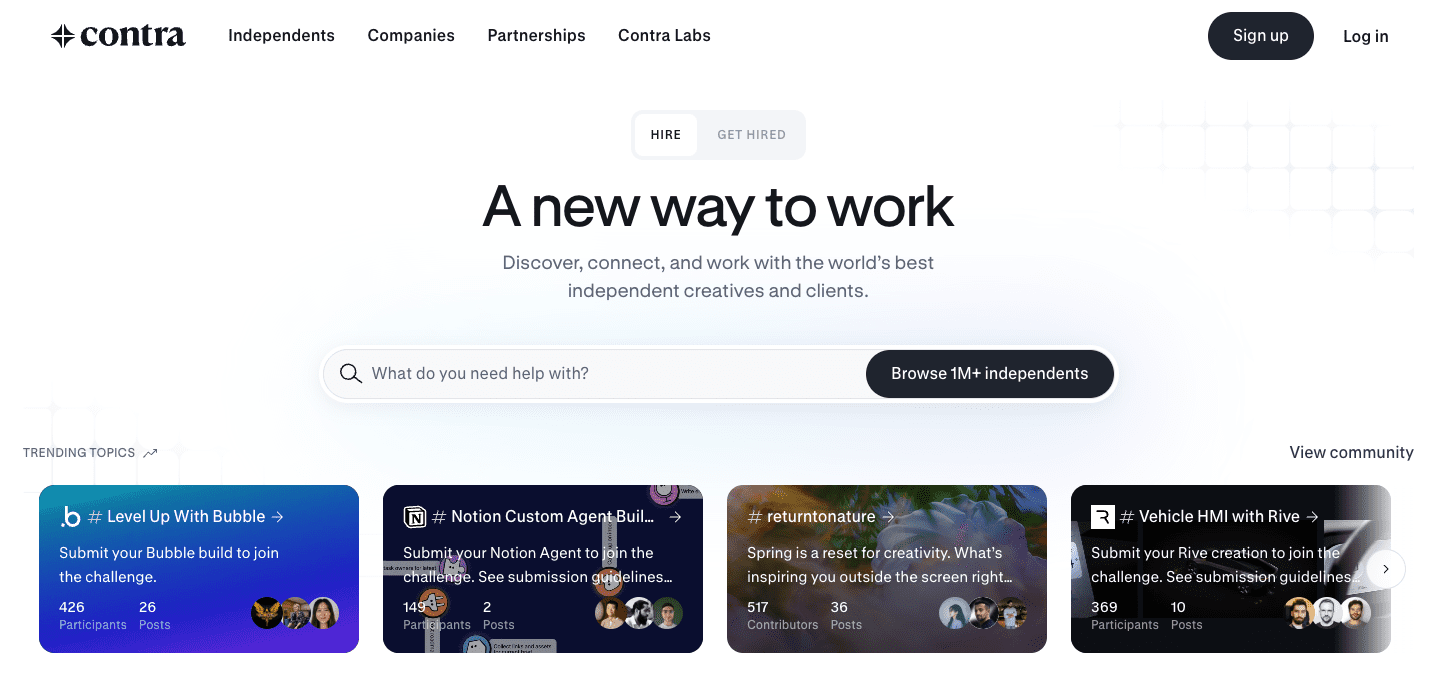
Contra feels like walking into a design-first space built for finding Framer pros. Upwork sprawls and wastes time. Contra skews toward visual and product designers who work with no-code tools, Framer included. It values fewer listings, stronger talent, and portfolios with live sites and interactive prototypes instead of static shots.
The showcase matters most here. Profiles aren’t resumes. They read like case studies with clickable demos, so it’s easy to see real decisions and results before reaching out. Fewer gigs show up each day than on giant marketplaces, but the ones that do feel focused and polished. Shortlists shrink fast.
I’m going to break down what makes hiring Framer designers on Contra stand out, from finding talent to fees, and share where it shines for teams pushing for standout design work.
Why Contra feels like a design‑first alternative to Upwork
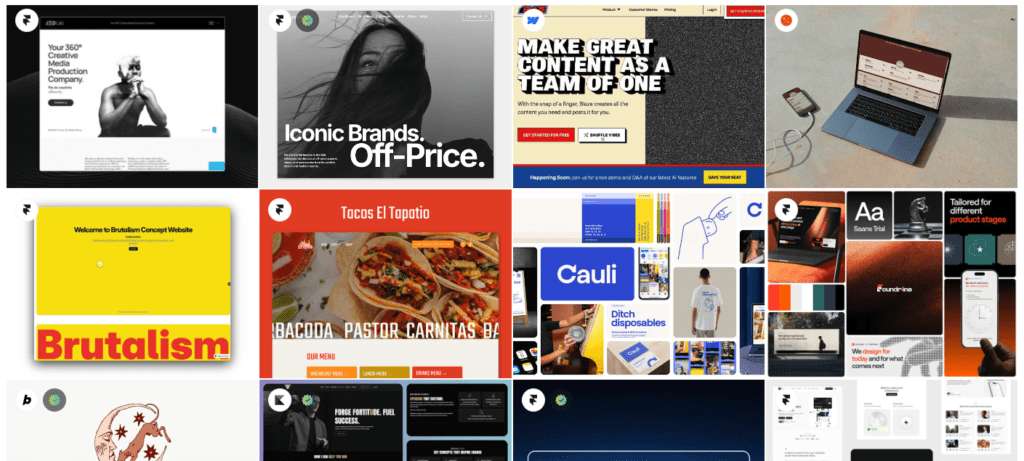
I’ve noticed Contra brings together a practical mix of Framer-focused freelancers. Product designers shape clear user flows, then move work into Framer without a handoff gap. Indie creatives cover strategy, UI, and final builds in one loop, which keeps momentum. Brand designers show up, too, and refresh web identities with tight visual systems. Framer developers round it out by building components and tuning interactions so pages feel responsive and sharp.
It isn’t a fully curated marketplace. It’s open once accounts get approved. Real quality signals live in portfolios with live links, interactive Framer shares, and reviews that tell a fuller story. I’d rather study shipped work than skim a badge, and this setup makes that easy.
Most freelancers sit in North America or Western Europe, so time zones tend to match typical team hours there. Rates skew mid to senior. Hourly pricing often ranges from $60 to $150. Fixed prices for a landing page land around $1,500 to $5,000 based on scope and complexity.
Common profile tags show a clear pattern:
- Framer, core platform skills
- Figma for collaboration
- Product design with end-to-end UX and UI
- Motion for animations and transitions
- Framer components like CMS setups, variants, interactions
- Typical ship timelines, often 2 to 3 week sprints for landing pages
Who you will find on Contra and how curation really works
Start by searching smart on Contra. Filter for Framer specialists, pick the project type like a website or landing page, and set a budget that fits the scope. Spend time reviewing portfolios with live Framer links and tangible outcomes, like higher conversion rates or faster load times. You see real work, not guesses.
Write a clear brief next. Include:
- Sitemap that shows the structure
- Brand kit for consistent visuals
- Final copy ready to place
- Required components, like CMS collections or forms
- Performance goals, for example mobile LCP under 2.5 seconds
Share example links to speed up scoping and set expectations early.
Once someone looks like a fit, send a short message to introduce the project and confirm interest. If it clicks, expect a proposal with milestones: wireframes first, then high‑fidelity designs in Figma, then build in Framer. After that, quality assurance happens and notes on component libraries get handed over so future updates stay straightforward.
Before closing out the contract on Contra, ask for a shareable link to the final Framer project and detailed changelogs. Include which breakpoints drive responsiveness, which variants cover states or themes, and any custom code blocks added. Good documentation makes ongoing edits easier without constant back‑and‑forth.
How to hire Framer designers on Contra with a clear workflow
Choosing between Contra and Upwork for design work often comes down to signal versus volume. Upwork throws a huge pool of people and posts at you, which overwhelms anyone trying to hire for Framer. Contra trims the noise with portfolio-first profiles that show live projects, so skill checks happen fast without slogging through resumes or vague blurbs.
The strongest difference shows up in Framer work. Many Contra freelancers design and build directly in Framer, then ship. That removes the slow handoffs that pop up when files bounce between tools or teams. Upwork spans everything from WordPress to Webflow, useful for mixed stacks, but Framer depth varies significantly and true specialists take longer to spot.
Search works better on Contra with tags tuned to Framer tasks like CMS or animation. Relevant skills sit up front, so there’s less guesswork while reviewing portfolios. Upwork leans on keywords, so confirming real Framer skill means digging through multiple gigs and samples by hand.
Timelines are clearer too. Contra pros often list fixed-price landing page packages with delivery in 1 to 3 weeks, and expectations lock in early. Upwork tends to run hourly with mixed-tool flows, which stretches scoping as teams align on deliverables across platforms.
- Volume vs signal: Upwork offers vast pools, while Contra enables quick visual skill checks through live portfolios.
- Framer ecosystem: Contra features many end-to-end Framer pros who reduce handoffs, and Upwork covers broader tech with less consistent Framer depth.
- Search experience: Tag-based filters on Contra make specific Framer skills easy to find, and Upwork’s keyword search needs more manual vetting.
- Project speed: Fixed-scope 1 to 3 week builds are common on Contra, and hourly models with longer scoping dominate on Upwork.
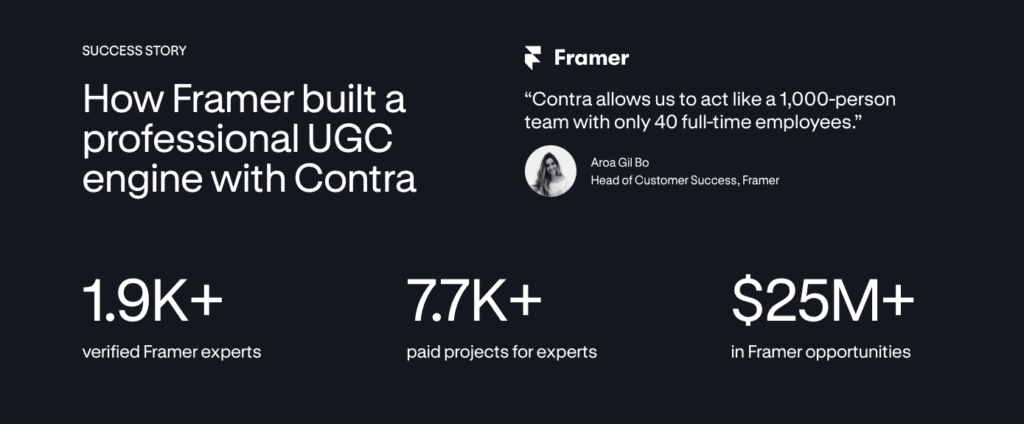
The two marketplaces suit different kinds of hire, and we set Contra vs Upwork against each other on cost, scoping and talent depth.
Contra vs Upwork for design talent and Framer‑focused work
I think Contra makes sense when the goal is a Framer site or a design‑led web project. Portfolio clarity sits front and center, not endless listings. It’s where quality visuals and smooth delivery matter more than volume. You see real work with live links before moving forward, which saves time and headaches.
Fees stay straightforward. Freelancers don’t pay commissions here, so they focus on their craft. On the client side, there might be payment processing fees or optional extras at checkout, so it’s worth double‑checking before locking in contracts.
Budget ranges feel consistent. Fixed bids for small marketing landing pages often sit between $1,500 and $5,000. Larger multi‑page sites with CMS features or advanced animations cost more. For ongoing tweaks or support, retainers usually land between $500 and $2,000 per month:
- Small landing pages: $1.5k – $5k fixed price
- Multi-page sites with CMS/animations: higher tiers beyond that range
- Monthly retainers for updates/support: around $500 – $2k
Contra fits best when startups or product teams need fast turnaround without losing visual polish. Think launches or rebrands where speed meets standout design. If the goal is bulk hiring across many roles or non-design work, other platforms might suit the job better.
Before moving ahead, write a clear Framer‑ready brief with sitemap structure, brand kit essentials, and final copy ready to plug in. Add performance goals like load times. Then browse 5 to 8 portfolios with live Framer projects to get a real sense of style and skill. When designers align with the vision, ask for proposals as both fixed‑scope offers and milestone‑based plans. Seeing them side by side helps weigh risk against timeline.
Leave a Reply