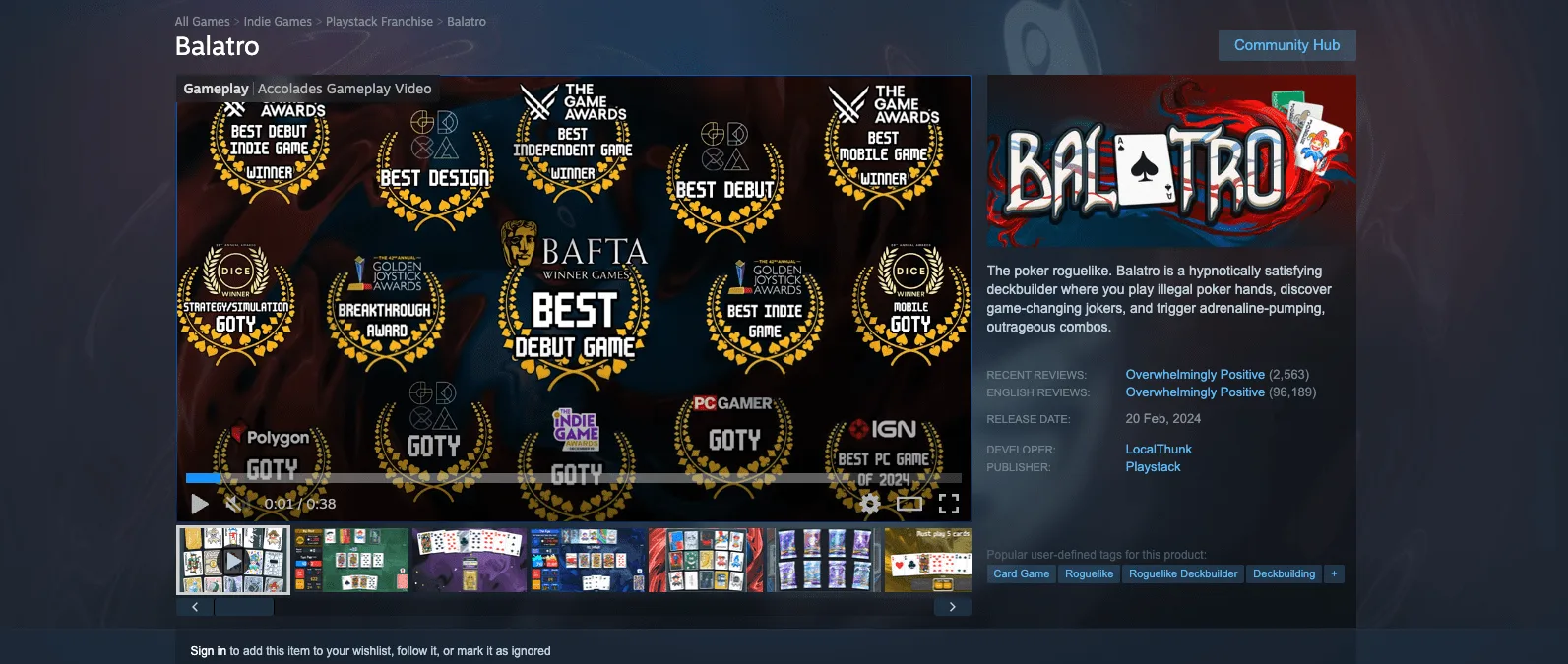
Balatro slipped onto Steam without much noise. A solo developer, LocalThunk, made a poker-flavored deckbuilder that shot up the charts and filled creator feeds fast. It looked simple at first, a single-player roguelike with familiar cards, but the ascent wasn’t random.
The core came from sharp design choices, solid timing, and steady iteration. Clear messaging helped, and the community kept energy high. Momentum built week by week.
Founders watching this should skip myths about instant hits. Work within real limits. Focus on clarity, keep improving, and let visibility grow over time.
What actually made Balatro spread beyond its niche
Runs in Balatro fit neatly into short, punchy sessions. Most take 10 to 30 minutes, with rising blinds and boss fights creating clear checkpoints and payoff moments. A full arc fits into one sitting, which makes it great for streams and bite-size clips without dropping viewers partway through.
Jokers shake things up in ways that feel fair and wild at the same time. Their synergies stack, with multipliers and suit-based boosts firing off into big combos. Highlights look “broken” in a fun way, and they come from planning plus a bit of luck. Players love grabbing screenshots or posting quick videos that show off a streak or a smart setup.
Scoring seals the deal. Chips multiplied by on-screen factors turn into a live tension gauge on every hand. The math sits in plain sight, so anyone watching a stream knows what a play is worth right away. Highlights hit harder when the stakes are clear, unlike games where scoring feels fuzzy.
Simple visuals help more than people expect. A small set of cards, a clean UI, and short animations keep the focus on strategy and new content, not on flashy effects. Production stays lean, updates land faster, and the game holds its edge over time without spiraling costs.
Design choices that fueled repeatable share loops
Early access to the Steam page gave Balatro a real jump. The capsule art did the heavy lifting. Sharp, readable, and specific. One glance said deckbuilder, roguelike, card game. That clarity drove wishlists months ahead of launch. Steam’s discovery queue favors titles with fast-rising wishlist counts, so steady growth kept organic impressions climbing without extra spend.
Event demos worked like a spotlight. Joining showcases similar to Next Fest brought in waves of eager playtesters. Those bursts fed reviews and creator chatter, then converted curious clicks into wishlists. Feedback from these windows tightened difficulty and balance well before launch, which meant fewer pain points when the pressure hit.
Trailer thumbnails made people stop. Poker hands stacked fast into huge scores within seconds. Steam’s autoplay loops are short, and social feeds move even faster, so the first 10 seconds had to land. Viewers figured out right away if the loop hooked them, no time wasted.
A tight launch window sealed it. Global unlocks and coordinated embargo lifts focused attention into 24 to 72 hours. That concentration pushed Balatro onto Steam’s Popular New Releases and Top Sellers lists, where momentum takes over and more players pile in.
Timing and distribution that primed the Steam launch
Mid-sized creators with 10,000 to 500,000 subscribers ended up driving most of Balatro’s reach. Mega channels often post once, then move on. Smaller influencers speak to tight-knit audiences who care about niche strategy games and stick around. The developer sent keys and press kits stuffed with combo examples and smart setups, which led to a steady wave of videos over several weeks. Interest stayed warm instead of flaming out after one big spike.
Balatro’s design feeds evergreen formats that keep discovery going well past launch. Community prompts like “beat Ante X with Y Joker” spark endless experiments and uploads. Seed-sharing gives players fresh starts for new runs, and high-score chases push repeat attempts. These videos slot neatly into YouTube search and TikTok trends, where quick tips and highlight streaks keep pulling views months later.
A clear streaming policy lowered friction. VOD uploads were allowed, and monetized streams were fine, so creators didn’t hesitate. Patch notes mirrored balance feedback from players and creators, which built trust. The back-and-forth felt real, and people stayed invested.
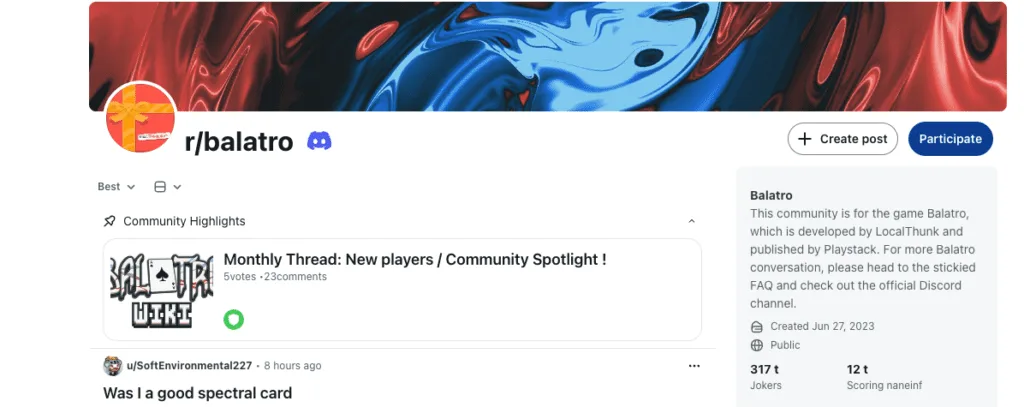
Discord did heavy lifting in the background. Channels that featured standout runs and weekly seed challenges acted like casual tournaments, without piles of admin work. Pinned “starter builds” helped newcomers push through early walls instead of bouncing off, which kept retention healthy.
Taken together, these moves show a practical path for indie teams. Work with mid-tier creators, keep content formats evergreen, make streaming rules clear, and let community channels do quiet, consistent work. It’s far cheaper than big ad buys and often more durable.
How creators and community amplified reach on a budget
Playstack’s work on Balatro covered jobs solo devs often struggle with alone. Platform submissions, age ratings like ESRB and PEGI, and storefront assets take time and slow launches if they slip. Playstack took that weight off, which let Steam and console releases hit at the same time. That sync matters for buzz across multiple stores. Co-marketing helped too. Front-page features on platforms and steady pushes through publisher channels lifted creator videos and posts. Sales impact is hard to isolate, but the coordinated timing lined up with sharp jumps in charts and review counts.
The solo developer kept scope tight and iterated with discipline, which set the stage for all of it. A clear core loop made sharing natural. An early Steam page built wishlists month by month. Event-tied demos brought in motivated players. Creator kits kept new content flowing. Well-timed updates extended discovery long after launch. Review velocity told the story in public – thousands of positive reviews arriving fast from wishlist conversions and stream exposure.
For solo founders aiming to repeat this without draining resources:
- Nail the core gameplay loop first. Keep it simple and strong enough to share again and again.
- Open the store page early to stockpile wishlists before launch hype.
- Schedule demos around events and showcases with hungry audiences.
- Ship thorough creator kits so influencers have everything needed for standout videos.
- Time post-launch updates to hit key discovery windows and keep momentum going.
This path shows how focused design and a capable publisher partner push an indie into a wider spotlight without loss of control or burnout. Solo devs can treat these points as a practical blueprint – start small, plan share loops from day one, and invest in community touchpoints that scale.
Leave a Reply