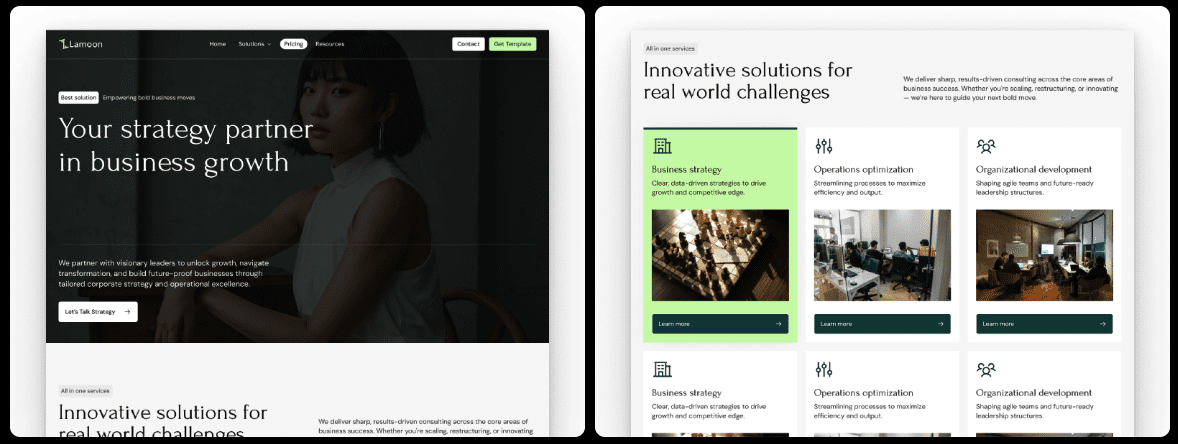
A corporate site lives or dies on the template. Looks matter, sure, but the real test is how the layout guides people, builds trust, and steers them to act. Clean type, varied sections, and navigation that stays easy even as the site grows. A strong template signals credibility before a single headline lands.
Here are four Framer templates built for business sites: Lamoon (free), Exora ($69), Busix ($29), and HAYSolutions ($69). Each meets core needs for client-facing work. Layout quality, information hierarchy, and visual flow take center stage. Flexibility inside Framer matters too, from component structures to tokens that speed up customization and keep design consistent.
They also match what corporate teams expect: spaces for services pages, case studies or portfolios that show proof, team or leadership profiles, and contact blocks designed to convert visitors into leads. Pricing isn’t just the sticker price. Setup time counts, plus ongoing edits by non-designers who know Framer basics like frames and CMS.
Choose well and launches happen faster with fewer hiccups. Founders get a site that can grow without frequent redesigns, while staying clear and trustworthy for clients.
Lamoon is a fast, free start for lean solo consultants
Lamoon is a free Framer template built for solo consultants who want a simple site fast without upfront costs. It keeps the essentials front and center. A clean homepage explains services in plain terms and gives visitors a clear way to get in touch. No heavy case studies. No maze of menus.
The flow is direct. A bold hero grabs attention, then features and benefits. A small grid often highlights one to three services with straightforward pricing. A basic contact form closes the loop so prospects can reach out. Those who need layered pages or detailed navigation won’t find that here.
Customization favors ease. The component system stays light with minimal nesting, so newer Framer users can edit copy and swap visuals without stress. Growth takes more manual work though. Adding extra service pages means duplicating sections and keeping each version updated by hand.
It fits best when the offer is tight. One to three services. A clear story. No extras like team bios or compliance pages aimed at enterprise buyers. For solo consultants who want clarity over flair, Lamoon does the job.
Free comes with limits beyond design. Those planning to add richer content, like case studies or expanded footers, should budget a few hours to build them out, roughly four to eight depending on scope.

Busix offers a budget-friendly base for small agencies
Busix sits in the sweet spot for small agencies and freelancers. It offers more than a free template without a premium price. At $29, it’s a smart middle ground for teams that want extra layout options but don’t want high-end overhead. It includes enough sections to cover a typical B2B agency site, so getting online happens fast while keeping solid flexibility.
It usually ships with the pages that matter most: clear services, portfolios or project showcases that let visuals lead, testimonials for social proof, pricing tiers for transparency, and FAQs to answer common questions. Together, this forms an 8-12 page framework many agencies expect from their site structure. The layout isn’t only about looks – it guides visitors through what the agency offers and why it matters.
Customization in Framer stays simple with Busix because of its modest design system. Reusable components, color and text styles, and consistent spacing rules keep pages tidy. With tokens set up, swapping colors or fonts to match a brand takes an hour or two, and no code is required. That speed helps when client projects compete with building a company’s own site.
For teams that rely on visual proof, Busix pulls its weight. Portfolio sections pair images with short write-ups so potential clients see style and substance in seconds. This mix boosts credibility in RFPs and in follow-ups after cold outreach. Showing clean work online makes the case better than a claim in a sentence.
There are trade-offs. Busix favors value over deep component complexity. Some parts feel less refined than pricier templates made for heavy customization from day one. Advanced features like CMS case studies with filters add setup time by a few hours beyond the first pass. For tight budgets, though, it delivers plenty and still leaves room to grow.

Exora brings a polished corporate feel with CMS depth
Exora is a $69 Framer template built for B2B teams that need more than a basic site. It’s made for multi-page, content-heavy websites where credibility matters. Think detailed case studies and press-ready sections that show expertise without overwhelming visitors. No flashy tricks. Just a polished platform that looks trustworthy from the first glance.
The layout makes information easy to follow. Visitors hit a hero section that states the value clearly, then move into organized services pages and industry content that actually resonates. Case study templates guide the story from problem to outcome. Trust blocks with logos, stats, and certifications reinforce results without shouting.
Customization goes deeper than usual. Exora includes an advanced component library with variants for buttons, cards, and full sections, so teams mix elements without fuss. Color palettes and typography tokens speed up rebrands when guidelines are ready. Swapping fonts or colors takes under an hour, not days of manual tweaks.
CMS setup is ready for real workflows across departments. Collections for case studies, blogs or insights, and team profiles let non-designers update content confidently without breaking layouts or styles. The process keeps sites fresh and frees designers from constant maintenance.
The upfront price is higher than simpler templates, yet setup often saves 4-6 hours thanks to built-in features like gated resources and newsroom pages. Companies that need depth and polish get fewer headaches later when scaling content or showcasing complex projects.
How to choose the right Framer template for professional services
Picking a Framer template depends on the type of professional services firm and the level of site complexity. For solo consultants just starting out, Lamoon offers a free, no-frills option that stays fast and simple without extra features. Small agencies on a budget that want to showcase visual work with some flexibility will find Busix balances price and functionality. When depth matters, especially for B2B teams that need CMS-powered case studies and polished layouts, Exora brings tools for content-heavy sites.
HAYSolutions sits alongside Exora at $69 but focuses on consulting firms that want pitch-ready pages centered on storytelling – problems, solutions, outcomes, and timelines. The layout includes proposal-friendly sections and enterprise cues, with strong lead capture like Calendly and contact modules aimed at higher conversion rates. A consistent component system makes spinning up multiple service pages fast, which helps firms with several offerings.
This lineup covers the market well, from lean startup consultants and creative agencies to established consultancies that want credibility in every pixel. Each template offers something different depending on whether the priority is speed, visuals, content management, or sales-focused design.
Before buying, narrow to two contenders that align with business goals and site requirements. Use Framer Marketplace previews and duplicate templates to prototype a homepage and one key service page. Firsthand testing shows how long rebranding takes – aim for under 90 minutes – what CMS collections are needed, and whether all required features exist.
Pricing may change over time, so double-check current costs before purchase since marketplace listings update. Scan component structures closely to avoid surprises when customizing or scaling.
Choose well now to avoid headaches later. Getting familiar with these templates through real-world testing puts control in the buyer’s hands while building an effective online presence.



Leave a Reply